
Even in your book, you show that there were some different, very different, kinds of politics in early German electronic music. There’s a feeling that dance music can be a sort of big tent, even progressive, in a way, and I think that’s something that a lot of people miss when they think about it—though, I completely understand why people might miss it. I’d like to hear what you think about why dance music endures as a type of music that unites people—beyond, you know, drugs. And I’m wondering what you think about all this in conjunction with what you said about the spaces and how they make people feel and the relationship to drugs and how those experiences translate to the outside club environment.
Cagney: I wanted to contribute towards changing the narrative around what the club experience is. Because it isn’t just about hedonism and it’s not just about mindless thumping beats. It’s about self-expression. It’s about community building, it’s about innovation, and optimism. We’ve gotten so habituated in this neoliberal phase of pessimism around our future. There was a lot to be said about the kind of blue-sky thinking of the rave movement when it hit Ireland in the nineties. Kelly’s in Portrush was a bridging place for communities during The Troubles. Kelly’s was rave in the countryside in Ireland, rave and entrepreneurship. I see rave in Ireland as of a moment with World Cup ’94 and Sinead O’Connor and Jack Charlton and our coming out of the long economic slump. A more optimistic era.
You mentioned liberation in terms of freeing people up from conflict, breaking down boundaries—that was really the case in post-’89 Berlin. They say it was on the dance floor that reunification first happened, culturally, because on the dance floor you couldn’t hear somebody’s accent: you didn’t know whether they were from West or East. It didn’t matter. I like that a lot about the dance floor, that it’s a nonverbal, non-semantic space. It frees you up from semantics, which means identity and representational thinking, and it can free you up from yourself as well.
The one thing I was told about how you could distinguish back then between someone from East Berlin and someone from West Berlin, a former club owner who I asked told me, just look at the person’s shoes. If they were from East Berlin, they had good sturdy footwear. If they were from West Berlin, they’d be wearing a pair of shitty trainers.
Rail: So, West Berliners were wearing something fashionable, but East Berliners had the built to last gear?
Cagney: Yeah. I still buy clothes in Army surplus stores here in Berlin because they last. Even the t-shirts last way longer than fast fashion.
Rail: I wanted to ask you about the response the electronic music community, the clubs, and even Germany has had to what’s going on in Gaza. I was talking earlier about how dance music is often kind of a big tent politically and for a variety of reasons often brings communities together. What I know of the scenes in cities like New York and Berlin, there’s often a leftwing, inclusive ethos to a lot of the parties. How has it been witnessing a community like this ignoring, or, to put it as generously as possible, staying totally silent about what’s going on.
Cagney: That’s the thing I come back to, the silence. That’s been one of the most difficult things for someone living in Berlin during the genocide. People who I know and love and have partied around, people who present as queer, people who present as alternative, people with tattoos, people with piercings, liberal white Germans, people who march for Black Lives Matter, people who have modular synths, people who take drugs, people who go to Berghain—seeing them say nothing about the Gaza genocide whatsoever. Being around them and experiencing their silence left me disillusioned. Never more so than a year and a half into the genocide, during the weekend of the Internationalist Queer Pride (IQP) parade.
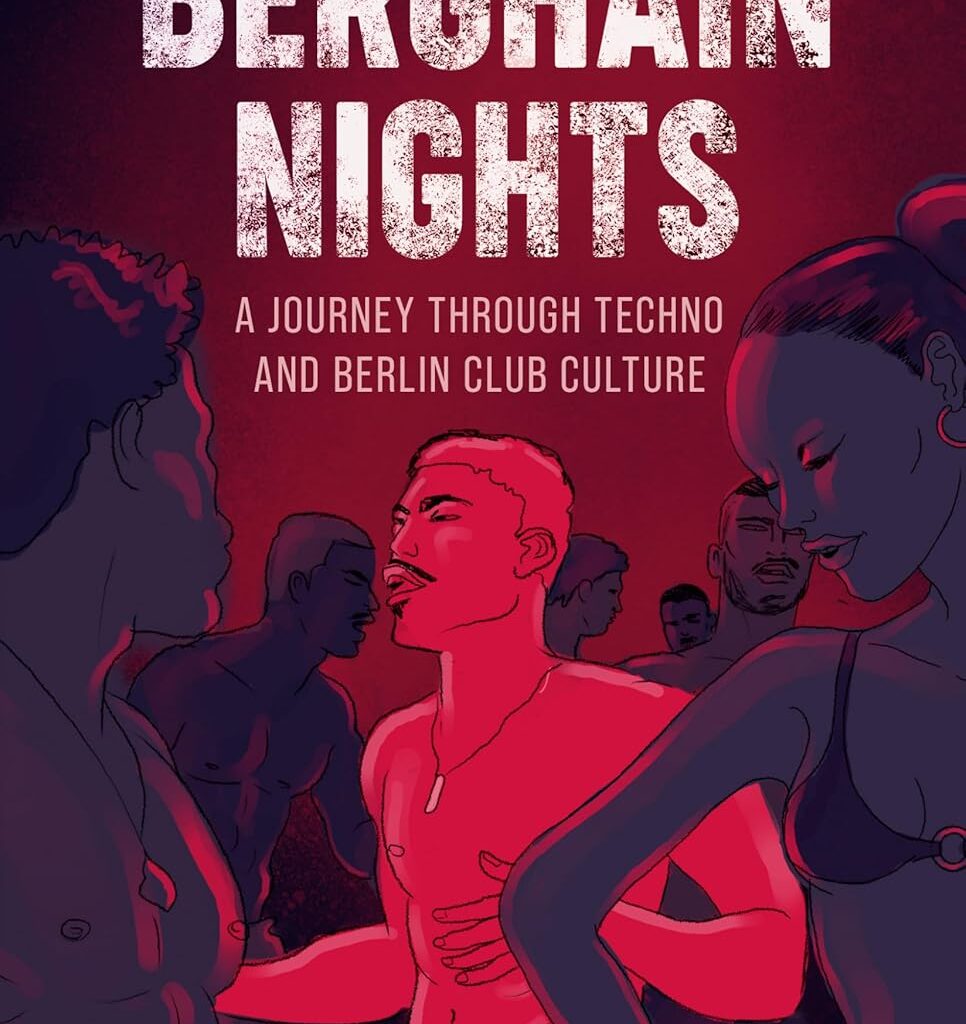
In Berlin there’s a main pride parade, which is the mainstream one and it’s got big corporate floats and all the rest. Then there’s a counter demonstration and it’s grassroots queers—queers of color, anti-colonial queers. It’s the people who make the club scene happen, the people who threw the first brick at Stonewall. Pride weekend was the last weekend of July and I was going to Berghain that weekend to see a friend play. The motto on the Berghain wristband that weekend was “Never be silent again!”—“Nie weider stille!” Which was the motto of the corporate pride parade. And already seeing that, never be silent again, coming from Berghain during the genocide, about which it hadn’t said a word, rubbed me up the wrong way. But at the International Queer Pride parade, the police went in and beat people up in the parade in the most brutal way—police brutality against queers. When I was at Berghain the day after that happened, and there was a wristband saying “never be silent again,” and meanwhile Berghain is being totally silent about it. My friend’s group Decius was amazing. One for the books, as they say. But apart from that, all I could feel was the silence. I felt like, what are we doing here? What are we really doing here? Distracting ourselves?
For my part, non-clubbing people would say, why are you still going there? Why don’t you boycott Berghain and other German cultural venues when the clampdown’s happening? When what happened to Oyoun was happening? When what happened to Jewish Voices for Peace was happening? I started going a lot less. When I did go, in some sense I felt like if I’m writing about it, witnessing it, I’m able to critically engage with it and critically write about it, maybe that’s of value.
Rail: I think so.
Cagney: I’ve come round to the idea that, instead of shouting at people online and just telling them they’re wrong, it’s better to try and have a conversation and be a bit lighter. I think that can be more effective because, I mean, everybody in Germany is brainwashed. Institutions of what Louis Althusser called the Ideological State Apparatuses, from kindergarten onwards, media and TV, are brainwashing people to the State narrative. To get them out of that, conversation can be more effective than shouting.
Rail: It’s bad here in America, but I’ve been shocked by the scenes I’ve seen from Germany and just the violence of the police towards protesters. I mean, I think everyone in Ireland probably saw that video of the Irish protester being punched. It was horrific. Not to diminish that in any way, but I’ve seen even more shocking things happen, too.
Cagney: It’s predominantly brown people who are getting beaten up and predominantly white people looking the other way. There was the video of the activist Kitty O’Brien, when she got two black eyes and she had her arm broken. I was having a discussion about that with a now ex-friend of mine, somebody who lives in Germany and who presents as very alternative. He said: I think the German police are doing an excellent job. So then you realize, okay, this is a racist person and I don’t want to be friends with them. And this is somebody who I was friendly with for years. There’s been a lot of that.
Rail: Oof. That seems like a gap that can’t be bridged.
Cagney: Yeah, you put it well, a gap that can’t be bridged. There are some people about whom you have to be optimistic that you might change their mind. But there are others with whom that gap can’t be bridged.
Rail: You mentioned it earlier on when you spoke about being on the twentieth floor of that building you lived in Plattenbau and asking yourself, how the fuck did I get here? In some sense the book is one long answer to that question. By the end of the book, you seem changed by your experience, and the timing of this coincides, roughly, with broader changes in Berlin relating to COVID-19, the housing crisis, and maybe even the music scene. I got a sense that you had come to a deeper understanding of your place in the scene.
Cagney: The end of the journey thing is a literary trope, obviously, but it was genuine. Things did change. On a personal level I came to own how I’m queer and I also realized I was autistic. And in a wider sense Berlin felt different. There were a lot of ways in which I felt Berlin was becoming like London. People at Berghain were talking to you about crypto. That’s gentrification.
In the book’s opening chapter, David, my old friend, had said to me that Berghain is a place that reflects you back to yourself. Because it’s this open space, it kind of makes you start to ask yourself questions about yourself. Going there repeatedly over years and recognizing why, partly because I was autistic, partly I wanted to be in queer spaces around queer people, combined then with reading and learning about techno’s history, did actually put me in a place, now, where I’ve got a different sense of myself and I’m confident enough to have that.
Sun Ra is the epigraph for the book. I find him inspiring. “It is important to liberate oneself from the obligation to be born, because this experience doesn’t help us at all,” he said. He often reminds me of Clarice Lispector. “I can scarcely believe that I have limits,” she writes, “that I am cut out and defined.” There’s a deeper truth there than any ethnographer could access, when they measure experience like a cartographer and then package it up in abstractions.
I now own the sense that I don’t belong regardless of which community it is, and I’m confident now and empowered in that, as a techno person. I don’t really feel like I am fully from this place or that I fit within whatever the narrative is that we’re all supposed to be living inside, whether it’s academic or social. I’m the surplus. I do come from nowhere, as a nonbinary person and generally. I had a change in my sense of self for sure. How well I articulated it—I think in some ways it’s unorthodox, but I hope people can cut the writer some slack.