
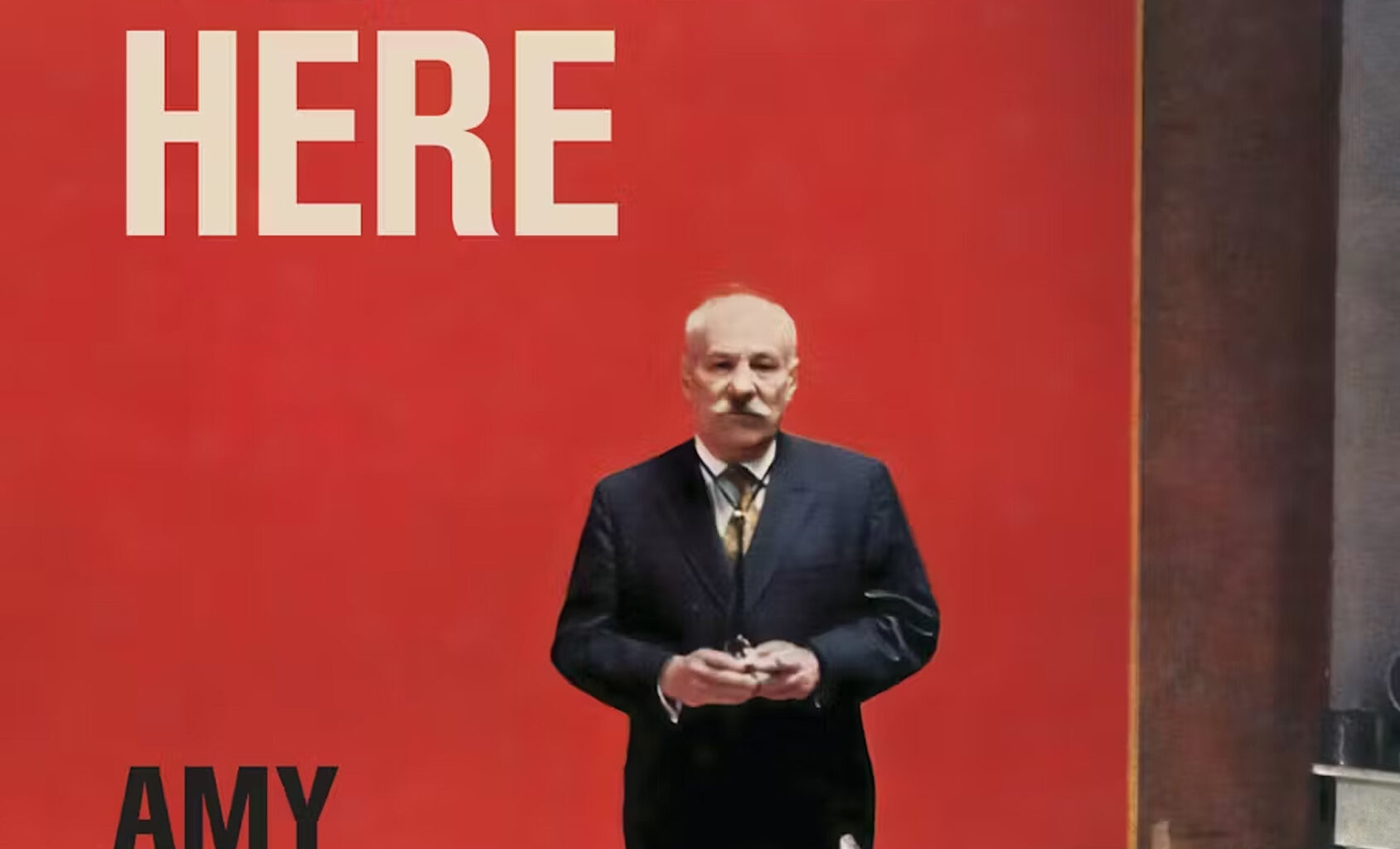
Amy Newman
Barnett Newman: Here
Princeton University Press, 2025
“The fetish and ornament, blind and mute, impress only those who cannot look at the terror of the Self. The self, terrible and constant, is for me the subject matter of painting and sculpture.”1
Barnett Newman: Here by Amy Newman (hereafter AN) is the definitive biography of one of the most influential American artists of the twentieth century. Barney (b. 1905, d. 1970)—as he was known to peers—significantly advanced abstract painting and sculpture, as well as the language of its critical reception at mid-century: his large-scale, nearly monochromatic canvases punctuated by vertical bands or “zips,” as well as the monumental sculpture Broken Obelisk (1963–69), are foundational for Abstract Expressionism, Color Field painting and Minimalism. Newman was a “giant” at the renowned Betty Parsons Gallery; this only several years after he produced and exhibited his first serious paintings, already in his mid-forties. As AN lays the groundwork, “It was not enough, in 1950, to have had his debut as an artist; for Barney it had to establish him as not simply a presence among his peers, but as sui generis, a pioneer, a general in the avant garde.” 2
Barnett Newman: Here transports the reader deep into Barney’s rich and often self-complicated universe. Considerable weight is devoted to his upbringing within an immigrant Polish-Jewish family that ascended from Jacob Riis’s Lower East Side to moderate prosperity. Fueled by a precocious intellectual drive, Barney became a formidable crusader for justice who viewed life as a grand project: he penned poetry and manifestos, ran for mayor of New York City, became an expert ornithologist, wrote criticism for other artists—all while keeping his aspirations as a serious painter in wait (he had trained at the Art Students League and taught high school art). AN offers the reader several important keys to his constitution as an “artist-citizen”: obsessive pursuit of an unsuccessful, multi-year lawsuit on behalf of his father-in-law; a visit in 1949 to Native American earthwork mounds in Ohio; deep identification with Jewish-American culture and its sacred texts. Ultimately, she locates Newman’s complex life-force in the Yiddish term geshray, or “outcry.” Indeed, Barney cried against injustices (real or perceived), cried out for sublime aesthetic/visual experiences, and loudly broadcasted his selfhood to vanquish a terrifying sense of loneliness within the universe.
Here brilliantly transcends shopworn accounts of the artist’s contributions to the formation, apotheosis and eventual fracturing of Abstract Expressionism, drawing from an extensive trove of primary sources, including unpublished texts in Newman’s hand. The profound impact of so-called “primitive art,” artist-club thinktanks, breakthrough paintings such as Onement I (1948) and Abraham (1949), the ascendence of American art in the international sphere and “Stations of the Cross” are but a few stopping points along a lengthy and fascinating trajectory. AN reminds us that, far from collegial, the New York School was energized by competing factions: downtown painters Willem de Kooning and Robert Motherwell frequently stood in contrast to Newman, Clyfford Still, Ad Reinhardt, Mark Rothko and even Jackson Pollock. Cohesion within this latter flank would ultimately be pulverized by death, dissention and malicious displays of ego. A dramatic turning point occurs in 1954 when Newman—always reading between the lines for slights and seeking misplaced justice for his father-in-law’s failed litigation—sued his close friend Ad Reinhardt for playfully referring to him as “the holy-roller-explainer-entertainer-in-residence.”3 Their relationship would never be repaired.