
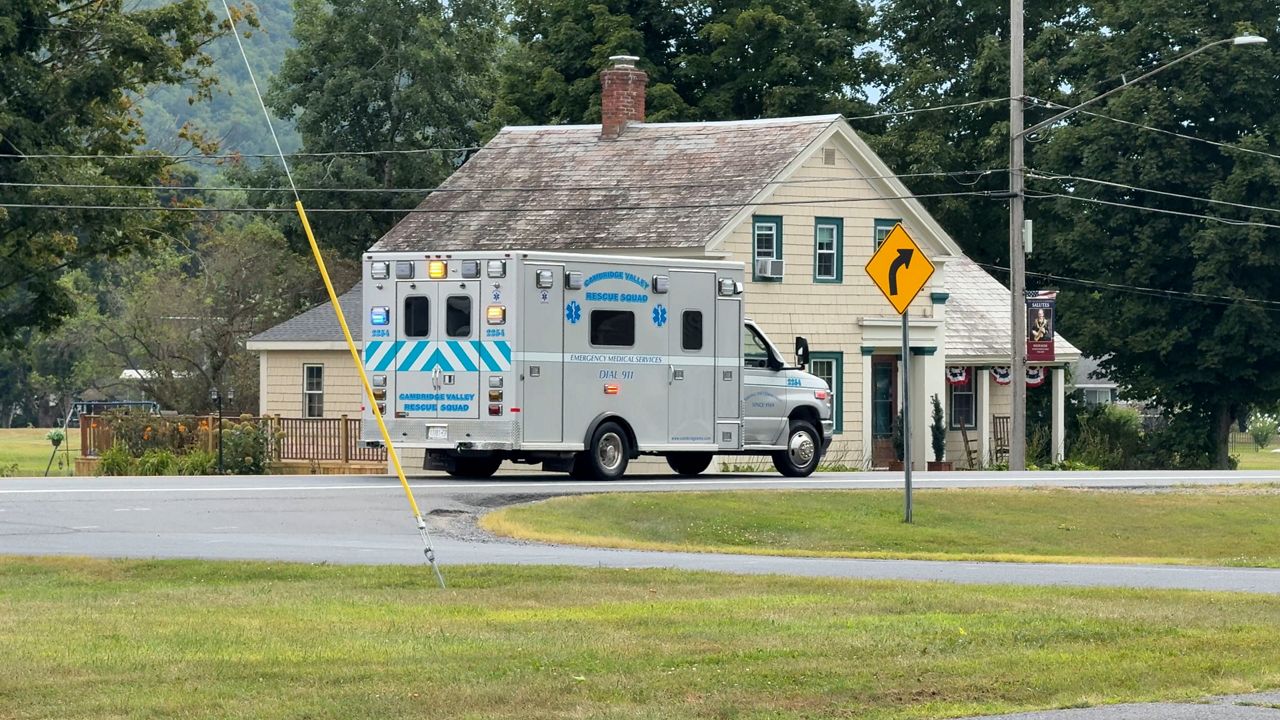
Emergency Medical Service providers joined legislators from across upstate New York Wednesday to highlight the central finding of a report warning the rural EMS system is teetering “on the brink of collapse.”
Released in January, the Report on Rural Ambulance Services outlines challenges faced by ambulance services, including long ambulance wait times, funding shortfalls and obstacles to volunteer recruitment. It makes dozens of recommendations, starting with “woefully inadequate” Medicaid rate increases.
Appearing Wednesday in Albany to highlight the report were state Assembly members Donna Lupardo and Angelo Santabarbara, state Sen. Michelle Hinchey and representatives of the New York State Association of Counties, the state Volunteer Ambulance and Rescue Association and the Rural Ambulance Services Task Force.
Santabarbara and Hinchey pushed for the 2021 passage of legislation that created the Rural Ambulance Services Task Force, which led to creation of the report.
Lupardo, a longtime advocate for changes to the rural EMS services in New York, said the group’s campaign slogan for creating awareness, #RescueEMS, is intentionally ironic.
“Because now we’re standing up to rescue EMS so they can continue to rescue us. It’s unclear to a lot of people how at risk the system is,” she said.
The challenges in providing ambulance coverage in the state’s more than 40 rural counties and beyond have created an impending crisis that endangers public health and safety, Lupardo said.
For EMS workers, Lupardo said the crisis can be summed up simply: “It costs them more to go out than they are getting reimbursed.”
Greene County Administrator Shaun Groden added perspective.
He said the 650-square-mile county is home to nearly 20 municipalities with about 47,000 people but has no hospitals, no urban center. He added that multiple independent agencies and two nonprofits run the EMS system with workers with varying wage and benefits packages serving disparate agencies for sometimes 70-80-hour work weeks.
Santabarabara said the time to make fixes is now during the state budget process.
“In too many areas, the emergency response system people rely on is hanging by a thread,” he said. “Ambulances are not a luxury service; they are a lifeline. When someone calls 911, every second matters, and every community should have confidence that help will arrive.”
Hinchey said the Rural Ambulance Services Task Force has made progress, including the creation of law to ensures EMS can be reimbursed for on-scene emergency care and for transporting patients to non-hospital settings. But more needs doing.
“We need to recognize EMS as an essential service and fix long-outdated Medicaid reimbursement rates that have failed to keep pace,” she said.