
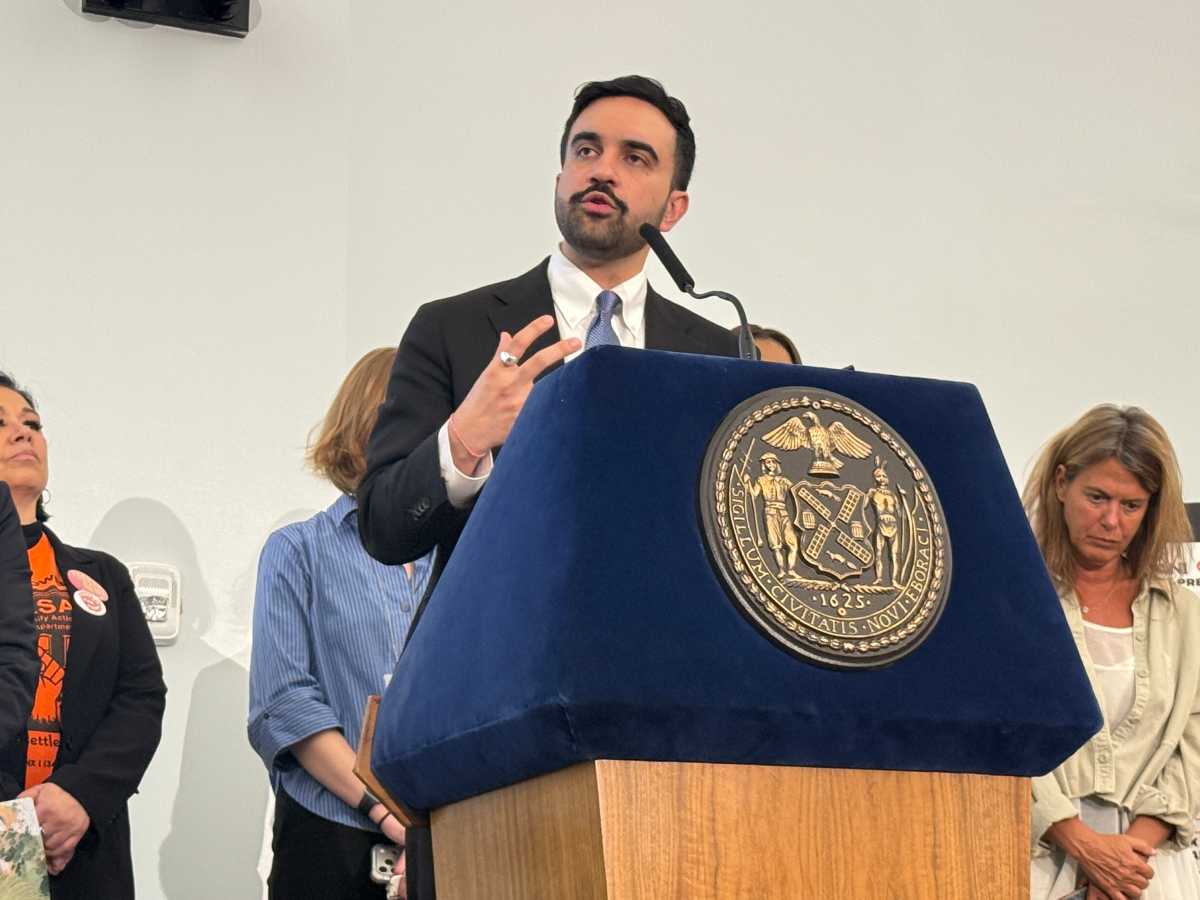
The Mayor’s “Rental Ripoff” hearings have reached the Bronx and hundreds of people are ready to snitch on their landlord.
Residents lined up at the McShane Center at Fordham University to sit down with city officials and air their grievances during three-minute testimony slots, describing everything from unaddressed repairs to steep rent hikes.
On the fifth day of his administration, Mamdani signed Executive Order 08 establishing the hearings, which allow tenants to report problems to city agencies ranging from lack of repairs in their buildings and unresponsive landlords to unfair rent hikes and frustrations with 311 and other agencies that they say have given them the runaround.
The Bronx event marked the first hearing Mamdani has personally attended since launching the series.
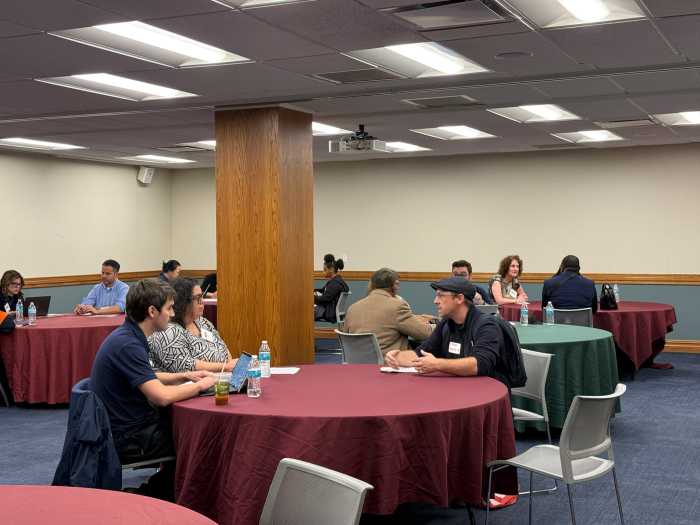 Tenants sit with city officials to discuss their landlords in their three-minute slot. Photo by Carol Chen.
But as soon as the mayor took the stage, he was met with heckling from some attendees who said the hearings exclude residents of public housing and focus primarily on private rentals — a criticism the initiative has faced since it began.
“NYCHA residents have been dismissed and have been neglected,” Mamdani said.
“I know that not only have NYCHA residents faced chronic disinvestment, they have also come to expect little from a city government that has constantly turned a blind eye to disrepair.”
The hearings are intended to strengthen housing and building code enforcement in private rental housing. While NYCHA residents are welcome to testify, complaints involving public housing follow a different enforcement process than those involving private landlords.
“I want to say this directly, and I want to say this clearly. If you are a NYCHA resident, we want and welcome your stories at the Rental Ripoff hearing,” Mamdani said.
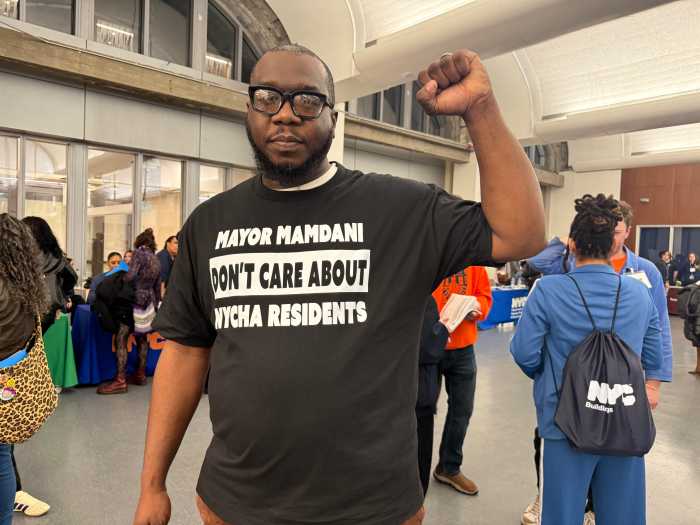 Rev. Kevin McCall, who organized a counter rally outside the hearing for NYCHA residents. Photo by Marina Samuel
Among the tenants who spoke was Patricia Jewett, who has lived in the same rent-stabilized apartment for 50 years and now faces a $300 rent increase tied to renovations she says did little to address persistent problems.
“The rent is too damn high,” Jewett said.
Her building in Fordham recently underwent upgrades including new boilers, plumbing and an intercom system. But according to Jewett, residents still deal with inconsistent heat, unreliable hot water and outdated appliances.
At the hearing, several city agencies along with housing and legal organizations set up tables where residents could collect resources and speak with staff about their concerns. Volunteers encouraged residents to answer prompts about their landlords on interactive poster boards.
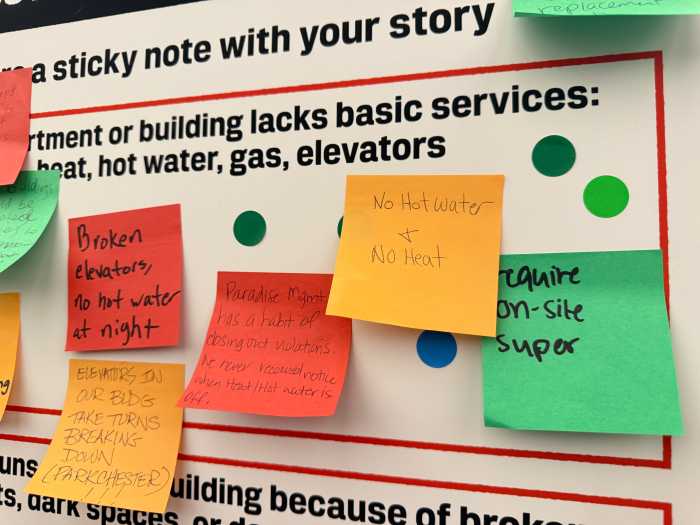 Tenants anonymously detail the basic services that their building lacks in an interactive poster board. Photo by Marina Samuel
Jose Perez, who lives in Washington Heights, said he paid more than $12,000 out of pocket for repairs after a fire broke out in a neighboring apartment and his landlord delayed fixing the damage. Though his landlord later offered rent credit, Perez said he was never reimbursed for the repairs or for medical expenses incurred after the incident.
“I didn’t make a big thing about it because I just needed to get it fixed,” Perez said. “But now I’m trying to make it a big deal, because after that experience, it’s like, I shouldn’t really be doing these things on my own.
He said he couldn’t wait for the Manhattan hearing in two weeks, and instead made the trek to the Bronx.
“I deadass just came to the one in the Bronx to get information. I have no idea how to go about it.”
Wakefield resident Sabrina Powell arrived carrying a folder filled with legal documents documenting her own housing dispute.
Under a preferential rent agreement, she had been paying $500 a month for her apartment. But on her lease renewal, her landlord raised the rent to $1,580 — far exceeding the incremental increases set by the New York City Rent Guidelines Board.
Since then, Powell says she has become a self-taught legal expert, fighting her landlord in housing court since 2023. She recently filed a harassment claim, alleging the landlord filed unnecessary legal actions in an attempt to evict her.
“I became a hood lawyer because of this!” Powell said.
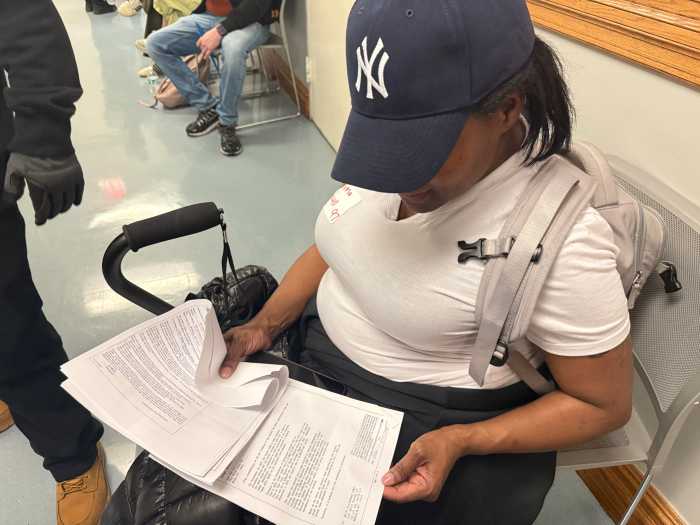 Sabrina Powell and her folder of legal documents, detailing her longstanding disputes with her landlord. Photo by Marina Samuel
Pierina Sanchez, who chairs the housing and buildings committee in the New York City Council, joined housing advocates ahead of the hearing to support tenants preparing to testify.
Darius Gordon, executive director of Met Council on Housing, said Bronx tenants face some of the most predatory practices from landlords in the city.
In three months, the Mayor’s Office to Protect Tenants, the Department of Housing Preservation & Development, the Department of Buildings and the Department of Consumer Worker Protection will compile testimony from the hearings into a report proposing policy changes and stronger enforcement measures.
He stated that while the hearing is a step in the right direction, he is hoping the report will produce tangible solutions.
“Tenants have to organize, regardless if they’re in the Bronx, Brooklyn, Queens, Staten Island. So we can’t romanticize this administration,” said Gordon in an interview with the Bronx Times.
“We cannot make the same mistakes that we’ve done in the past,” he said. “We have to do our job and make sure that we’re holding those in power accountable to the things that they promised.”
Reach Marina Samuel at msamuel@schnepsmedia.com. For more coverage, subscribe to our newsletter and follow us on Twitter, Facebook and Instagram!