
Theater review by Adam Feldman
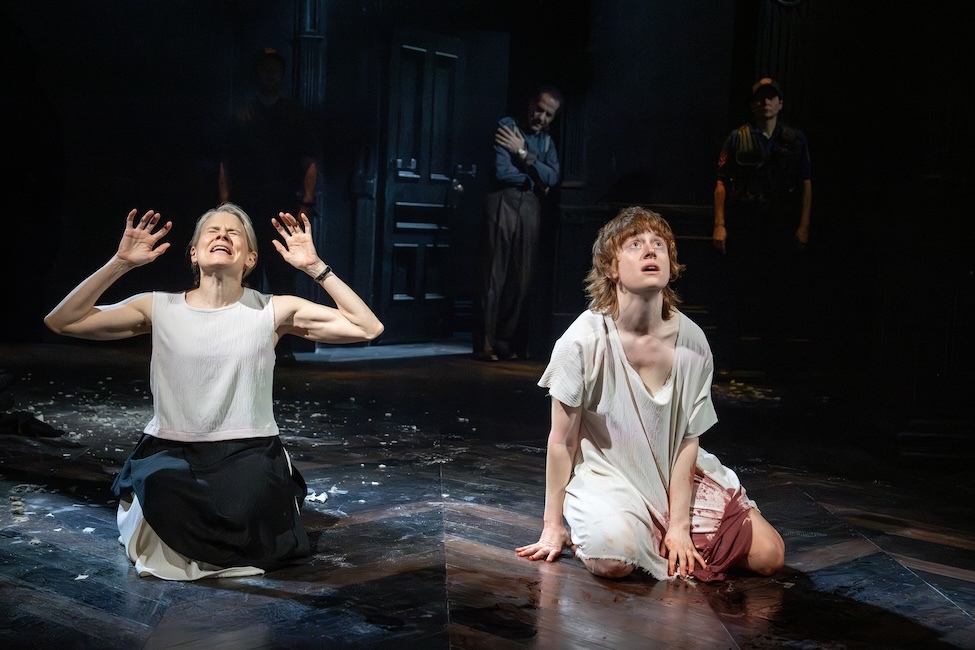
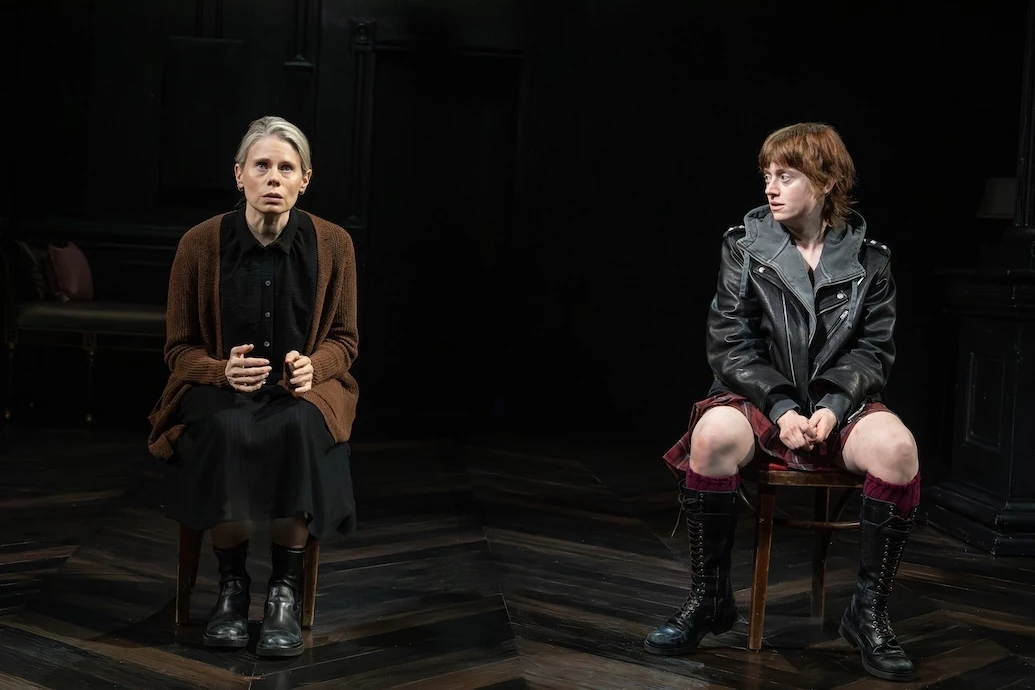
In Anna Ziegler’s Antigone (this play i read in high school), the Chorus has an uncanny encounter with a teenage girl on an airplane. This Chorus is nicknamed Dicey, and is played with perforated steeliness by Celia Keenan-Bolger; the girl, a student played with insouciant directness by Susannah Perkins, is reading Antigone, Sophocles’s tragedy of protest and punishment in ancient Thebes. Antigone’s behavior in the face of punishment has haunted Dicey throughout her life: an implicit spirit of reproach to her own lack of courage. She finds herself explaining, she says, “how literary characters can stalk you sometimes.”
Antigone (this play i read in high school) | Photograph: Courtesy Joan Marcus
The sense of being shadowed by Antigone may feel familiar to New York theatergoers. Variations on her story are everywhere now. She was a side character in Robert Icke’s Oedipus on Broadway; Alexander Zeldin’s modern British take on her, The Other Place, just closed at the Shed, but Jean Anouilh’s 1944 version is at the Flea and Barbara Barclay’s Antigone in Analysis begins next week at La MaMa. The challenge resides in finding ways to adapt a 2,500–year-old tragedy—in which Antigone’s cause relates to the burial of her disgraced brother—to modern purposes. The girl on the plane, for one, is unimpressed with the Sophocles original. “Is it even about her?” she complains. “It seems like it’s all about her brother’s body. A man’s body.” Dicey, who implicitly stands in for Ziegler à la Liberation, takes the point, tapping into her “ancient voice” (“an ancient anger, even”) to recenter the narrative. “I’m going to tell you a different story,” she imagines promising her infant self. “About Antigone’s body and also your own.”
Antigone (this play i read in high school) | Photograph: Courtesy Joan Marcus
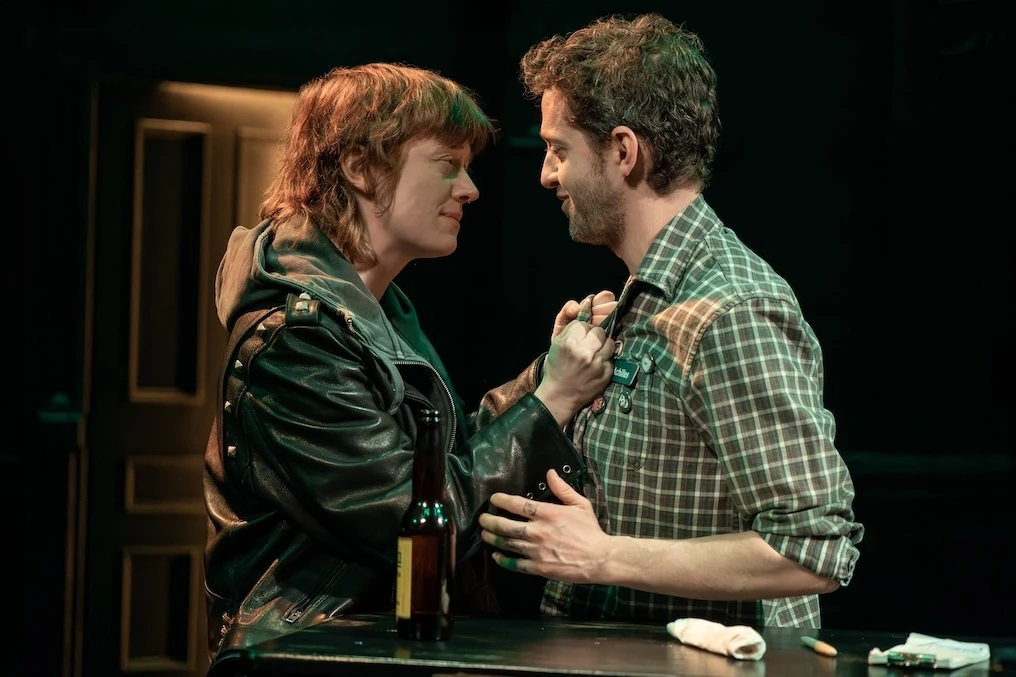
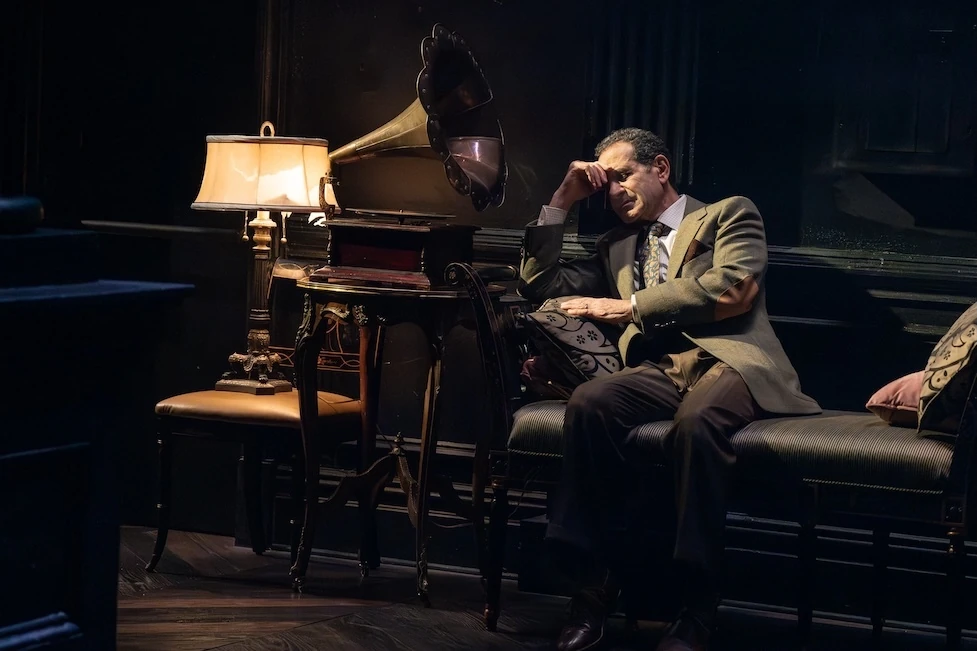
The resulting retelling begins with a funny, spiky scene in which a reckless Antigone (Perkins), a celebrity embracing the sense of scandal that hangs over her family, flirts with a waiter named Achilles (Ethan Dubin)—”But, like, not the Achilles. It’s just a name that my parents gave me”—despite being affianced to her gentle cousin Haemon (Calvin Leon Smith). Why not? It’s her body. And it’s also her body when, somewhat later, she finds herself with child and takes steps to terminate the pregnancy. But Thebes’s new ruler, her uncle Creon (a sympathetic, thought-tormented Tony Shalhoub), has enacted harsh new anti-abortion laws, which forces her to seek help from the sharkish Proprietor (Katie Kreisler) of a back-alley chop shop.
Antigone (this play i read in high school) | Photograph: Courtesy Joan Marcus
Handled with proper care, this could be the basis of a compelling new vision of Antigone. But Ziegler’s play is, at times, quite bafflingly sloppy. Early on, for example, while providing “Antigone 101” background, Dicey says that Oedipus “was famously cursed to murder his father and sleep with his mother—which he did and then promptly killed himself.” But he didn’t kill himself, of course; famously, he blinded himself. Is this a deliberate howler, intended to make Dicey’s narration unreliable? It’s hard to tell, because so much of the rest of the show and Tyne Rafaeli’s direction of it at the Public are tonally chaotic. Ziegler loads Dicey with a heavy-handed metaphor about finding her voice, in too-stark contrast with Creon’s mute wife. There are clumsy stabs at comedy—a trio of cops speak in broad Boston accents; a palace guard (Dave Quay) keeps dropping his papers—and a few even clumsier stabs at impassioned rhetoric, as when Antigone’s sister, Ismene (Haley Wong), in a traffic jam of metaphors, declares: “I won’t let my body be a stage on which men wage their wars or forge their laws.”
Antigone (this play i read in high school) | Photograph: Courtesy Joan Marcus
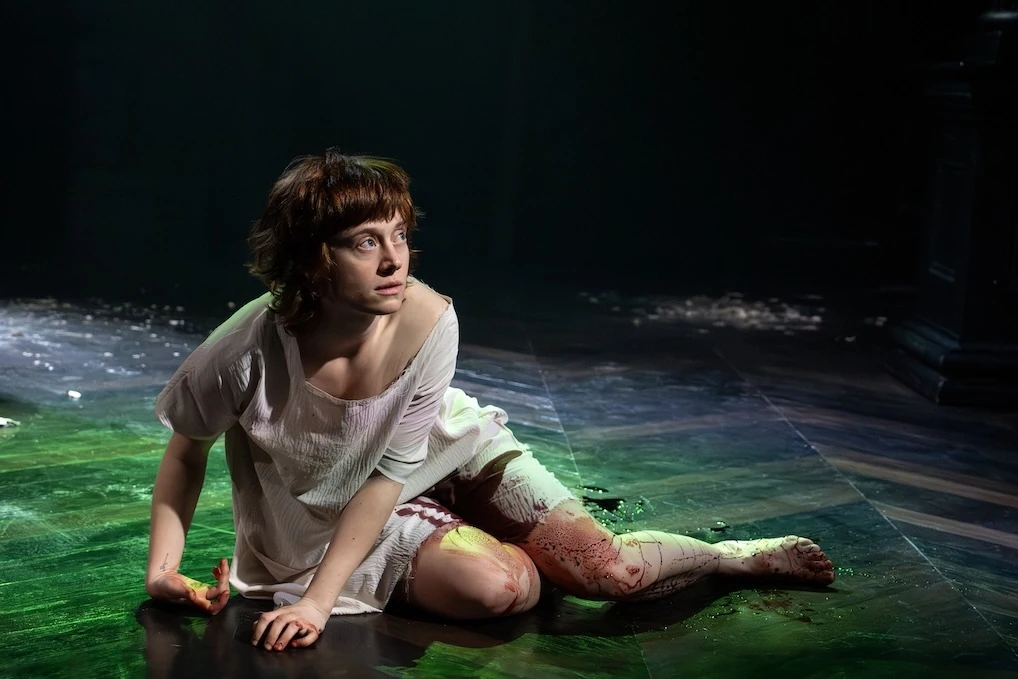
Such problems would be less damaging if this were not also the kind of highly serious play about bodily autonomy that winds up with its lead actress defiantly nude and/or hemorrhaging blood from her privates. But Perkins rises to the demands of her role heroically, with an unforced self-possession that brings out the best aspects of the writing. (When she says, of her pregnancy, “I can’t,” that’s all the justification required.) In her performance, as in Shalhoub’s, one gets a sense of the play’s unusual sense of destiny, of submitting to personal decisions so overdetermined that choice isn’t quite the right word: “I won’t. I will but I don’t want to,” says Antigone at a crisis point. “I want to but I can’t. I won’t. I have to.” Such moments make one hope that Ziegler will continue refining the play beyond this shaky world premiere. Her vision is promising, but in need of revision.
Antigone (this play i read in high school). Public Theater (Off Broadway). By Anna Ziegler. Directed by Tyne Rafaeli. With Susannah Perkins, Celia Keenan-Bolger, Tony Shalhoub, Calvin Leon Smith, Haley Wong, Katie Kreisler, Ethan Dubin, Dave Quay. Running time: 2hr 10mins. One intermission.
Follow Adam Feldman on X: @FeldmanAdam
Follow Adam Feldman on Bluesky: @FeldmanAdam
Follow Adam Feldman on Threads: @adfeldman
Watch Adam Feldman’s theater podcast on YouTube: Sitting Ovations
Follow Time Out Theater on X: @TimeOutTheater
Keep up with the latest news and reviews on our Time Out Theater Facebook page