
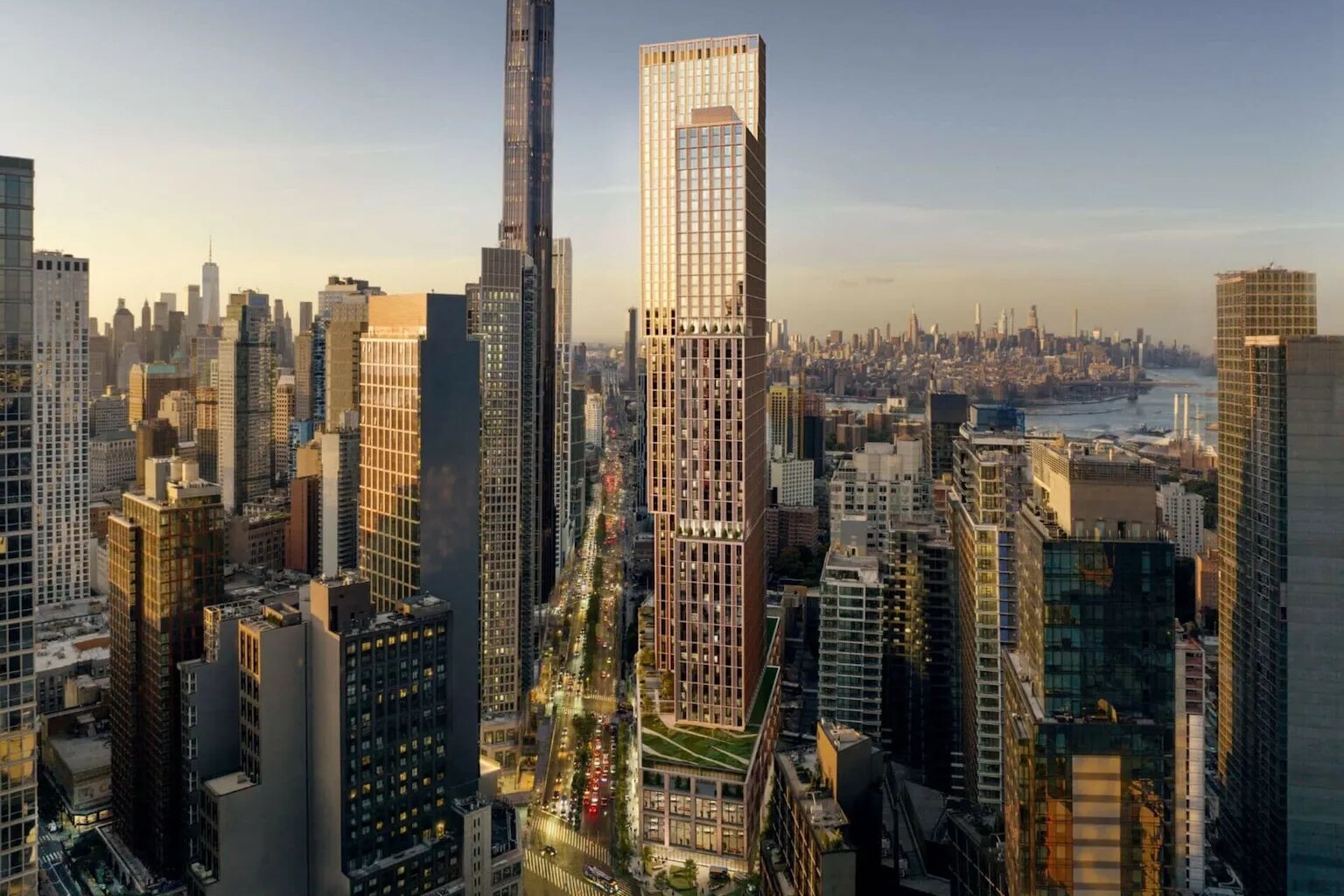
The New York City Council approved a 72-story tower in Brooklyn this week, a major step toward adding desperately needed affordable housing.
New York developers Rabina and Park Tower Group plan to swap a reviled, outdated low-rise office building near the Manhattan Bridge for more than 1,200 apartments.
Roughly a quarter of the apartments – currently referred to as 395 Flatbush – are set aside for lower-income New Yorkers.
The approval illustrates the odyssey new ground-up housing must endure to move from blueprint to reality in the Big Apple, even amid an urgent push for more homes. Future renters may not begin occupying units until the 2030s.
Although the project’s origin and early progress predate Mayor Zohran Mamdani’s election, the milestone City Council vote aligns with his campaign promise to improve housing affordability in the city. That promise included fast-tracking the approval process for new housing.
This deal’s approval fell to the City Council, which exercised its authority through the traditional process that voters changed in November through charter amendments. Council leadership had opposed those amendments, proposed under former Mayor Eric Adams.
They argued that the amendments weakened neighborhood review power, and their opposition did not change once voters approved the changes. Leaders emphasized their role in deepening affordability and securing investments.
Council Member Crystal Hudson, whose district borders the site, has cast the tower project as a higher-impact affordability win than had been on the table earlier in negotiations.
Hudson wrote on social media that the council “ensured more two- and three-bedroom units; and secured a $1 million investment for (a nearby park) over 10 years.”
The 840-foot tower is slated to include about 1,263 apartments, with 25% designated as permanently affordable under the city’s Mandatory Inclusionary Housing program, according to planning and environmental records.
A long path to development
The downtown Brooklyn area where the tower is set to rise has been zoned for high density since 2004. Economic activity has blossomed nearby in recent years.
The Dumbo (down under the Manhattan Bridge overpass) neighborhood has revived as a technology hub. The resurrection includes the corporate headquarters for e-commerce marketplace Etsy. Meanwhile, the Brooklyn Navy Yard has evolved into a thriving industrial area. Barclays Center, home to the NBA’s Brooklyn Nets, has anchored a redevelopment that still has room for more housing.
The tower moved through a traditional land use process, preserving the council’s power to negotiate and vote on a high-profile, mixed-income project of this scale.
The approved tower project formally entered the city’s land use pipeline last summer, when the City Planning Commission certified rezoning and kicked off the seven-month Uniform Land Use Review Procedure. A Brooklyn community board backed the plan with conditions in the fall, followed by a December approval from the commission and final council sign-off this week. State environmental regulators completed their review late last year, clearing the way for permitting and financing.
Rabina, which holds a growing portfolio of high-rise projects in New York, is partnering with the Department of Housing Preservation and Development on the publicly controlled site.
Beyond housing, the plan calls for tens of thousands of square feet of commercial and community facility space and a small publicly accessible plaza tucked into a dense cluster of office towers, hotels and residential high-rises.
City planners have highlighted the location – steps from multiple subway lines – as a textbook example of putting more mixed-income housing near jobs and transit.
Next steps in bringing affordable housing
None of this will come online soon. Existing leases at the site run through 2027, and environmental documents indicate all current tenants will leave by January 2028 before a new 99-year ground lease begins.
Secondly, it takes several years to build a 72-story tower. The city’s environmental analysis projects 2032 as the year the building is up and occupied.
That is a reminder that the council’s vote this week will not translate into full occupancy until perhaps well into the next decade.
Related