
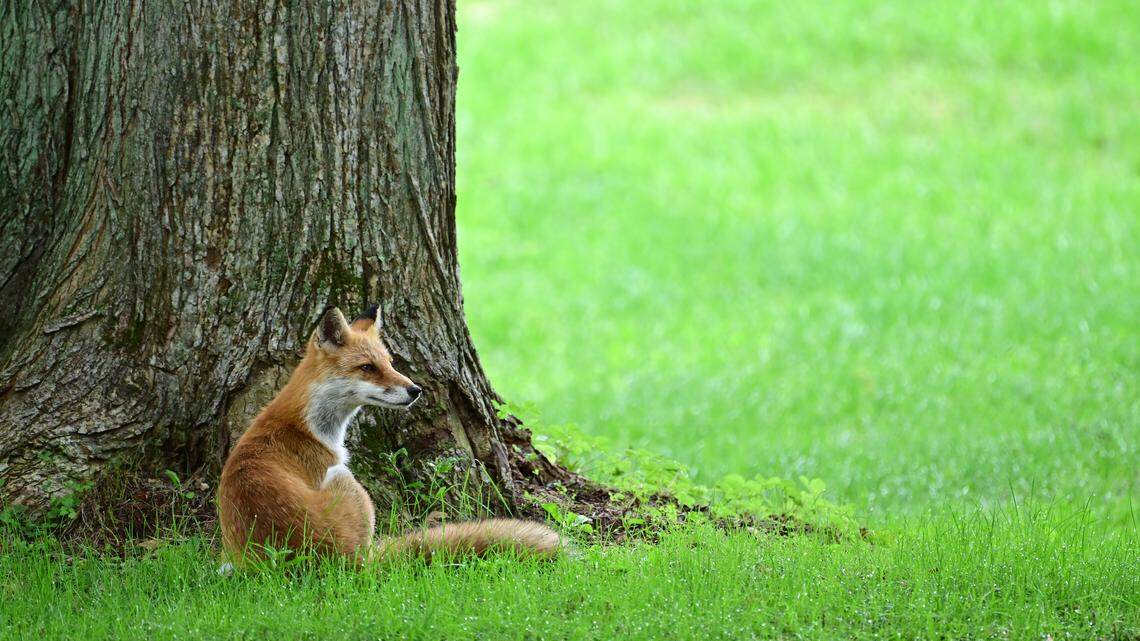
NANAE, JAPAN – AUGUST 29: An Ezo red fox is seen during the second round of NITORI LADIES at Hokkaido Country Club Onuma Course on August 29, 2025 in Nanae, Hokkaido, Japan. (Photo by Atsushi Tomura/Getty Images)
Atsushi Tomura
Getty Images
An 11-pound male red fox, estimated to be about 2 years old, is under veterinary care at the Bronx Zoo after stowing away on a cargo ship that crossed the Atlantic Ocean from England to the United States. The transatlantic journey lasted 14 days, and the fox’s arrival has prompted questions about animal welfare and the ecological complications of placing a European-origin fox in a country where wild populations of the same species already live.
The ship carrying automobiles departed Southampton on Feb. 4 and arrived Feb. 18 at the Port of New York and New Jersey, according to the zoo. The fox was transferred to the Bronx Zoo the following day.
How a Fox Ended Up on a Cargo Ship
Officials do not know how the fox got onto the vessel or at what point during the 14-day crossing it was discovered. Upon arrival at the port, officers with U.S. Customs and Border Protection captured the animal and facilitated its transfer to the zoo.
A spokesperson for Customs and Border Protection told the New York Post, “CBP routinely works with our federal and state wildlife protection partners to protect regulated wildlife and is pleased to place this ‘stowaway’ in the Bronx Zoo’s care.”
That interagency coordination moved quickly. The fox was at the Bronx Zoo the day after the ship docked.
A Species That Spans Four Continents
The stowaway is a red fox — Vulpes vulpes — a species found across Europe, Asia, North America and parts of Africa, according to the zoo. That geographic range makes the red fox one of the most widely distributed land carnivores on the planet. The species thrives in habitats from arctic tundra to dense urban centers.
Because red foxes already live in North America, this fox’s arrival is not the introduction of an alien species in the way an entirely non-native organism would be. But the ecological considerations are far from simple.
Red fox populations across such vast geographies can differ at the subspecies level, carrying distinct genetic profiles, disease exposures and behavioral adaptations shaped by their specific environments. A fox from southern England has lived in a different ecological context than a fox from the outer boroughs of New York City. Those distinctions matter when wildlife managers weigh the risks of placing an animal into a new environment, even when the species name matches.
Wild Foxes Already Live in the Bronx
Wild populations of red foxes already live in parts of New York City, including the Bronx and Staten Island, according to the zoo.
That fact speaks to a broader reality about wildlife in America’s largest city. New York’s green spaces, park corridors and fragmented habitats support a surprising diversity of species, and red foxes have carved out niches in these urban and suburban landscapes. Wild foxes roam the same borough where the Bronx Zoo is now caring for this stowaway.
If the zoo determines that the fox cannot be returned to England and must remain in North America, identifying what the zoo called an “appropriate long-term home for the animal” will require careful consideration. Disease transmission, genetic mixing with local populations and the broader management of urban fox ecology all factor into that decision. These are the kinds of concerns that wildlife agencies across the country grapple with when handling displaced or introduced animals.
Zoo officials said the fox has not yet been named and that a long-term placement will be determined once veterinary screenings are complete.
Early examinations found the animal appears healthy. Keith Lovett, the zoo’s director of animal programs, told the Associated Press, “He seems to be settling in well.”
Lovett added, “It’s gone through a lot.”
The comprehensive veterinary screening the zoo described will determine what options exist for the animal. Wildlife facilities generally evaluate disease status, parasitic load, behavioral fitness and genetic background when determining placement for animals that arrive under unusual circumstances.
Whether this fox ends up in a permanent zoo exhibit, a wildlife sanctuary or some other managed setting depends on those results. The zoo has said it will work to identify an “appropriate long-term home for the animal.”
Federal Agencies Coordinate on Wildlife at Ports
The fox’s interception followed established federal protocols. Agencies like CBP coordinate with partners such as the U.S. Fish and Wildlife Service and state departments of environmental conservation when animals are found in shipping or cargo contexts.
The vessel had been transporting automobiles from England, and the fox was aboard for the entirety of the 14-day ocean crossing — or at least a significant portion of it, since officials do not know exactly when the animal was discovered on the ship.
This fox’s story goes beyond an unusual animal-interest anecdote. It is a case study in the decisions wildlife managers face as global trade and shipping create unintentional pathways for animal movement across borders and continents.
Releasing a European-origin red fox into the wild in North America — even into an area where the same species already lives — would raise concerns that any responsible wildlife institution would need to weigh carefully. The word “appropriate” in the zoo’s statement about finding a long-term home will likely hinge on veterinary health, regulatory requirements and ecological prudence.
Production of this article included the use of AI. It was reviewed and edited by a team of content specialists.