
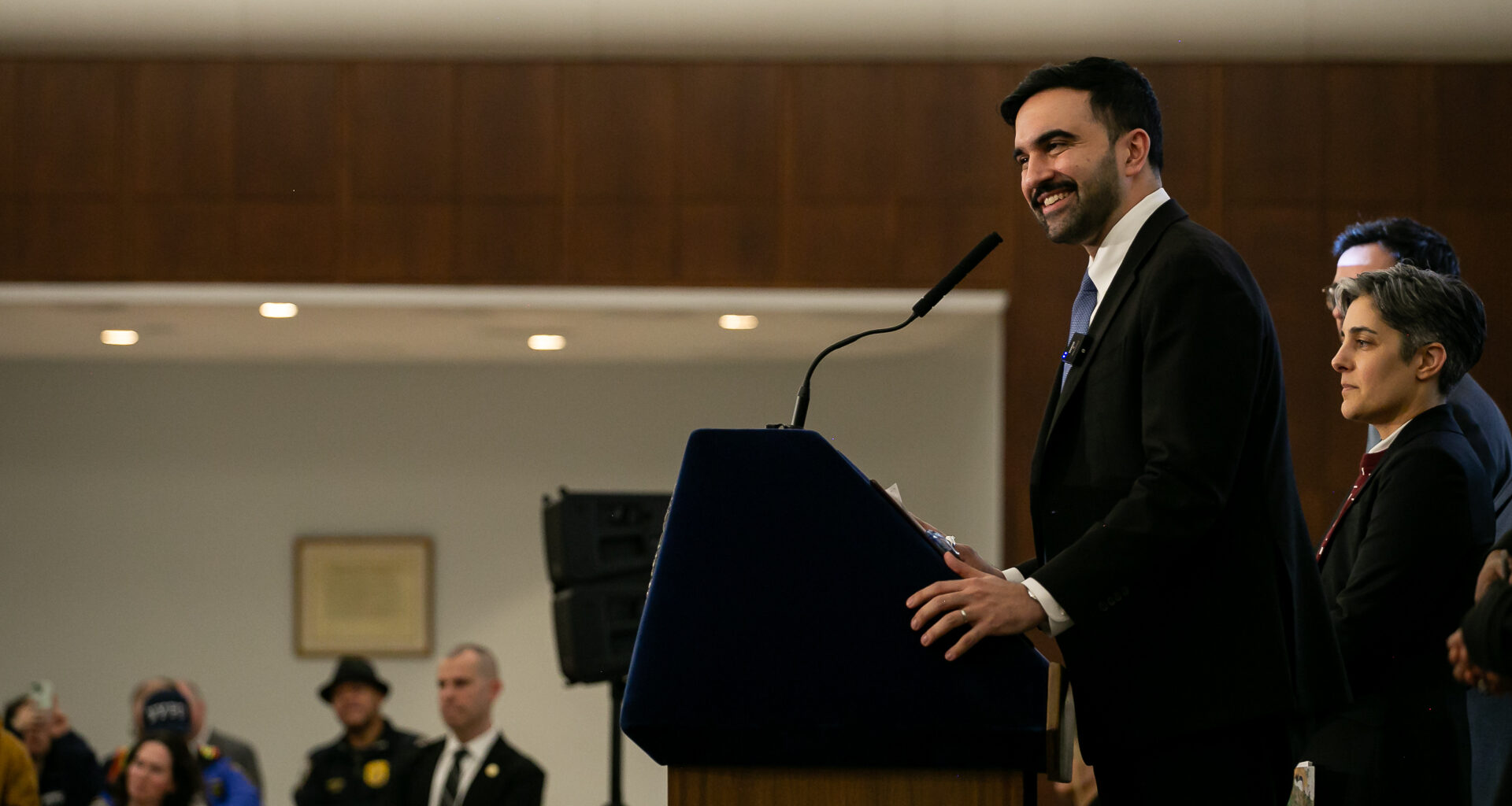
“These are conversations that will deliver dignity to New Yorkers by getting those leaks fixed, by restoring that heat, by putting an end to the kinds of unaffordable fees that we have come to accept on a daily basis, and by actually holding landlords accountable,” Mayor Zohran Mamdani said.
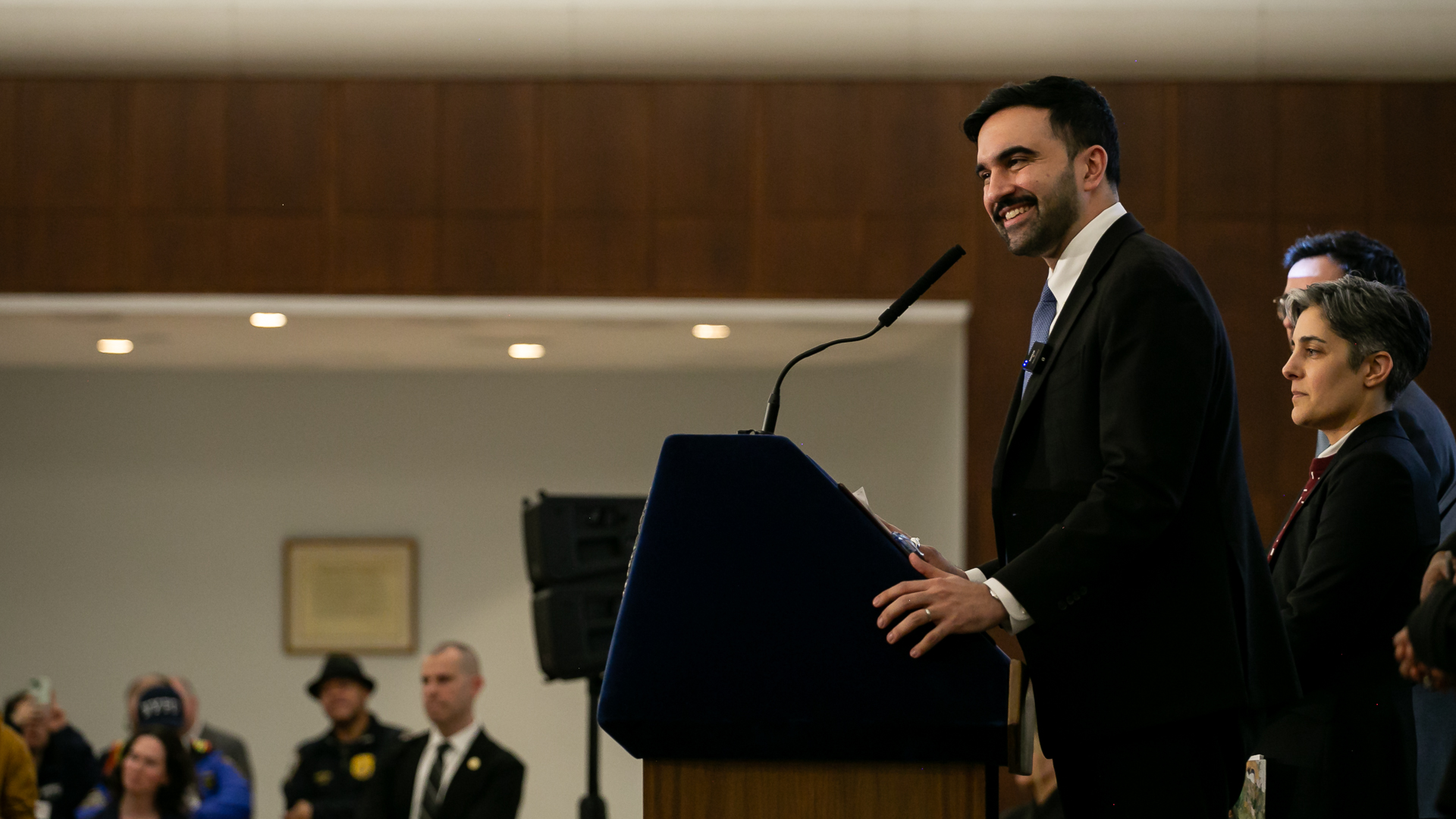 Mayor Zohran Mamdani addresses the crowd at his Rental Ripoff hearing in the Bronx Wednesday night. (Adi Talwar/City Limits)
Zohran Mamdani, who campaigned on being a mayor for tenants, was greeted with raucous applause as he spoke at the city’s “Rental Ripoff” hearings in the Bronx this week.
The hearings have been an opportunity for New Yorkers in each borough to voice their concerns about their landlords and how the city responds to issues like mold, heat outages, and more.
“Tenants’ rights have been a defining priority of this administration from our first day,” said Mamdani. “These are not just listening sessions for me to hear and then move on to know that this is a problem. These are sessions where we want this to shape the actions that follow. We want this to guide the policies and the practices of New York City government.”
But the mayor also made a point to strike a different tone on the city’s public housing agency, NYCHA. NYCHA tenants had been critical of the hearings, which officials said would be focused on private landlords, not the public management of the city’s housing agency.
The mayor invited NYCHA tenants to give testimony: “For far too long, NYCHA residents have been dismissed, have been neglected… if you are a NYCHA resident, we want and welcome your stories at the Rental Ripoff hearing,” said the mayor.
 Mayor Zohran Mamdani addresses the crowd at his Rental Ripoff hearing in the Bronx Wednesday night. (Adi Talwar/City Limits)
“I think there’s been a change in their posture,” said Dr. Jessie Fields, a community doctor and advocate for NYCHA.
Outside before the hearing, protesters from the group Save Section 9, which pushes for increasing funding to traditional public housing, criticized that approach.
“When the administration was campaigning, they spoke a lot about public goods for the public good, and for us that’s something that aligns with Section 9 public housing,” said Ramona Ferreyra.
Cynthia Tibbs, right, protesting outside the mayor’s Rental Ripoff hearing in the Bronx alongside other NYCHA tenants and advocates. The group opposes plans to convert more NYCHA properties to private management. (Adi Talwar/City Limits)
Two and a half months in, the administration’s plans for NYCHA remain unclear—though officials recently came out in support of a plan for the Fulton-Elliot and Chelsea Houses on the West side of Manhattan. Units there are being converted from Section 9 to Section 8, and developers will demolish the existing NYCHA buildings to replace them with new ones, while also adding market-rate and affordable housing.
The program, called PACT, allows NYCHA to access new money for rehabilitation but requires switching to a private manager and Section 8 vouchers—a controversial change for some residents.
“We are here today to protest and to insist that there’s a moratorium put into the PACT program. The PACT program has done nothing but displace tenants,” said Cynthia Tibbs, president of the WSUR Brownstones development on the Upper West Side.
Officials told City Limits last month that testimony from hearings will help inform the city’s housing plan and recommendations.
Linda Seward testified to the mayor directly about the heat outages and mold issues in her Morris Heights apartment. “For somebody to spend their time—the mayor of the city—just to sit down and talk to the tenants, or let the tenants talk to him. It means a lot,” Seward said.
Jasmine Williams attended the Rental Ripoff hearing in the Bronx. (Adi Talwar/City Limits)
Other tenants, like Jasmine Williams, hoped the hearings would result in more accountability for their landlords.
Williams, 39, works as an EMT and said that she was displaced because of the poor conditions at her apartment in Morris Park, and has been living in a women’s shelter in Manhattan since the fall.
“I want people to understand that this not only takes a toll on you just financially, but it takes a toll on you, PTSD wise. Everything you knew and loved is now gone,” said Williams.
The crowd at the Bronx Rental Ripoff hearing Wednesday night. (Adi Talwar/City Limits)
Landlord groups were also critical of the hearings, which they say blame owners for state regulations that make it difficult for landlords to finance repairs at older rent stabilized buildings.
“Renters shouldn’t have to live in bankrupt buildings, but that is what is happening to tens of thousands of people in the Bronx because of government actions,” said Kenny Burgos, CEO of the landlord group New York Apartment Association.
Two more hearings in Manhattan and Staten Island are scheduled for the coming weeks.
Here’s what else happened this week in housing—
ICYMI, from City Limits:
A report from State Comptroller Thomas DiNapoli highlights ongoing repair issues, vacancies, and mismanaged funds in the city’s revered middle income Mitchell-Lama housing developments. But determining who is responsible gets complicated.
The city’s small businesses, too, are being squeezed by rising real estate costs. “Politicians who say they will do something, but they have been saying that before I got my store,” said Juan Dela Cruz, owner of 77 Ave D Deli, where his rent has climbed to more than $11K a month. “And things are still getting worse, so you do the math.”
For years, tenants at NYCHA’s Redfern Houses in Far Rockaway have battled dust from a construction recycling facility across the street. Now they hope for relief under a 2023 state law meant to address the concentration of industrial sites in low-income communities and communities of color.
ICYMI, from other local newsrooms:
The City Council is looking to update and revive the Third Party Transfer program, which allows the city to seize properties from negligent landlords in order to make repairs, Gothamist reports.
After being rescheduled several times because of the extreme cold, officials and volunteers canvassed the streets this week for the annual HOPE count, which surveys the number of street homeless New Yorkers, The City reports.
Gov. Hochul and the State Senate support proposals to cut red tape for developers and give tax breaks to affordable housing operators, New York Focus reports. Will the Assembly get on board?
The New York Times examines the city’s efforts to convince homeless New Yorkers who are wary of the shelter system to come indoors.
Residents are pushing back on a plan to bring a large battery storage facility to Addisleigh Park, a historic Black enclave in Southeast Queens, City and State reports.
To reach the reporter behind this story, contact [email protected]. To reach the editor, contact [email protected]
Want to republish this story? Find City Limits’ reprint policy here.