
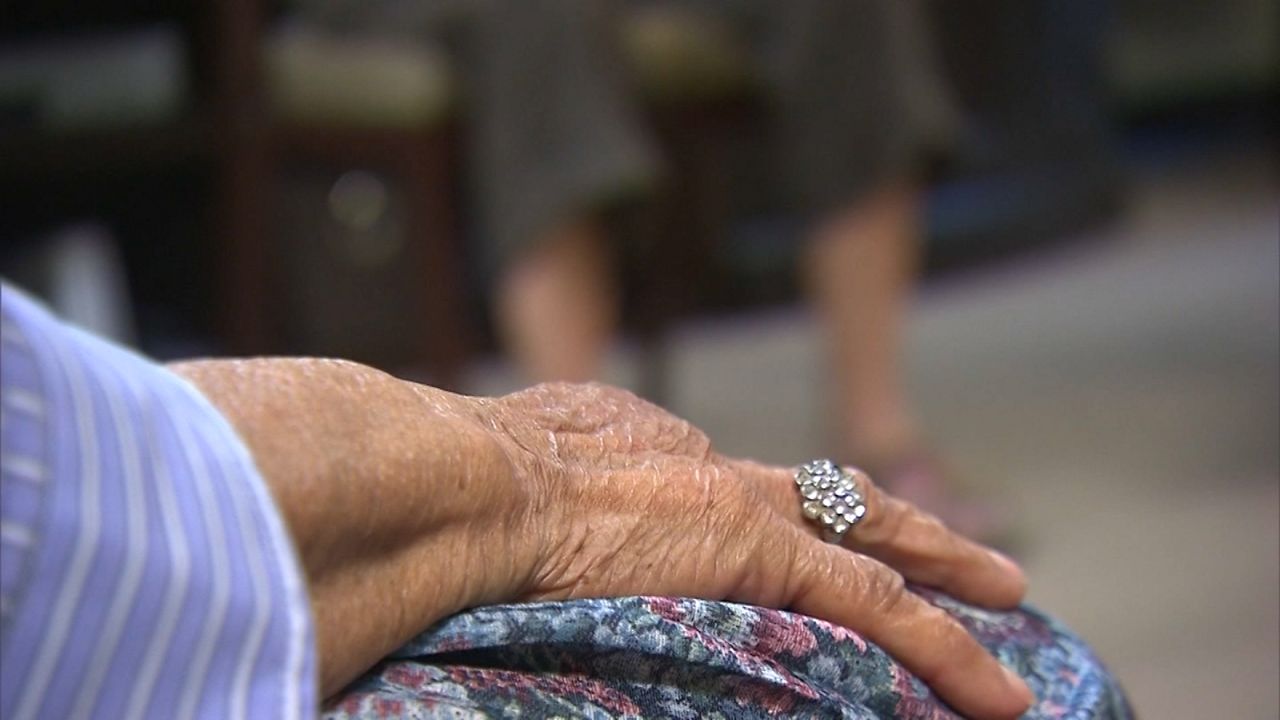
Senior advocates in New York say caring for the elderly is a part of the affordability crisis that needs more attention from state lawmakers.
There’s a call for the state Legislature to expand the current budget of the Special Needs Assisted Living Residence Voucher Program beyond its current $7.75 million budget.
“Now my mother is in memory care,” said Lisa Newcomb, the executive director of the Empire State Association of Assisted Living. “A wonderful place. We sold her house to pay for the care. She has about two years left of her own funds.”
Newcomb speaks from experience when she shares the story of her mother Sally Dillon’s journey with Alzheimer’s and the financial responsibility to pay for care.
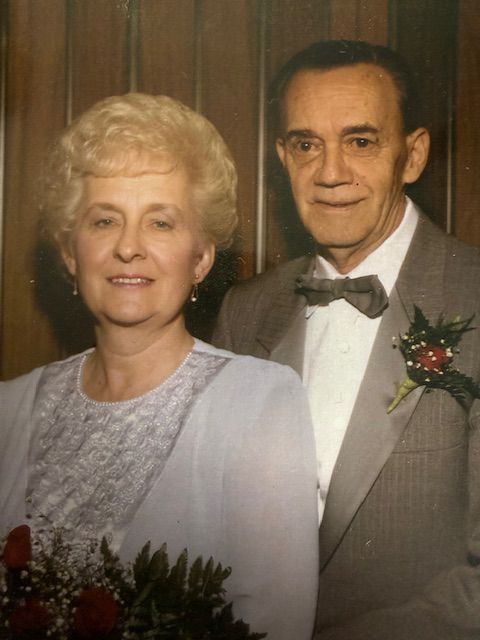
Sally Dillon pictured with her husband. Her daughter, Lisa Newcomb shares her mother suffers from Alzheimer’s. As the executive director of the Empire State Association of Assisted Living, Newcomb is advocating for a budget expansion of a voucher program that helps seniors with Alzheimer’s receive in-home care. (Courtesy of Lisa Newcomb)
“I am hoping that this will be available for her if she is still living, but there’s no guarantee, and we need more funding for it,” Newcomb said.
As executive director of the Empire State Association of Assisted Living, Newcomb is advocating that the program’s budget be expanded to $15 million.
With the program’s current $7.75 million budget, the breakdown is nearly $646,000 a month. The average cost of assisted living memory care is $7,263 if paid privately. This is compared to $8,587 if paid by Medicaid for a senior with memory care to be put in a nursing home.
This is according to the Empire State Association of Assisted Living.
“Memory care is not paid for by Medicaid in assisted living,” said Newcomb.
Newcomb said currently, there’s an estimated 139 New York residents who are benefiting from the program which allows them to receive at home care. There’s an estimated 129 still on a waiting list.
In the program, the state pays 75% of care cost with the remaining 25% left to the families.
As seniors live longer, Diane Darbyshire, Vice President for Advocacy and Public Policy at Leading Age New York, said the voucher program needs to rise to the demand.
“Based on the research from the Alzheimer’s Association, we can expect that the incidents of Alzheimer’s is only going to grow,” said Darbyshire. “So, while we’re interested in meeting the need for present day it’s really important to think about the future too.”
To illustrate the need, the National Institutes of Health ranks New York second in the nation for the likelihood of seniors over 65 developing memory loss.
The latest Census data shows New Yorkers age 65 or older make up about 18% of the state’s population or about 3.6 million people.