
Mayor Mamdani, return these spaces to the people.
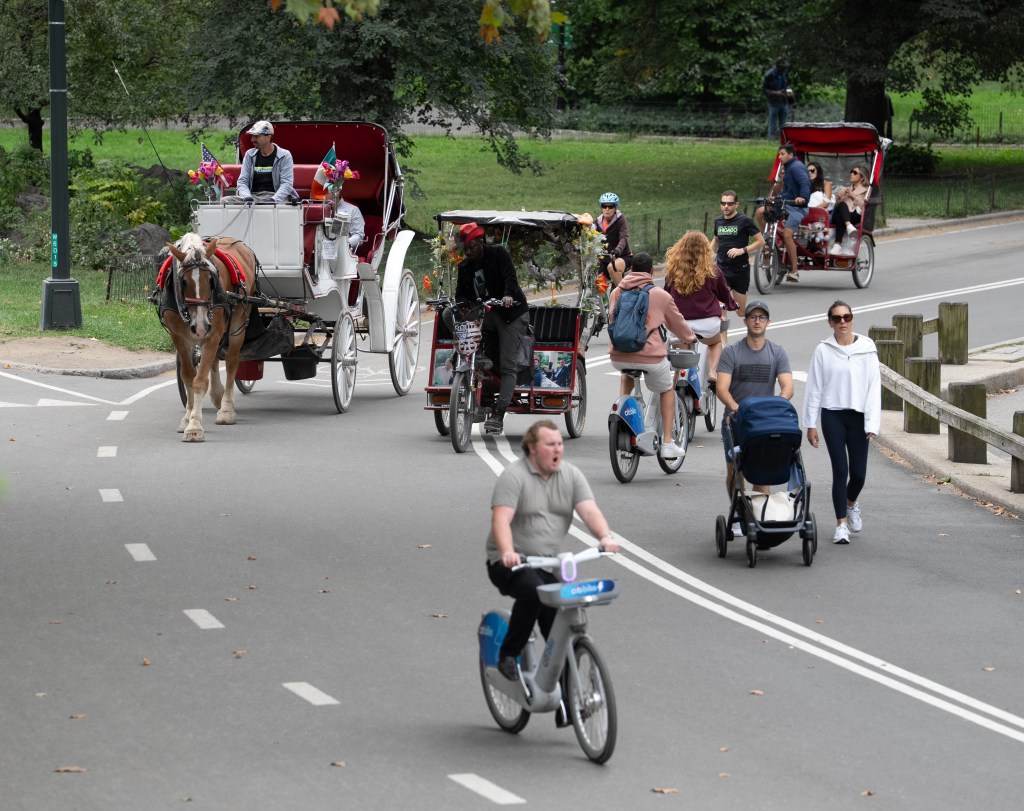
Among former Mayor Eric Adams’ parting gifts to conservative elected officials was allowing cars back onto park roads in Forest Park in Queens and Staten Island’s Silver Lake Park. Both roadways had been made into car-free park space in 2020 when the city launched the Open Streets program. Prospect and Central Parks fully banned cars in 2018, following decades of public pressure and incremental traffic reduction.
The Forest and Silver Lake Parks car-free roads were popular enough to turn out significant organized opposition to Adams’ restoration of traffic. Sizable protests took place in both parks, and petition drives favoring car-free roads garnered around 1,000 signatures each. Adams didn’t care: he was mostly interested in favors for political allies who embrace car access over other priorities.
The protests were no surprise: the places New Yorkers flock to more than any others are those we separate from the impacts of heavy motor vehicle traffic: Central and Prospect Parks, Astoria Park’s waterfront, the West Side Greenway, Rockefeller Plaza and more.
One of us is old enough to remember being called a “zealot” by a city parks commissioner for urging a car-free Central Park in the 1990s. But who now calls for heavy traffic to be returned to the heavily used loop drive, or to any other of our very heavily patronized car-free spaces?
Mamdani has said he wants more data on the issue. But the key points are already obvious:
The car-free park roads in Silver Lake and Forest Parks functioned without problem for more than five years. As recently as November, NYC Department of Transportation told Queens Community Board 9 that the car-free Forest Park road did not worsen congestion and had improved safety, and Parks described it as “well used.” The Silver Lake change was implemented by City Hall with no lead time for analysis, indicating it was a purely political move with no factual case.
Meanwhile, cars continue to spatially overwhelm the city. More than three-quarters of street space — most of our public space — is given over to driving and parking cars, local fights over new bike lanes notwithstanding. Why perpetuate this problem in city parks — our best refuges from the danger, noise and congestion of city streets?
Beyond Forest and Silver Lake Parks, a city that is ambitious about parks and space for people should develop policies to further reduce driving and better serve cycling and walking in and to parks. There are still unneeded roadways in major parks such as Flushing Meadows, and the Parks Department has never shown leadership on the issue.
Mamdani and his DOT commissioner, Mike Flynn, have said they aim to create city streets that are the “envy of the world,” that safely accommodate the varied ways New Yorkers use them, whether walking, cycling, bus riding or driving. But heavy car traffic on park roads is neither appropriate nor safe, and nothing to envy. We’ve already proved that in Central, Prospect and Astoria Parks.
The mayor has also called city parks an antidote to our concrete-filled city that “are truly accessible and affordable to each and every person who calls the city home.” Returning car traffic to Silver Lake and Forest Parks reduced and degraded this affordable antidote. Car traffic in our parks needs to end. It’s time to move ahead and fully devote our parks to people.
Orcutt is a long time transportation reform advocate and was NYC DOT’s policy director from 2007-2014. Park Price is advocacy and policy director at New Yorkers for Parks.