
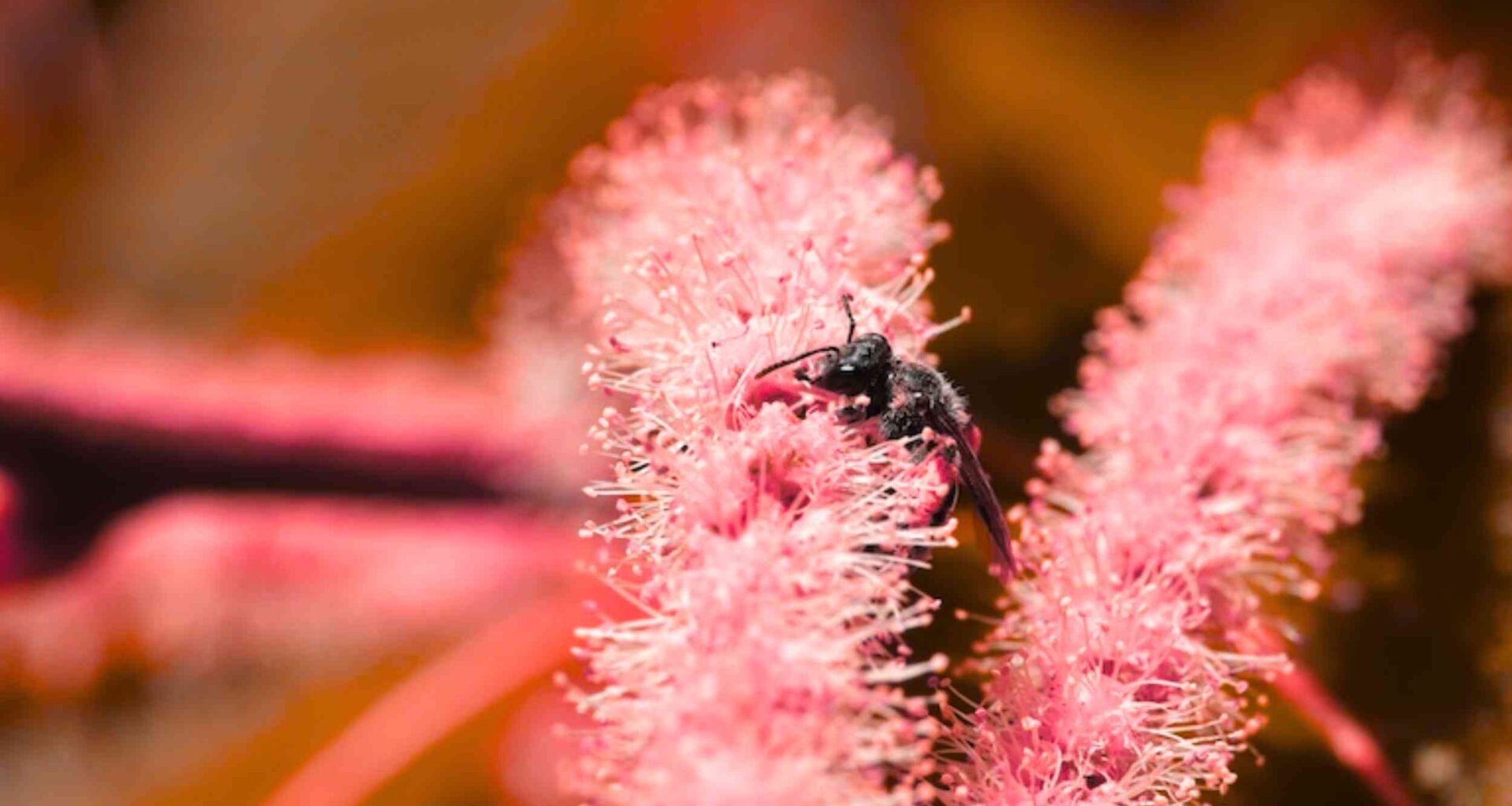
Researchers have documented a rare chestnut mining bee in Central New York, establishing the first confirmed population ever recorded north of the Hudson Valley.
The finding extends the known range of a species long believed to have disappeared from the state and reconnects it to landscapes where chestnut trees are returning.
Discovery in New York

In a Syracuse orchard lined with flowering chestnut trees, two tiny bees supplied the evidence behind the surprise.
At the SUNY College of Environmental Science and Forestry (ESF), pollinator ecologist Molly Jacobson collected the bees in July.
Because Jacobson found the insects in Central New York, the record marked only the second known population in the state.
That location also showed the bee surviving in city plantings, not just in the southern arboretum where it reappeared first.
A long absence
For more than a century, New York had no confirmed record after the bee’s last documented appearance in 1904.
After that silence, a 2022 state assessment treated the species as possibly extirpated, gone from New York but not everywhere.
Before Syracuse entered the picture, Jacobson had already rediscovered the bee in 2023 in Westchester County, just north of New York City.
Now the Syracuse find pushes the known New York range beyond the Hudson Valley and complicates the idea of disappearance.
Life with chestnuts
Andrena rehni, the chestnut mining bee, lives alone, not in a hive, and females dig nests in soil where their young develop.
Instead of gathering pollen from many flowers, it depends on chestnuts and chinquapins, close tree relatives that bloom briefly.
Across New York, state records say adults have been seen from April through June, so their seasonal window is short.
That tight schedule leaves little room for missed blooms, lost nesting ground, or years when weather turns against them.
Collapse of chestnut forests
Chestnut blight broke the link between this bee and a tree that once shaped eastern forests.
Once common enough to dominate some eastern forests, American chestnuts fell so fast that mature trees are now extremely rare.
Because the fungus kills everything above the infection point, trees resprout from roots and often get infected again.
When the blossoms disappeared, a bee tied to chestnut pollen lost the food source that had shaped its life.
What the orchard offers
Around the Syracuse site, ESF’s chestnut project maintains American chestnuts alongside hybrids and other chestnut relatives in one managed space.
There, different tree types bloomed close together, giving the team a rare chance to compare which flowers the bee used.
That opportunity mattered because the bee could persist near people only where the right trees and nesting ground overlapped.
Clues in pollen
During the 2023 orchard survey, the team recorded 66 visiting species and checked pollen from 49 insects across six families.
Every Andrena rehni specimen carried only chestnut pollen, which showed the bee was not merely passing through.
Honeybees, bumblebees, sweat bees, longhorn beetles, and soldier flies also carried chestnut pollen, some deliberately and some by accident.
That mix of visitors suggests chestnut flowers drew more pollinating help than people once assumed.
Mystery of nesting sites
No one has found a nest, so the bee’s most basic daily life remains hidden.
“We still know very little about the ecology and biology of this bee,” Jacobson said.
Future work could test whether females will use non-native chestnut trees and where they place their young underground.
Those gaps complicate protection because scientists still do not know where a rare species nests.
Risks beyond flowers
Beyond blossoms, ground-nesting bees need open soil, nearby nectar, and safe routes between feeding and nesting places.
Warmer winters can reduce bee numbers, and solitary bees often handle drought poorly when spring conditions turn dry.
Pesticides, habitat loss, invasive pathogens, and roads can also chip away at already thin populations.
Even a well-kept orchard cannot save the species on its own if the surrounding landscape keeps getting harder.
Restoring lost links
Restoration is part of the story because chestnut recovery may also bring back insects that depended on chestnut flowers.
At ESF, researchers are developing blight-tolerant American chestnuts meant for eventual return to eastern forests.
Because Andrena rehni followed chestnut flowers into orchards, the bee now offers one living sign of what tree recovery can restore.
That does not prove full ecological recovery, but it does show that rebuilding a tree can rebuild relationships around it.
A fragile comeback
Seen one way, the Syracuse bee is not only a rarity but evidence that damaged ecological links can reopen.
Future surveys, nest searches, and chestnut plantings will decide whether this comeback stays local or spreads across New York.
The study is published in Northeastern Naturalist.
—–
Like what you read? Subscribe to our newsletter for engaging articles, exclusive content, and the latest updates.
Check us out on EarthSnap, a free app brought to you by Eric Ralls and Earth.com.
—–