
 5 min read
In London, few restaurateurs loom larger than Jeremy King.
For decades, alongside his longtime business partner Chris Corbin, he helped define the city’s restaurant culture, creating institutions such as The Ivy and Le Caprice—rooms where theater stars, politicians, and society regulars mingled over polished service and quietly confident cuisine.
More recently, King has returned to opening restaurants of his own, launching The Park in Bayswater in 2024 and the European-inflected Arlington in Mayfair. He was also the original force behind The Wolseley on Piccadilly, long considered one of London’s most glamorous dining rooms.
Now, nearly two centuries after it first opened, another London landmark is returning. In March 2026, King will reopen Simpson’s in the Strand at 100 Strand, reviving one of Britain’s most storied dining rooms, where diners once included Charles Dickens and King Charles.
 Dave Benett//Getty Images
Jeremy King, restaurateur and founder of The Ivy and Le Caprice
The restored space will include two bars—Simpson’s Bar and Nellie’s—and two restaurants, the Grand Divan and Romano’s, along with a small ballroom, the Assembly Room. The Grand Divan will again feature the restaurant’s famed tableside-carved roasts, while Romano’s will offer a more relaxed dining experience.
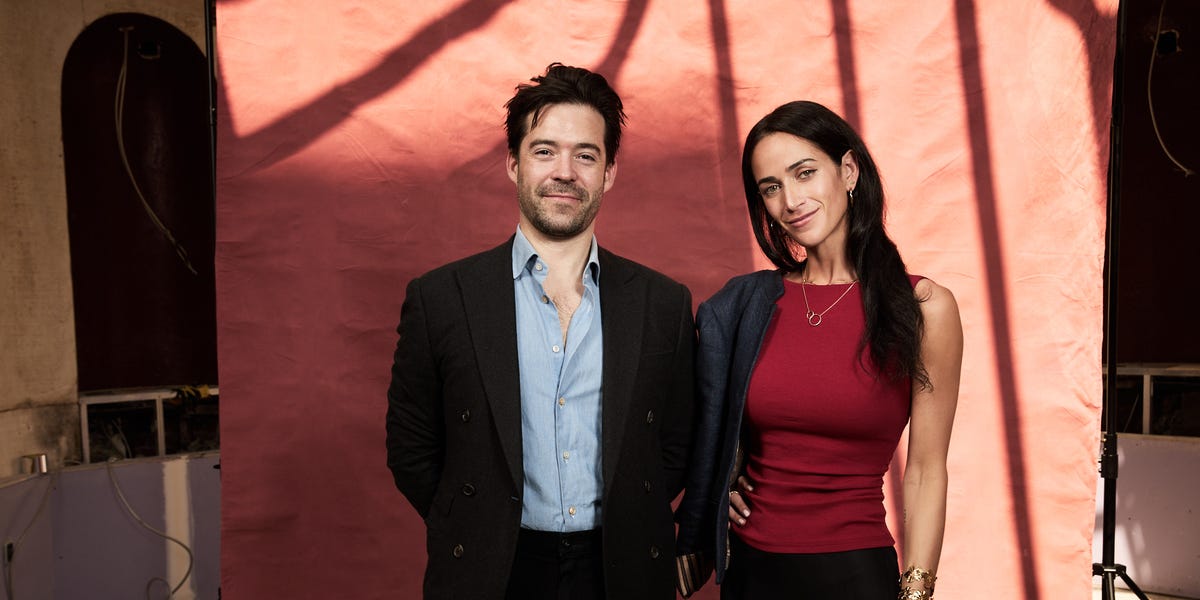
But King’s influence today stretches far beyond London—and into the next generation. Across the Atlantic, his daughter, Margot Hauer-King, is carving out her own hospitality story in New York with People’s, the downtown cultural salon she co-founded with Emmet McDermott.
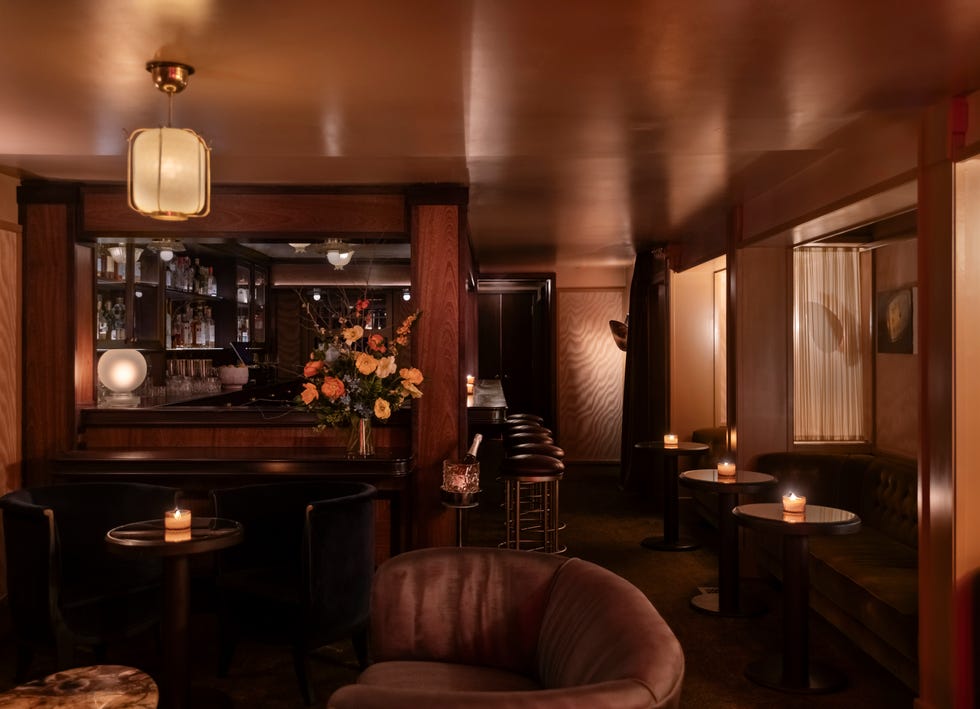
Inside the salon of People’s in New York City.
The Legacy of a Dish
Recently celebrating its first anniversary, the space has quickly become a quietly magnetic gathering place for artists, financiers, performers, and downtown regulars alike—an eclectic mix that would feel familiar to anyone who has spent time in one of King’s dining rooms.
This January, that family connection came full circle. People’s hosted a pop-up menu paying homage to Jeremy King himself, offering guests a taste of two of his most beloved dishes. The idea began as a tribute from Hauer-King and McDermott—and turned into something more personal.

Jeremy King on a Facetime call with Margot and Emmet.
“Well, when you suggested the idea of that little tribute,” King told his daughter over FaceTime, “I considered it a very heartfelt tribute from you, because you and Emmett have done such an amazing job with People’s.”
The dishes themselves carry decades of history. One of them, Bang Bang Chicken, originated at Le Caprice under circumstances King still remembers vividly.
“Bang Bang Chicken came out of a terrible visit to a Chinese restaurant,” he recalls. “A lot of things in life—we learn from what other people perhaps do badly, but we see the potential. The more we see potential—whether it’s dishes, people, or even sites—that’s what makes us better.”
Another dish also eventually became a signature—The Scandinavian Frozen Berries—a detail King added after hearing about the fruit from someone who had worked with Sir Paul Smith.
“The pastry chef at the Caprice created a classic dish,” King says. “One that’s been eaten by some of the most interesting people in the world.”
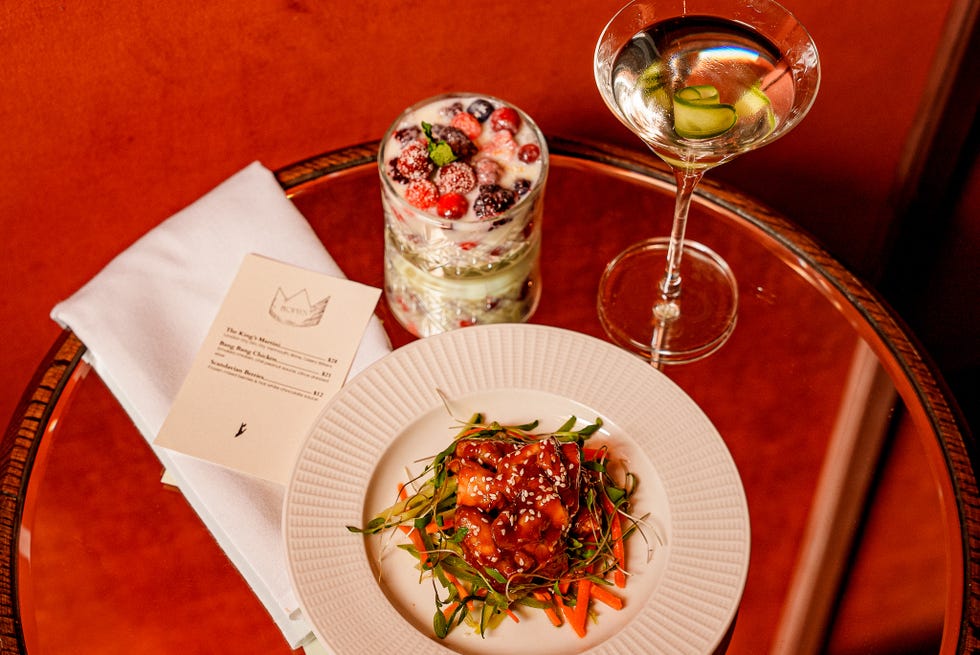 David Manrique
The King’s Menu at People’s.
Still, he admits there is a certain nervousness in handing it over. “There’s a real knack to it,” he says, laughing.
A New Generation of Hospitality
At People’s, the dish has been gently reimagined. “We couldn’t completely copy it,” Hauer-King explains. “We had to have our own slight spin.”
Instead of presenting the Scandinavian berries flat with the sauce poured over, the People’s team experimented with a different plating, giving the kitchen creative freedom while preserving the spirit of the original.
“The dishes are fun,” she says. “Dad describes them as quietly confident and unassuming, and that feels very People’s. We never wanted to be showy—we want people to have fun.”
That philosophy echoes the approach she grew up around. “He always said to us when we were young: the most interesting person in the room is not necessarily the one spending the most money,” Hauer-King says.
When King first began opening restaurants in London, Hauer-King’s mother worked in theater, and the dining rooms were filled with actors and creatives alongside society figures. That mixture left a lasting impression.
At People’s, Hauer-King has recreated that same cross-pollination. “We have a real mix. What’s gorgeous is how much people know each other—or are getting to know each other.”
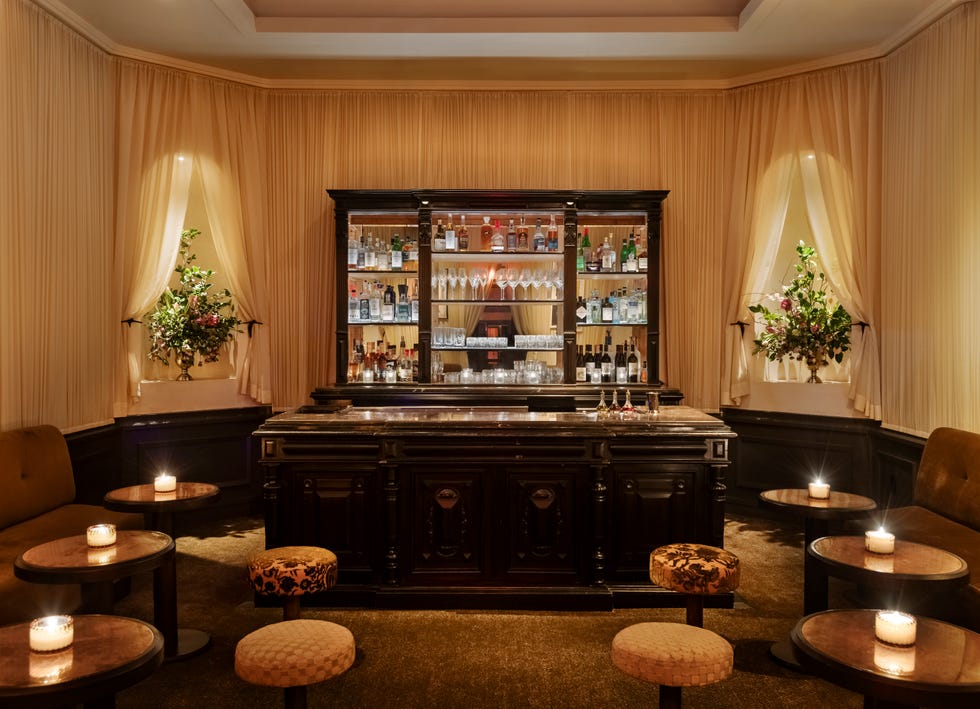
The Gallery room at People’s.
Rather than a traditional members’ club model,People’s operates through referrals and community connections, cultivating what feels less like exclusivity and more like a shared cultural ecosystem.
Reimagining New York Nightlife
For McDermott, the idea for People’s emerged from a sense that something had disappeared from New York nightlife. “When I moved back to New York from L.A., I had this acute awareness that something was missing,” he says.
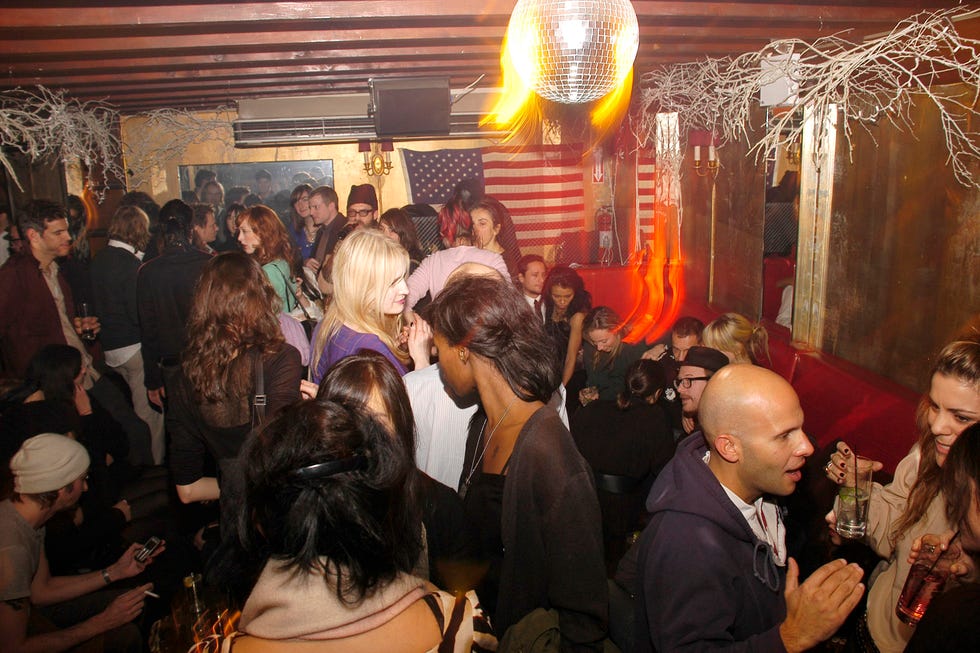 Patrick McMullan//Getty Images
A party at The Beatrice Inn on February 6, 2007 in New York City.
He had come of age during the era of legendary downtown spots like The Beatrice Inn and Bungalow 8—rooms that drove the city’s social life in the early 2000s. “There was Rose Bar as well,” he adds. “These places really defined New York for a long time.”
The pandemic accelerated their disappearance. But when McDermott met Hauer-King, the idea of building something new began to take shape. “It’s not that we decided to do this,” he says. “In a way, it was already happening, and we were just in the right place.”
Art, History, and Community
The space itself reflects that sense of layered storytelling—it’s home to what used to be the first commercial art gallery in New York City, The Downtown Gallery, by Edith Halpert. “This year is the centennial year of a gallery that used to be in this space,” Hauer-King explains. “It’s the reason we are a gallery.”
Working with curator Anne Parke, People’s rotates exhibitions from emerging artists and galleries, transforming the venue into a hybrid of nightlife destination and living art salon.
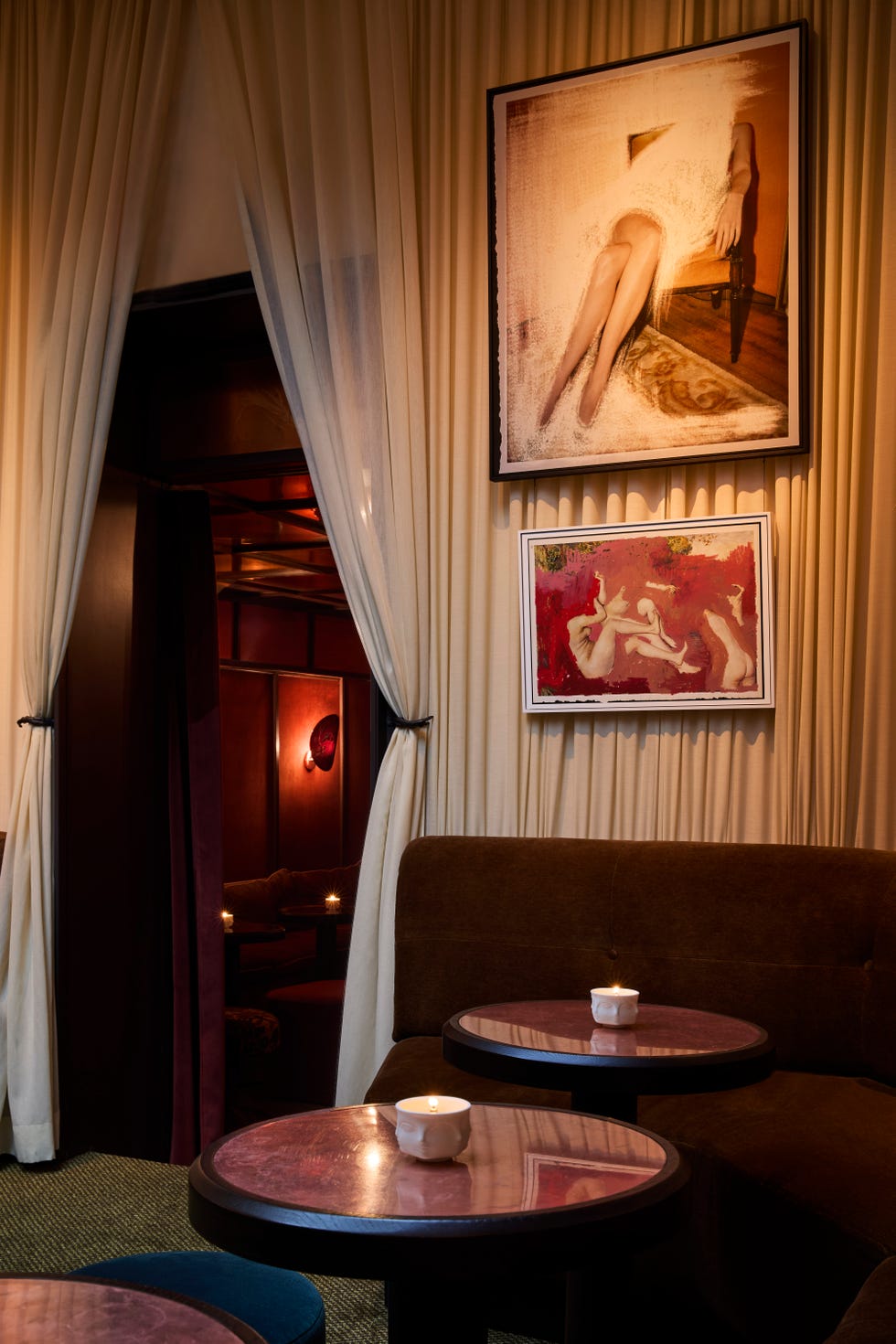
People’s used to be the historic Downtown Gallery in New York City. Today, it offers a collection of works curated by Anne Parke.
“We wanted to find these little pockets of opportunity to tell a story,” she says. “To honor history but also add something new.”
Even in a city with one of the world’s densest restaurant and bar scenes, the pair felt there was still room for reinvention. “It always feels ridiculous to say something was missing in New York,” Hauer-King admits. “I think New York is one of the top three cities in terms of restaurants and bars per capita.”
Still, People’s has managed to carve out a distinctive niche, partly by embracing an almost radical concept in 2026: privacy.
A Velvet-Rope Spirit—Without the Phones
Inside People’s, phones are discouraged. The policy is less about exclusivity than atmosphere. McDermott and Hauer-King wanted to recreate the kind of nightlife environment that flourished before social media turned every evening into a performance.
“In old-school velvet-rope New York nightlife, there were always interesting, cool people in the mix,” McDermott says. “Part of the freedom for them was that we didn’t all have social media out.”
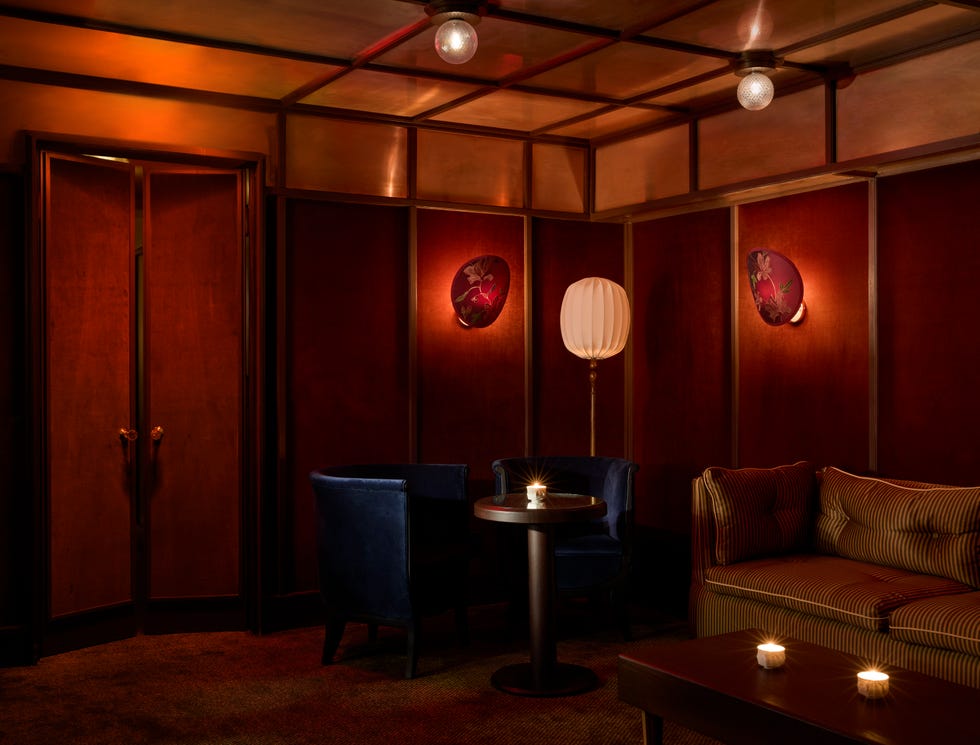
A look at the old-school velvet rope glamour at People’s.
The rule protects the eclectic crowd the venue attracts. “It would be cheeky of us to name names,” Hauer-King says with a smile. “But I will say—Jon Hamm loves a karaoke moment at People’s.”
Whoever you are, though, celebrity or newcomer, the philosophy remains the same. “If you’re in this community,” she says, “you’re part of it.”
Passing the Torch
For Jeremy King, watching his daughter build a new hospitality world of her own has been quietly gratifying.
“I love this transfer,” he told her during their conversation. “As one gets older, one sees the children become the adults.” With the reopening of Simpson’s in the Strand and the growing success of People’s in New York, the King family legacy now spans continents and generations.
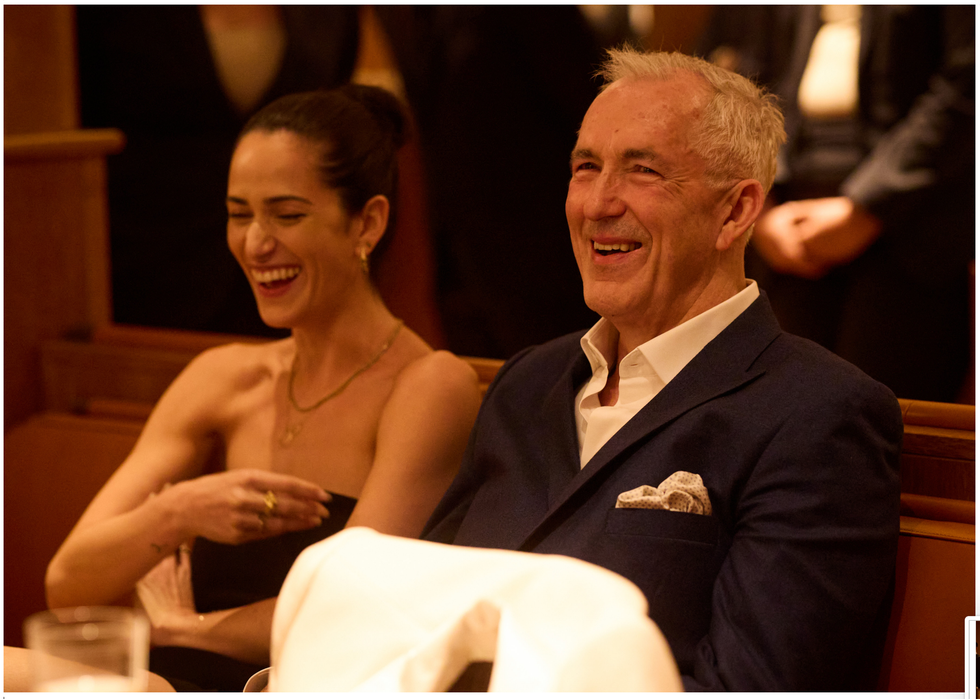
Jeremy King and daughter, Margot Hauer-King in 2014.
And if both father and daughter share one defining belief, it’s that restaurants are about more than food or glamour. “They want a good drink, they want to eat something nice, they want the room to be pretty,” Hauer-King says.
“But they’re coming for something more.” To create that, she adds, “you need to give them a story.”

Isabel McMahon is the social media editor at Town & Country. Previously, she ran socials for Women’s Health, where she won multiple Webby and Anthem awards. Follow her on Instagram @ismcmahon.