
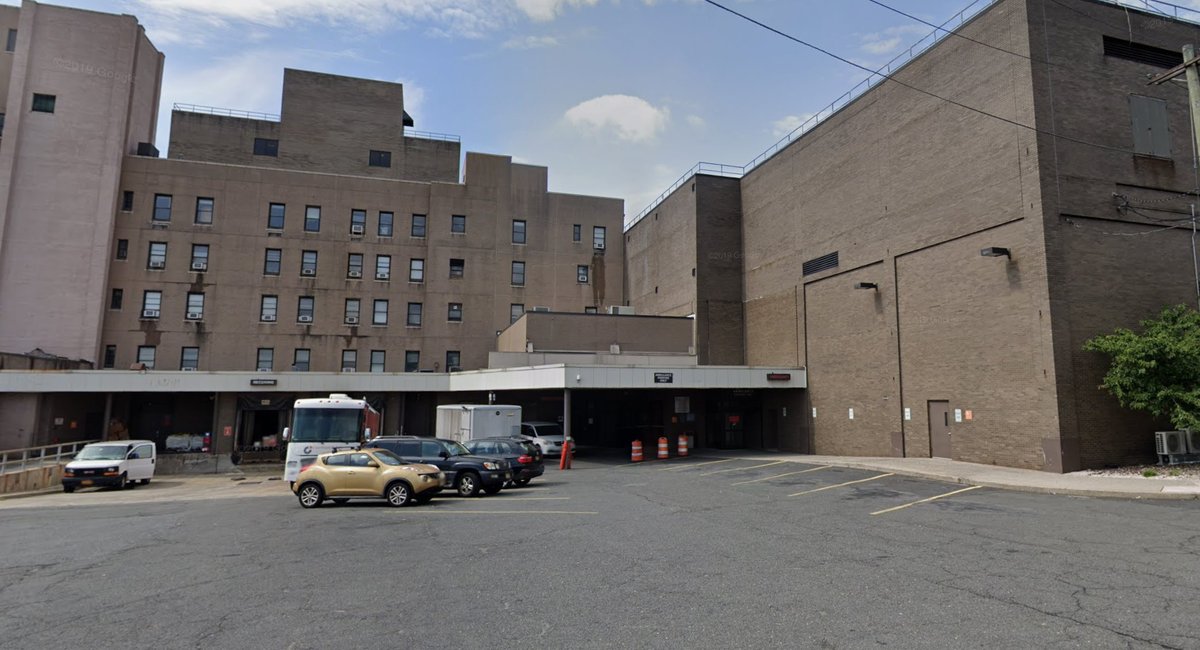
Jersey City has just one emergency room to serve its 300,000 residents following the closure of Heights University Hospital.
The hospital closed its doors for good on Saturday, despite weeks of outcry from local leaders and its nurses union. City officials sought a last-minute injunction to block the closure, but a judge denied that request.
Heights University Hospital, formerly called Christ Hospital, opened in 1872. Hudson Regional Health acquired the hospital last year and shut down most of its operations in November. The emergency department had remained open.
Hudson Regional Health has said it closed Heights University because the hospital’s deep financial troubles threatened the stability of the whole system. The operator said the hospital lost $74 million last year, and is projected to lose $30 million this year.
Hudson Regional Health had sought financial assistance from New Jersey and Jersey City, but spokesperson Vijay Chaudhuri said the company was told yesterday that neither were willing to put up public money to keep the hospital open.
“While this outcome is extremely disappointing, the decision was made to preserve the stability of the hospitals in the system and ensure the continued delivery of care within the HRH Hudson County network,” Chaudhuri said.
Jersey City once had three hospitals with emergency departments. Greenville Hospital closed in 2008. Jersey City Medical Center downtown is the only place in the city with an emergency department. Hoboken University Hospital may also fill some of the void left by Heights University’s closure.
State approval is needed to close a hospital in New Jersey. Hudson Regional Health has applied for that approval, but decided to close Heights University Hospital before receiving it.
Raynard Washington, New Jersey’s acting health commissioner, told state lawmakers on Thursday that Hudson Regional Health is “out of compliance” with state law.
“ We continue to work closely to identify all options available to us,” Washington said. “Certainly we do have enforcement tools within the statutes, and we’re prepared to use those tools.”
State authorities have not yet taken legal action to keep the hospital open, despite repeated requests from Jersey City and Hudson County leaders.
“Hudson Regional Health has routinely circumvented statutory and regulatory requirements throughout the process of closing Heights University Hospital, accruing tens of thousands of dollars in penalties owed to the State – which we intend to collect,” said Steve Sigmund, a spokesperson for Gov. Mikie Sherrill.
The governor is also planning to pursue legislation that would give the state more tools to hold health care facilities accountable, Sigmund said.
Jersey City filed an emergency injunction request in Hudson County superior court on Saturday, seeking a court order to keep the hospital open. That request was denied.
“We disagree with the ruling, but we respect it,” Jersey City Mayor James Solomon said. “What we will not respect is Hudson Regional Health’s conduct throughout this entire process.”
Solomon said the city is evaluating its legal options to reopen the hospital. That could include using eminent domain to take control of the hospital and its operations.
““The residents of Jersey City’s Heights neighborhood will feel the consequences of HRH’s decisions tonight. Longer ambulance rides. Fewer beds,” Solomon said. “The people in the Heights deserve better, and my administration is committed to restoring comprehensive, high-quality healthcare to the neighborhood.”
The health system’s request for public money comes as Jersey City currently faces a roughly $250 million budget shortfall, and as Gov. Mikie Sherrill has proposed a budget that reigns in state spending.
The nurses union HPAE has pointed out that Hudson Regional Health previously declared it was financially prepared to operate the hospital when it acquired it as part of taking over the bankrupt CarePoint system.
Hudson Regional Health has plans to redevelop the hospital’s property for residential use, but the City Council in December passed a zoning ordinance blocking such projects. Tom Zuppa, a councilperson representing the neighborhood, said the fight to reopen the hospital will continue.
“HRH will not hold the community hostage for luxury housing while showing such little regard for the health and wellbeing of our residents,” Zuppa said.
This story has been updated with additional reporting.