
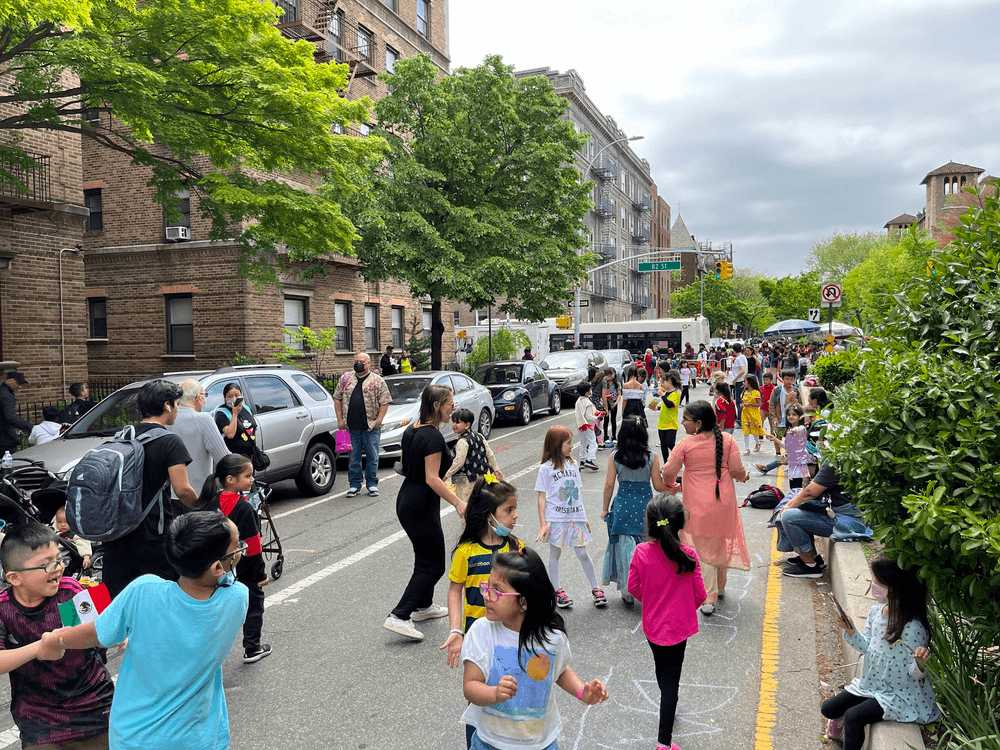
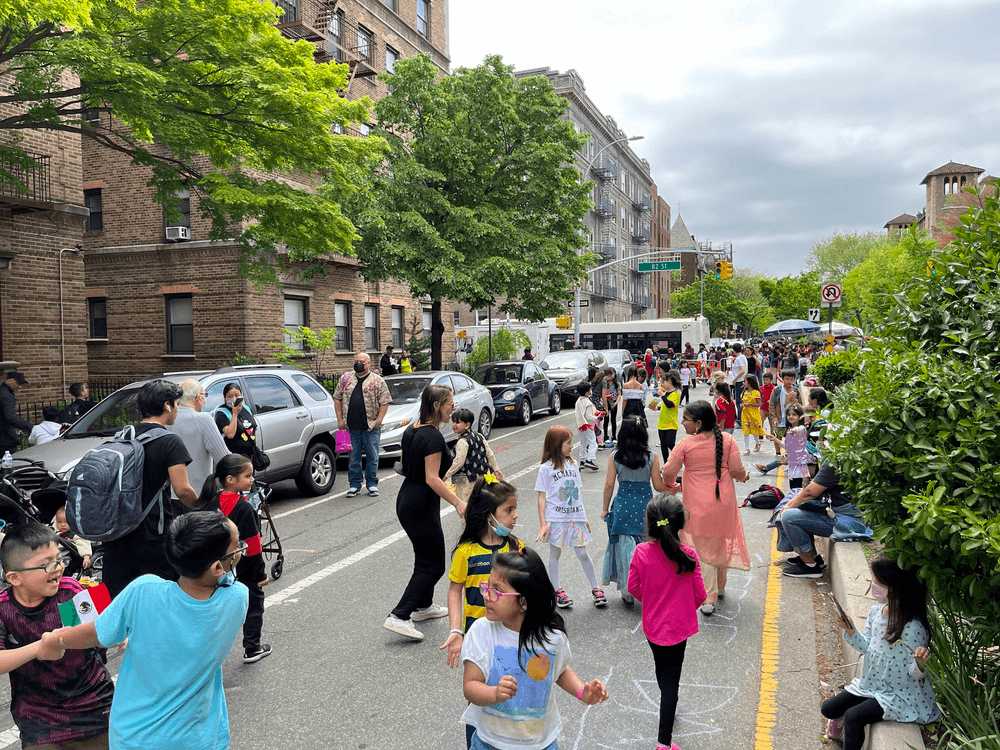
Courtesy of Open Plans and Transportation Alternatives.
Disability advocates cleared a legal hurdle in a lawsuit against the City of New York that claims the ongoing COVID-era Open Streets program violates the Americans with Disabilities Act (ADA).
Federal Judge Eric Komitee ruled in favor of the plaintiffs, a group called NYC Access for All, on March 10, after hearing oral arguments from both sides in October 2025. The decision means the case will proceed accordingly against the city.
“The motion to dismiss the claims against the city is denied,” the judge’s March 10 memo read.
Matthew Berman, an attorney for the plaintiffs, welcomed the decision.
“It’s obviously a positive ruling because the case is not dismissed and it gets to a court,” Berman said. “Most of the facts are not in dispute on what the program is—its hours of operation, the fact that it has various traffic-calming measures. Things like bike lanes, barricades. I don’t think there’s any real dispute that the city closes these streets.”
This marks a significant step in the lawsuit, which was filed in the U.S. District Court for the Eastern District of New York, also known as the Brooklyn Federal Court, on April 24, 2023.
The plaintiffs in the case are disabled individuals who live on or near affected streets open to local traffic. They claim that they do not have access to the streets because the city puts in place heavy physical barriers that the plaintiffs can not move. They also say paratransit and rideshare vehicles cannot enter streets closed for the program.
Open Streets ’empowers communities,’ city says
Some New Yorkers have called the program, which launched in 2020 during the COVID-19 pandemic as a way for locked-down New Yorkers to enjoy open-air space, “ableist, ageist and elitist.” The key reason? The city uses barriers and other heavy steel barricades that people with mobility issues cannot lift or operate to enter the open-space area.
Berman explained that many of his clients have trouble accessing paratransit and rideshare vehicles that cannot drive through a closed street. Generally, rideshare employers do not permit drivers to leave their vehicles, even if they have to get out to move a barrier. Disabled customers are often forced to meet paratransit and rideshare vehicles on the corners of open streets.
Although the city’s Department of Transportation (DOT), which manages Open Streets, did not respond to a request for comment, agency officials have historically touted the program as beneficial for the environment, due to vehicle restrictions, while also supporting the local economy.
“The program empowers communities to become stewards of their streets and reimagine them as valuable local assets,” the DOT website states. “These transformations allow for a range of activities that promote economic development, support schools, facilitate pedestrian and bike mobility, and provide new ways for New Yorkers to enjoy cultural programming and build community.”
Up next for the case
The next steps for the case include discovery, where both parties exchange documents, communications, witness testimonies and other evidence. In the meantime, it is possible the case can resolve itself, thus avoiding the courtroom.
“The parties are also working toward a negotiated solution in the meantime,” Berman said.
Judge Komitee, meanwhile, also requested further information regarding volunteers from third-party groups supporting Open Streets, as these individuals were included in the original filing.
The city provides three kinds of Open Streets: Limited Local Access, Full Closure and Full Closure: Schools. Locations and hours vary throughout the boroughs. In 2024, the DOT adopted rules to codify the Open Streets application process and program requirements, as well as clarify criteria for eligible program partners and corridors It also established a regulatory framework for how the program will be managed and operated.
amNewYork contacted the mayor’s press office for comment on the case and is awaiting a response.