
NEW YORK (WABC) — This Women’s History Month falls in the same year as the United States’ 250th birthday, marking the adoption of the Declaration of Independence. Part of that celebration is honoring the New York women who put their lives on the line back then so we could live ours today.
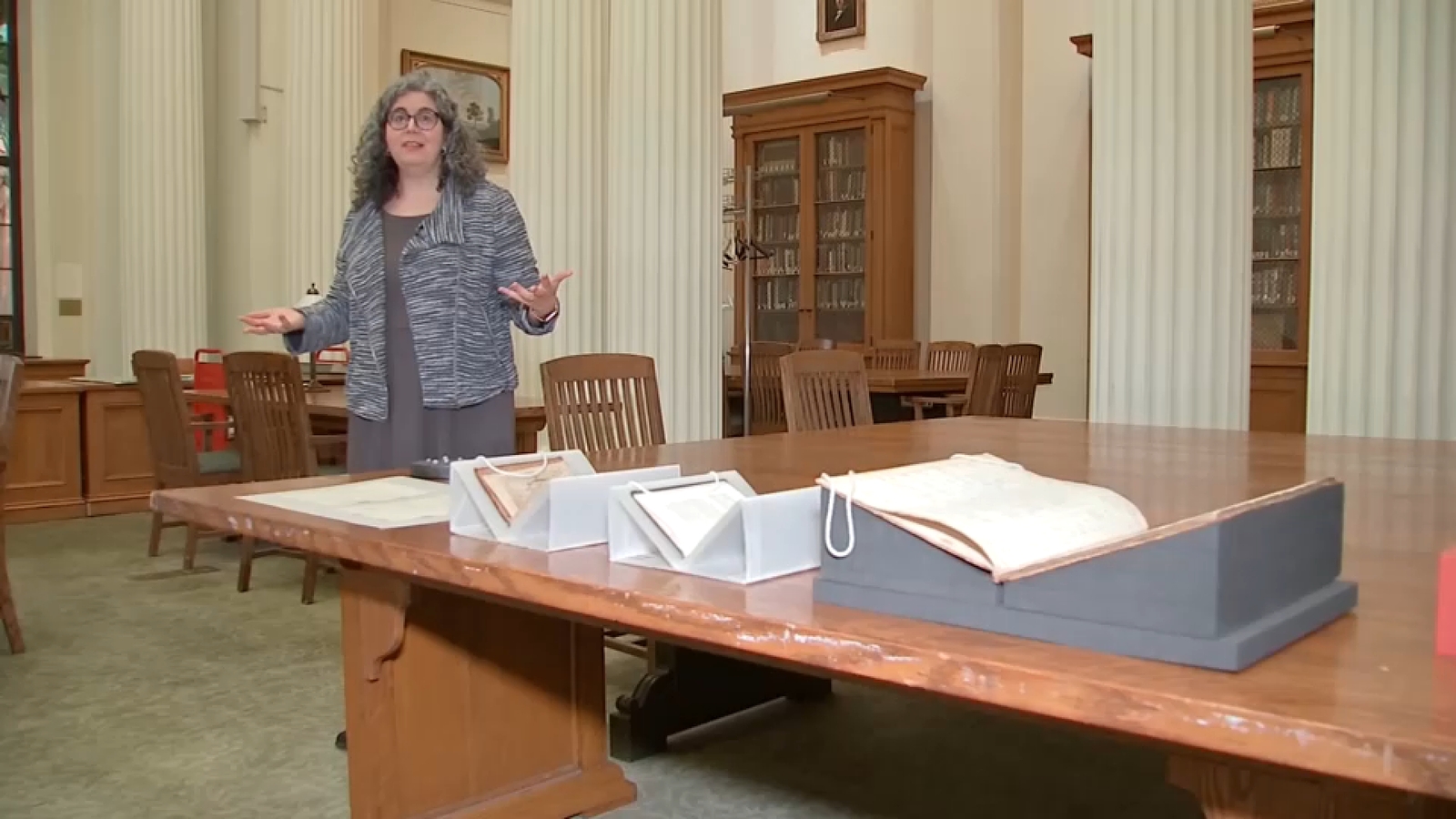
Hidden behind these walls are artifacts from both influential and unknown women that have helped change the world.
“Women here in New York did so many important things,” said Anna Danziger Halperin, director of the Center for Women’s History at the New-York Historical Society.
Danziger Halperin is also the curator of the museum’s upcoming exhibit called “Revolutionary Women.”
“Revolutionary Women is our take here in the center for women’s history’s on the 250th anniversary of the founding of this country,” she said.
The exhibit highlights the lived experiences of women before, during, and after the American Revolutionary War.
“These objects tell us about some of the many ways and here in the New York area whose lives were impacted by the revolution,” Danziger Halperin said.
Among the artifacts are small pistol balls melted down in the 1700s from the British King George III statue.
“Members of the Continental Army and members of the public destroyed the statue and the statue itself was taken to Connecticut and made into weapons ammunitions and it was women who turned that statue into pistols,” Danziger Halperin said.
The exhibit also highlights female bravery, like that of Deborah Sampson, a Massachusetts woman who disguised herself as a man to serve in the Continental Army.
“As Robert Shirtliff, Deborah Sampson fought for almost a year and a half for being injured,” Danziger Halperin said.
After the war, prominent abolitionist and women’s rights advocate Sojourner Truth shared her story while living in New York in the 1828 book, “The Narrative of Sojourner Truth.”
“In this 1828 book, Sojourner Truth tells us about her legal fights to keep her son from being enslaved to buy her own son’s freedom,” Danziger Halperin said.
Another lesserknown document on display is a pension granted to an Indigenous woman, powerful Mohawk clan mother Molly Brant, for her role in helping the British.
“What was more for her own and her people’s liberty was aligning with the British, not with the patriots,” Danziger Halperin said.
Another quietly kept item is a secret love poem written by a Patriot prisoner of war for the niece of a colonel on the opposing side.
“Akila Giles was carrying on a secret love affair with the niece of a loyalist colonel. Her name was Eliza Shipton,” she said.
Another lesserknown story is that of Rebecca Gomez, a prominent Jewish businesswoman during the war who operated a chocolate factory and shop near Wall Street. She sold the land that the Tontine House was built on, which later became the New York Stock Exchange.
“The book here is an account book from the Tontine coffee house which is the predecessor of the stock exchange so she was incredibly important to the financial backing of this institution,” Danziger Halperin said.
“There’s even more New York City landmarks tied to revolutionary women. The exhibit here opens in May and will run through October.
For more information, visit: https://www.nyhistory.org/exhibitions/revolutionary-women
———-
* Get Eyewitness News Delivered
* Download the abc7NY app for breaking news alerts
Submit a tip or story idea to Eyewitness News
Have a breaking news tip or an idea for a story we should cover? Send it to Eyewitness News using the form below. If attaching a video or photo, terms of use apply.
Copyright © 2026 WABC-TV. All Rights Reserved.