
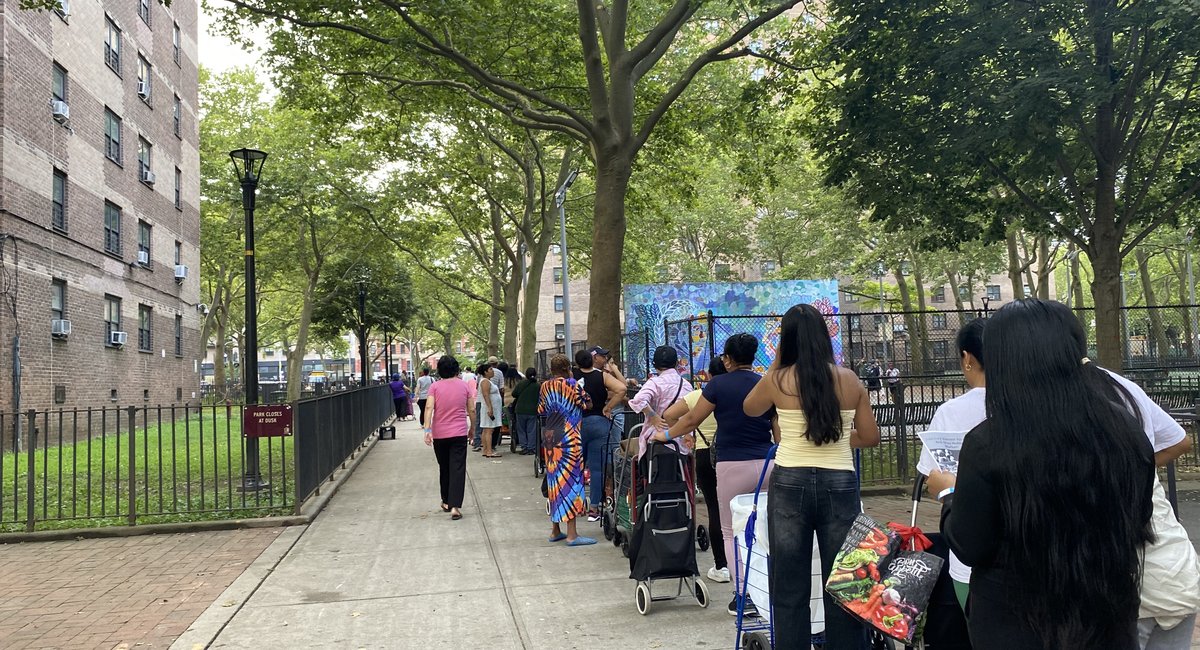
Nearly 2.2 million New Yorkers lived in poverty in 2024, a slight increase from the year before, while hundreds of thousands of others struggled to keep food on the table, pay their rent or have money left over at the end of the month, new numbers released by an anti-poverty group Monday show.
More than 1 in 4 city residents lived below the poverty line — twice the national average, according to the new data. Another third of the city’s population was considered low-income, or slightly better off in 2024, but still experienced similar rates of poor health and psychological distress.
That means most of the city — about 59% — were either considered low-income or in poverty in 2024. The yearly statistics were released by the anti-poverty group Robin Hood and Columbia University, and represent the highest totals since they began compiling data a decade ago.
Their report provides a snapshot of how many New Yorkers struggle to meet their basic needs and comes as the city prepares for cuts to two major federal programs: food assistance and Medicaid, which are expected to push even more people into hardship.
“New York City is on the brink of falling off a poverty cliff,” Richard Buery, Robin Hood’s CEO, said in a statement.
“Washington is threatening to pull away the very lifelines keeping millions of families afloat,” Buery said. “State and local leaders are being forced to make impossible choices to stave off the worst outcomes of an emergency they didn’t create. It’s critical that we all come together to support our neighbors in this moment of need.”
The food assistance program known as SNAP – the Supplemental Nutrition Assistance Program – helps about 1 in 10 recipients stay above the poverty line, but still leaves many recipients without enough food for the month, the report said. More than 60% of SNAP recipients run out of food before the month’s end.
It’s the third year that poverty rates rose in New York City after dropping in 2018, the report said. COVID-era government aid programs kept poverty numbers steady throughout the pandemic, but poverty rates began rising when those benefits ended in 2022.
The tracker measures poverty rates using more updated costs of necessities like food, clothing, shelter and utilities than national U.S. Census Bureau estimates. It defines poverty as a family of four living in rental housing, earning $50,283 a year.
The report found Asian and Latino New Yorkers were more than twice as likely to live in poverty as white New Yorkers. Black residents similarly accounted for disproportionately high rates of those living in poverty.
New York City’s poverty rates remain highest in the Bronx, where, in 2024, nearly 450,000 children were living in poverty.
The report warned the numbers could get worse. Robin Hood found cuts to SNAP could push another 70,000 New Yorkers into poverty every year beginning in 2028.
The cuts were part of President Donald Trump’s massive domestic policy legislation, which was approved last year by the Republican-led Congress.
The new laws combine permanent tax cuts, mostly benefitting high earners, with significant spending reductions, largely to safety net programs.
The overhaul of SNAP will force more people to prove they are working to keep their benefits and shift more program costs onto states.