
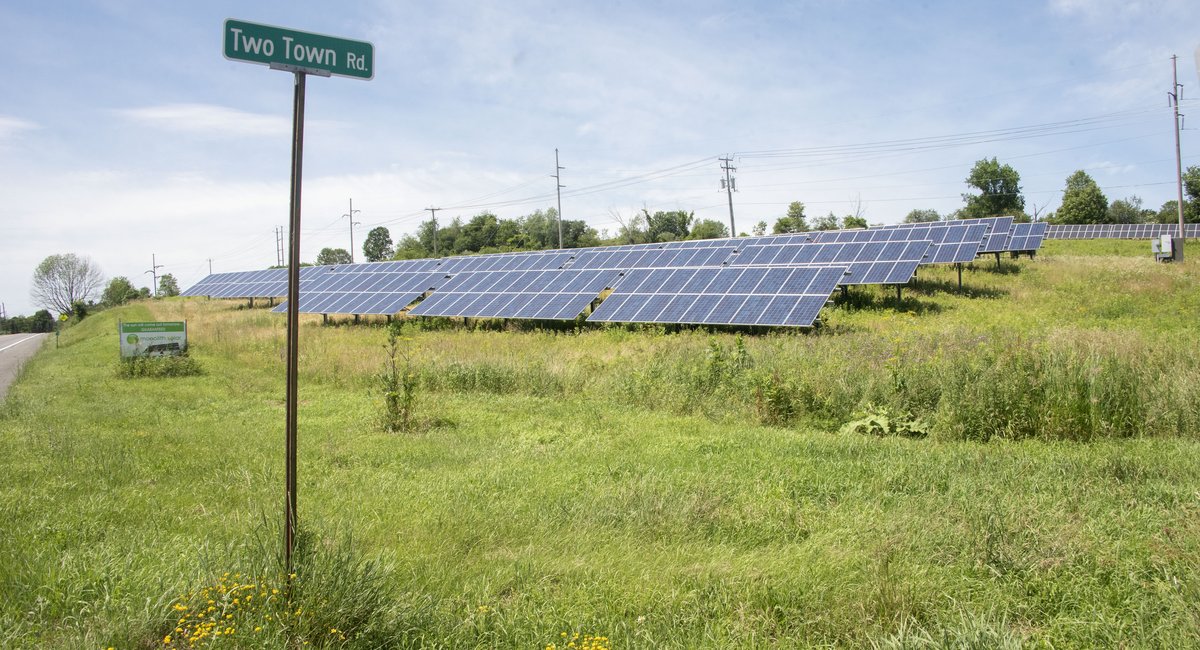
Renewable energy developers are at an impasse with the New York state government over rising construction costs tied to President Donald Trump’s tariffs. Enough power for more than 2 million households is in limbo.
The projects are fully permitted and ready to go, but they have not broken ground. Developers bid the contracts just before Trump took office. The tariffs increased project costs by as much as 30%, according to Alliance for Clean Energy New York, a nonprofit that promotes renewable power and has been speaking to developers. The alliance says the increased prices have made some contracted clean energy projects unviable. They include increases on steel from Canada, wind turbine parts from European countries and solar panels from Asian countries. The Alliance says developers are stuck with contracts they cannot execute, but that state officials won’t let them cancel to rebid,
“None of the contracts are financially viable anymore because of tariffs,” said Marguerite Wells, executive director for Alliance for Clean Energy New York. “For a renewable project to get built, it has to be in the black a little bit. It can’t be in the red. You just can’t get a loan for that, and so the projects remain unbuilt.”
More than two dozen solar and wind projects scattered across upstate New York, most with capacities exceeding 100 megawatts, are affected by the tariffs. Several of the developers contacted by Gothamist did not reply to requests for comment.
The developers have already gone through the difficult and time-consuming process of striking agreements with the New York State Energy and Research Development Agency, the government authority tasked with boosting the state’s clean energy. This includes siting projects, acquiring permits and undergoing environmental reviews. The remaining work on the projects is procurement and building, but tariffs are affecting this critical step. The towers for wind turbines require steel, which is imported commonly from Canada, which is levied with a 50% tariff.
Because these tariffs did not exist when the contracts were awarded, the bid prices don’t reflect the increased cost in steel.
If developers build these projects, they will do so at a loss, according to the Alliance for Clean Energy New York. Wells said that constructing clean energy designs unprofitably means that companies cannot secure loans to even build.
“This is just another example of Trump’s illegal tariffs raising costs and thwarting necessary green energy projects and job creators,” said Ken Lovett, senior communications adviser on energy and environment for Gov. Kathy Hochul.
Wells said the developers want to cancel the contracts and rebid them. But the New York State Energy and Research Development Agency, or NYSERDA, said last year it won’t agree to do so. Additionally, the unbuilt clean energy is eligible for the 30% tax credit that the government has since phased out. Developers have already secured the federal credits and moved forward with plans that depend on them, buying equipment and materials, Wells said.
“It would be a huge loss to New York State if those projects can’t actually move forward and use those tax credits, because it’s $3 billion worth of tax credits on the table,” Wells said.
If NYSERDA were to allow the terminations, the developers could rebid projects with prices that reflect the cost of the tariffs while holding onto the federal credits. But there is no mechanism in the contract that allows for renegotiations.
“NYSERDA expects its developers to honor their commitments,” agency spokesperson Deanna Cohen said. “The competitive bidding process is designed to protect consumers and result in fair and cost-effective contracts. NYSERDA intends to continue to protect ratepayers by holding contractors to the terms they agreed to.”
If renegotiation is not an option in New York, the companies can use their tax credits to build different renewable projects in different states, which means New York could lose out on about 3 gigawatts of clean energy. The grid that powers the New York City metropolitan area is heavily dependent on fossil fuels.
Wells said that the industry is bracing for more tariffs in the future, and the best way to handle the volatility is to forge contracts that can account for them.
”We hope they changed their minds because it’s a lot of value for New Yorkers,” Wells said. “ It’s just a loss to New Yorkers because it just means that electrons in the future that don’t have tax credits applied to them will get more expensive.