

Look, I know everyone’s been gushing about Resident Evil Requiem the past month, but me? I’ve been far more intrigued about Pragmata. Hot mid-50s Leon is one thing, but how about a game that’s all new and strange? Having spent a couple hours with the game, I think I’m right to be excited.
To say that Pragmata has remained enigmatic since its 2020 announcement might be a bit of an understatement. We went several years where the only news was of longer development, until our first hands on opportunities emerged through 2025 – an evolving slice of the game that has been remixed, expanded, and ultimately became the Sketchbook demo that was made public in December.
That gave us an early sense of what Pragmata really could be: an unusual mix of third person action game with astronaut Hugh wielding an array of guns, and a hacking puzzle game mixed in on-the-fly as the android Diana assists while riding backpack. The first challenge seemed like it would be the controls, but putting the directional inputs for the hacking puzzle on the symbol face buttons is almost effortless after the first couple goes, keeping your left thumb on the analogue stick for movement and your index fingers on triggers and shoulder buttons for dodging and locking to target. Once hacked, the robot enemy bodies open up to expose weak spots, calling on your to switch to Hugh’s main weapons and start blasting.
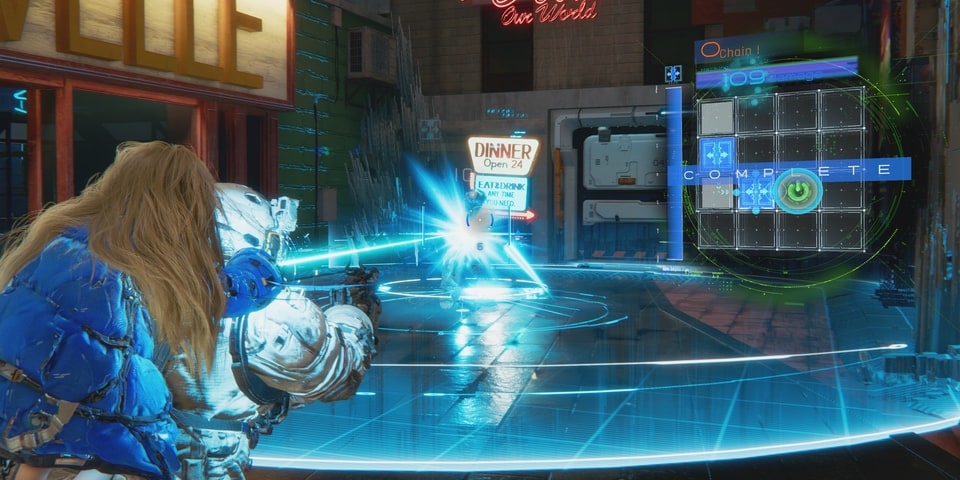
Still, it can get pretty darned hectic. New robotic enemies are sent by the rogue lunar base AI IDUS to assault Hugh and Diana, able to move faster, having different attack patterns, and on top of that having much broader hacking puzzle windows, and even hacking disruptor modules. If you’ve got to face off against multiple enemies together, you’ll be juggling your targeting priorities – here I did find a few occasions where the lock on would attach to a background enemy – and forced to move quickly and evade more.
There’s some wild new enemy designs that we encountered, so in addition to the humanoid bots and drones at range, there’s now some quirky wheel-like enemies, and then just a giant crawling bot that reminded me of an oversized baby. A baby whose face can open up to fire off lasers.
Just as the enemies grow in variety, so too do the hacking options. New hacking modules, such as a distributed hack that can spread the weakened effect to other nearby enemies, are added to Diana’s arsenal, and this adds to the complexity felt in the rapid puzzles. Charting your route through from start point to end gets trickier when considering if you want to use a particular hack module at that point, especially as they only have limited charges.
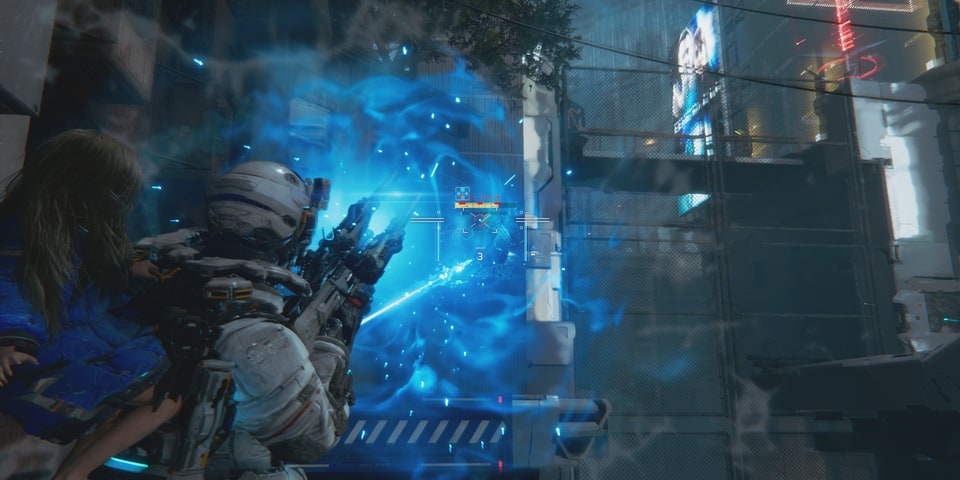
It’s a similar story for Hugh’s arsenal of weapons. Alongside the standard pistol, which rapidly recharges shots when not being fired, there’s a slot for a power weapon, more of a status effect weapon, and a utility. A new Charge Piercer rail gun can go in place of the shotgun, the Riot Blaster fires concussive blasts to knock enemies down in place of the Stasis Net to slow movement in an area, and we eventually got a Decoy Generator to lure enemies away from the real Hugh. Outside of the pistol, each comes with a very limited amount of ammo, forcing you to conserve resources, or swap guns when a loaded alternative appears. I didn’t really feel ammo starved very often – the main pistol is pretty good – but there’s definitely some thought that needs to go into how you tackle longer and bigger encounters. Even if they tend to have a bunch of pickups dotted around the arena, burning through more powerful shots on basic enemies makes taking down bigger enemies that need multiple hack and damage phase cycles to defeat more difficult.
This section of the story sees Hugh and Diana heading into the New York City streets that were featured within that very first reveal trailer, but they’re more warped, twisted and eerie than before. This lunar base has been designed and built with extensive 3D printing technology, using an almost magical compound called Lunafilament and giant printing platforms to be able to spit out utterly authentic looking yellow cabs, New York streets and more. Except something has corrupted this process, there’s cars that look to be melted into the ground, there’s sections that haven’t been finished printing and have rogue strands sticking out, and as you need to bridge a street, it’s printed out of a bizarre hodgepodge of other scenery. And at the heart of this biome is a massive tower just made out of miscellaneous stuff.
That’s the destination, but IDUS locks down the street, unleashing those big baby bots and forcing Hugh and Diana off into the back streets and maze of rooms and passages, searching for terminals to open the path forward.
There’s save stations along the way in the form of ladder hatches. These take the pair back to a small hub area where you can upgrade Hugh’s gear and armour with firmware updates, enhance Diana with more hacking modules, and change up your loadout for a return back to the wider world. These are also moments to interact with and bond with Diana, printing out fragments of scenes from Earth, like a playground slide or basketball hoop, and then seeing Diana’s child-like AI mind learn from them. It’s sweet.
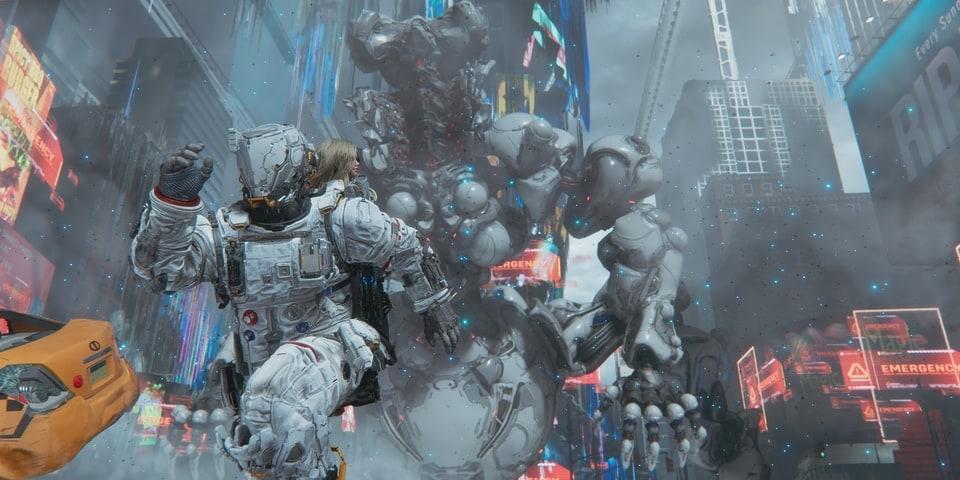
But it’s not long before you have to return to the world up top, and that final encounter from our hands on session, a boss fight against another giant boss, though one that’s much more insect-like. It’s a fun fight, the huge hacking puzzle grids that it reveals a challenge to balance with avoiding its large scale attacks, the need to disable anti-hack modules vital, and then a great finale.
With Pragmata set to release one month from today, our final hands on preview really brought the game into focus. That core gameplay loop of hacking and shooting, the bizarre enemies, and the twisted renditions of an Earth-like scene all feel distinctive and new. So yes, I was right to be looking forward to this game.