
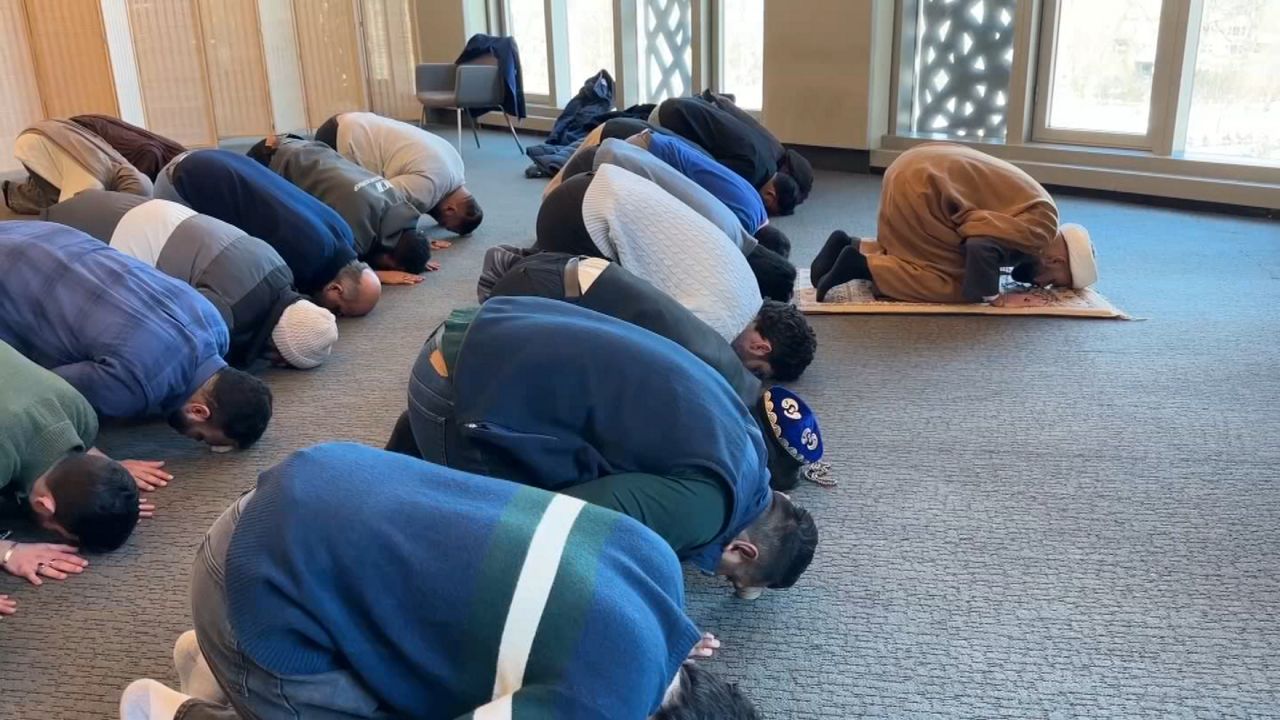
As the holy month of Ramadan comes to a close, Muslim New Yorkers are marking a time of reflection, fasting and community, with one local imam emphasizing the importance of unity and support during the sacred period.
Faiyaz Jaffer, executive director and university chaplain at New York University’s Islamic Center, said Ramadan — a period of time when Muslims fast from before sunrise to sunset — is a time to strengthen faith and connection with others.
What You Need To Know
Imam Faiyaz Jaffer says he has focused on bringing people together and strengthening faith among more than 4,000 Muslim students at New York University
The Shia Muslim community which makes up a minority within Islam finds added meaning in gathering and worship during Ramadan
As Ramadan ends, concerns about the war in Iran are weighing on congregants especially those with family in the region
Jaffer, who grew up on Long Island, has been serving the city’s Shia Muslim community for about a decade. He said the aftermath of the Sept. 11 attacks inspired him to pursue a path of faith, despite initial hesitation from his parents.
“I was in high school, in ninth grade during 9/11, and with so much Islamophobia and anti-Muslim rhetoric during that day, I think it really pushed me into pursuing some sort of advocacy, some sort of community work,” he said.
“When I became an undergraduate student, I pursued religious studies much to sort of the disappointment of my parents, [who] probably wanted me to do something a little bit more meaningful,” he joked.
Now leading a community of more than 4,000 Muslim students at NYU, Jaffer said Ramadan brings a heightened sense of purpose to his role.
“There’s always a sense of pressure to put forth my best effort, in toward communicating to my congregants in the most meaningful way and manner,” said Jaffer.
The holy month has taken even greater meaning for Jaffer as he leads the university under New York City’s first Shia Muslim mayor. Shiism is a minority sect within Islam representing about 1 in 10 Muslims worldwide.
“I think about my children, I think about young students throughout our campus, it offers a sense of pride, that maybe we have never seen before,” he said.
This year, Jaffer said he has focused on building even greater connections with them as U.S. Immigration and Customs Enforcement continues to ramp up raids, detainments and deportations.
“There’s certainly a level of attention that’s heightened during the month of Ramadan, particularly in this sociopolitical climate, where we’re talking about ICE raids impacting minority communities, and so many obstacles and hurdles, that we as a community are facing here in the city, and across the country and really, across the world,” he said.
As Ramadan concludes, the community is preparing to celebrate Eid al-Fitr, the holiday marking the end of the holy month, which is expected to begin Friday.
At the same time, Jaffer said global events are weighing on many worshippers.
The ongoing war in Iran — a Shia-majority country — has prompted concern among congregants with ties to the region, particularly as the conflict has spread to nearby countries including Lebanon.
Jaffer said members of the community have been reaching out daily with worries about loved ones overseas, and he has been offering emotional and spiritual support as they navigate the uncertainty.
“My job is to be able to communicate these things to the community, give them a sense of upliftment and positivity,” he said.