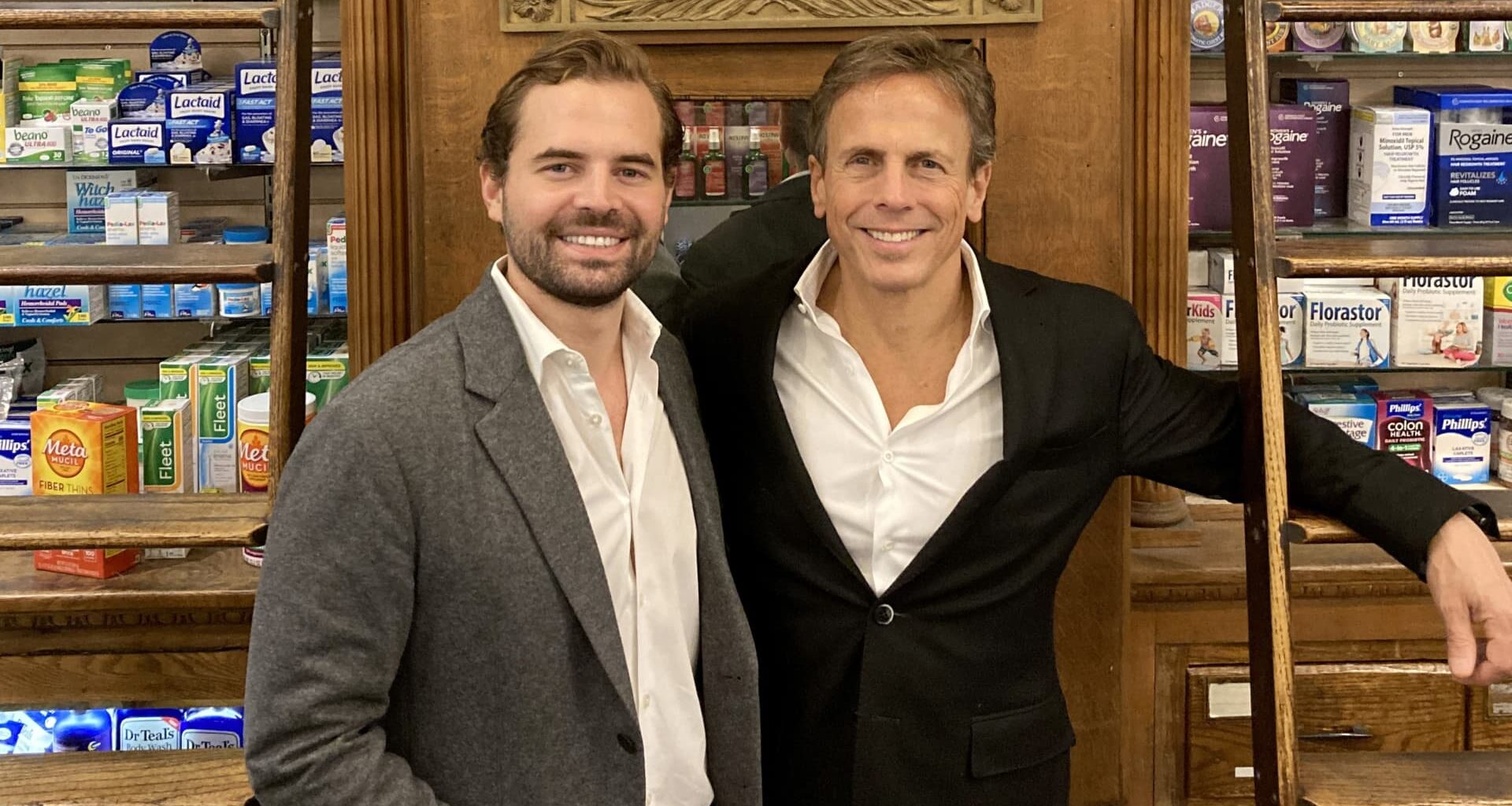
On a normal weekday afternoon at C.O. Bigelow apothecary in New York’s Greenwich Village neighborhood, regulars and tourists traipse across the shop’s original tile flooring to pick up prescriptions, peruse luxury beauty products or chat with staff, some of whom have been there for over four decades.
The last month has been abnormal, say owners Ian and Alec Ginsberg, a father-and-son duo. Twenty-somethings are visiting the 188-year-old pharmacy in droves, gathering at the corner of the shop’s beauty counter where headbands are stocked. Most want one thing: A $40 1.5-inch tortoiseshell headband, the same style previously worn by Carolyn Bessette Kennedy, the former Calvin Klein publicist and wife of John F. Kennedy Jr, the store’s owners say.
On weekends since the Feb. 12 premiere of FX’s “Love Story: John F. Kennedy Jr. and Carolyn Bessette,” C.O. Bigelow has seen “traffic like the holidays,” says Ian Ginsberg, who has worked full-time at the store since 1985, when his own father owned it.
“Things [usually] ebb and flow in terms of foot traffic … but this past weekend, the store was packed like sardines,” says Alec Ginsberg. “That’s not typical every single weekend of the year.” After “Love Story” premiered, sales rose at multiple other New York-based businesses associated with Bessette Kennedy, including eyeglass store Selima Optique and Panna II Garden Indian restaurant, Bloomberg reported on March 5.
Carolyn Bessette Kennedy
Lawrence Schwartzwald | Sygma | Getty Images
Established brands or products tend to go viral when a new demographic sees them as offering something they haven’t discovered yet, says Jonah Berger, an associate marketing professor at the Wharton School of the University of Pennsylvania.
These specific headbands may offer “a feeling of social currency” to some Gen Zers, showing the people around them that they’re culturally aware — up-to-date on a buzzy TV show and fluent in its cultural commentary — and can afford to show it, Berger says.
DON’T MISS: The leadership skills that can help you stand out at work
Some businesses are well-positioned to capitalize on cultural trends. Chinese toy brand Pop Mart sold roughly $423 million worth of Labubu dolls in 2024 after K-Pop star Lisa Manoban was spotted with one attached to her purse that April. In New York, tourists still visit 138-year-old Katz’s Deli to see the restaurant from the 1989 movie “When Harry Met Sally.”
And many Gen Zers have an affinity for in-person retail shopping. In 2025, consumers between 18 and 24 years old bought 62% of their total general merchandise purchases in stores, according to Circana data reported by the Wall Street Journal on March 9.
“We’re excited to see Gen Z discover retail,” says Ian Ginsberg.
‘The headbands have been exactly where they’ve been for 30 years’
The Ginsberg family has owned C.O. Bigelow since 1939, when Ian Ginsberg’s great-grandfather purchased the then-rundown pharmacy after the Great Depression, according to its website. In the 1970s, its proximity to recording studios attracted artists and performers to its lunch counter, and the shop became a sort of “cultural community gathering place,” Alec Ginsberg says.
In late 1980s, Ian Ginsberg decided that the store needed a differentiator, or it’d risk losing business to chain pharmacies that could sell “lighters, pens and Tylenol” at lower prices, he says. He chose a luxury twist, sourcing beauty products and hair accessories from Europe, including the headbands that Bessette Kennedy first purchased in the 1990s, he says.
Customers who walk into the store today should have a comparable experience as the customers who came in nearly 200 years ago, the owners say. In part, that means hiring personable and knowledgeable employees, including the Ginsbergs themselves: Ian Ginsberg once told his son that he’d need to attend pharmacy school to hold any significant role in the store, he says. The business has maintained several physical aspects of its store over the decades, including original gas-run chandeliers.
C.O. Bigelow CEO Ian Ginsberg with his father and former owner, Jerry Ginsberg, in 1988
Courtesy of C.O. Bigelow
Prioritizing customer experience, especially in a way that’s authentic, can help brick-and-mortar stores survive retail upticks and downturns, says Joe Pine, an experience economy researcher, consultant and author. That customer experience can include buying a product, even as small as a hair accessory, that fulfills a shopper’s desire to look or feel a specific way, he says.
“People increasingly desire to buy things — physical goods, as well as services and experiences — that help them achieve their aspirations and become who they want to become,” says Pine.
C.O. Bigelow has sold out and restocked its tortoiseshell headband multiple times since the “Love Story” premiere, the owners say. Seconds after a customer plucks a black, brown or pearl headband out of a bowl or off a rack, a salesperson dutifully replaces it with a replica.
“It’s not like, all of a sudden, we saw the obsession with [Bessette Kennedy] and thought, ‘We should capitalize on this. Let’s do headbands again,'” says Alec Ginsberg. “The headbands have been exactly where they’ve been for 30 years.”
Want to lead with confidence and bring out the best in your team? Take CNBC’s new online course, How To Be A Standout Leader. Expert instructors share practical strategies to help you build trust, communicate clearly and motivate other people to do their best work. Sign up now and use coupon code EARLYBIRD for an introductory discount of 25% off the regular course price of $127 (plus tax). Offer valid March 16 through March 30, 2026. Terms apply.
Take control of your money with CNBC Select
CNBC Select is editorially independent and may earn a commission from affiliate partners on links.