
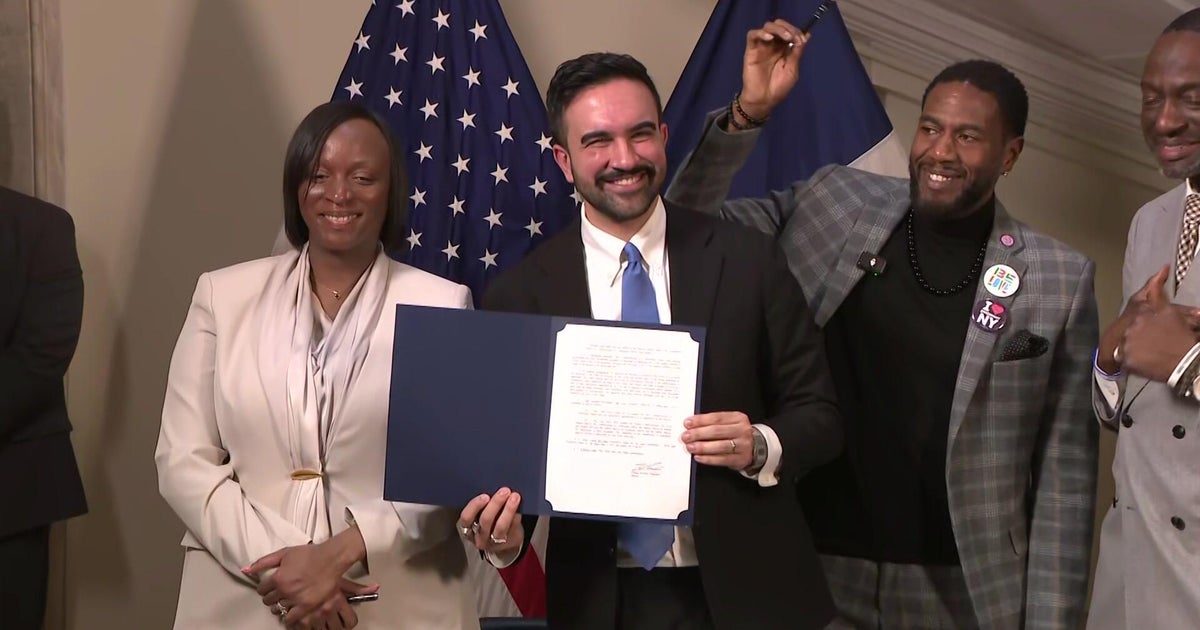
New York City Mayor Zohran Mamdani is taking the first steps toward overhauling how the city responds to 911 calls involving mental health problems.
The mayor filled the rotunda at City Hall with dozens of supporters Thursday as he announced the signing of an executive order to create the Mayor’s Office of Community Safety.
It will have a new deputy mayor to oversee it – Renita Francois, his first African-American deputy mayor – and a budget of $260 million.
Mamdani called it “a groundbreaking announcement, one that fulfills the change that more than 1 million New Yorkers voted for, and one that will allow this city to approach public safety with the seriousness, innovation and commitment it deserves.”
The office will oversee five existing city programs that deal with mental health, domestic violence, gun violence and hate crimes. Its goal is to have social workers, not police officers, respond to 911 calls for non-violent individuals who are experiencing a mental health crisis.
“For too long, we have approached crime and safety by placing only ever-expanding expectations on the police department as we have asked them to address every failure of our social safety net,” Mamdani said.
During his campaign for mayor, Mamdani promised a new department with a budget of $1.1 billion where police involvement in responding to mental health-related 911 calls would be limited.
Police Commissioner Jessica Tisch told the City Council that only 85,000 of the 4.3 million 911 calls received in 2024 did not require police to respond.
“I believe that you need to send the police when there’s a call for a violent person,” Tisch said Wednesday. “That means that 2% of our 4.3 million calls would be divertible away from the NYPD.”
“Today, officers have to handle 200,000 mental health calls a year. That is not a system that is working. Today marks the end of that,” Mamdani said.
The New York Civil Liberties Union praised the move as a step that prioritizes prevention and not policing and penalization, and a step that recognized the need for non-police responses.