
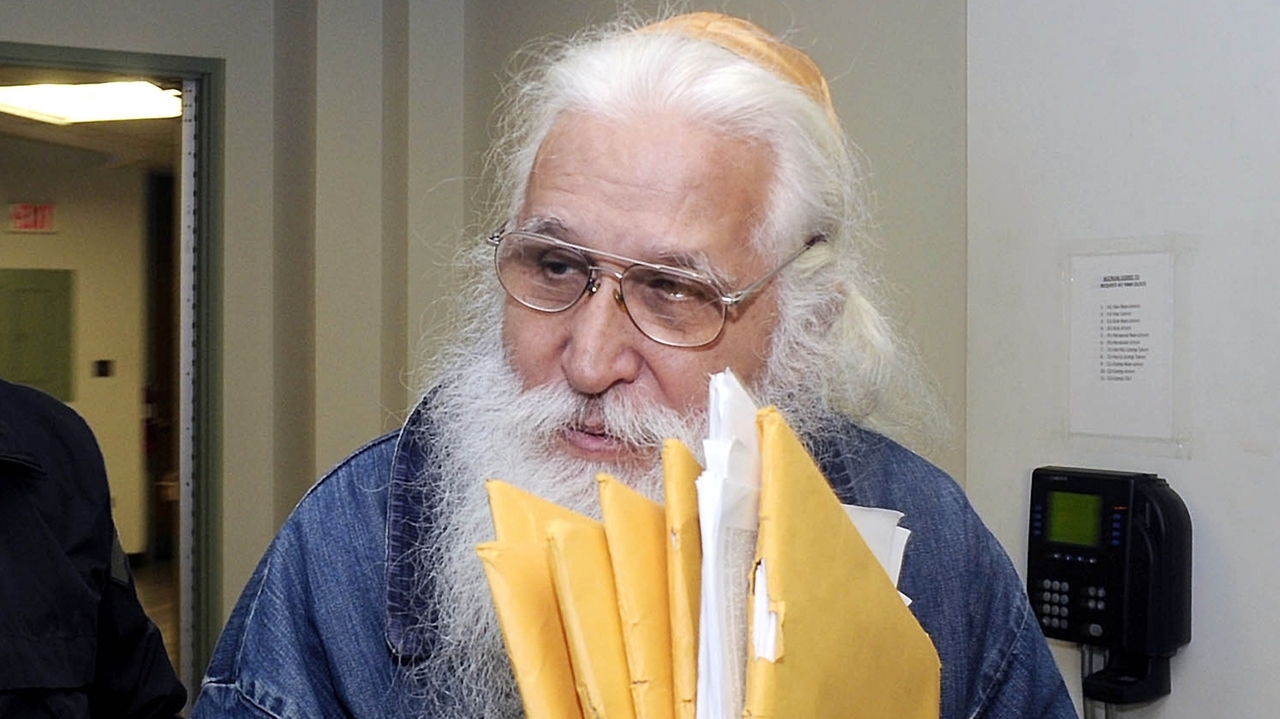
NEW YORK — A man who was suspected for decades — before another man was charged — in the 1979 disappearance of New York first grader Etan Patz has died, authorities said this week.
Jose Antonio Ramos died March 7 at Bellevue Hospital in Manhattan, prosecutors wrote in a court filing in the case of Pedro Hernandez — the man now facing a third trial in Etan’s haunting and infamous case. It helped to make missing children a national cause in the United States.
Ramos, 82, denied abducting the 6-year-old and was never charged in his disappearance. But Ramos’ history has been part of a complicated picture painted through nearly a half-century of investigation, Hernandez’s criminal trials and a wrongful death lawsuit against Ramos himself.
Ramos spent most of his adult life imprisoned in Pennsylvania on convictions including sexually assaulting a child there. He lived his last years in New York selling scavenged items on the street until he became ill with cancer, said Rabbi Howard Cohen, a former prison chaplain with whom Ramos maintained contact for decades.
“The situation was pretty bleak,” said Cohen, who recalled fielding calls from hospitals about the man’s care. Estranged from his family, Ramos had listed the New England-based rabbi as his emergency contact.
How Ramos became a figure in Etan’s case
Etan was last seen May 25, 1979, proudly making his first solo trip to the bus stop two blocks from his family’s downtown Manhattan apartment. He was among the first missing children pictured on milk cartons, and the anniversary of his disappearance became National Missing Children’s Day.
With Ramos gone, so is any possibility of him answering more questions about Etan — queries that dogged and irked him. He complained in a 2013 letter to The Citizens Voice newspaper in Wilkes-Barre, Pennsylvania, that narratives connecting him to Etan’s case were “without substance or merit,” and he refused to testify at Hernandez’s trials.
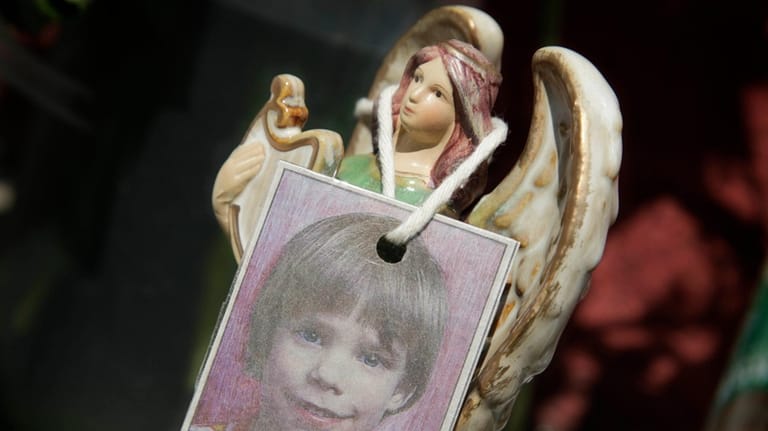
A photograph of Etan Patz hangs on an angel figurine, as part of a makeshift memorial in New York, May 28, 2012. Credit: AP/Mark Lennihan
Hernandez was arrested in 2012 after giving confessions that his defense says were false. His first trial ended in a hung jury; his second produced a murder conviction that a federal appeals court overturned last year, setting up a forthcoming third trial where his lawyers again aim to suggest that Ramos was the real culprit. His death doesn’t change their plans.
A drifter with artistic aspirations, Ramos came under suspicion in the early 1980s, when he was investigated over allegations of taking backpacks from two boys and trying to lure them into a Bronx drain pipe where he was living.
He told police he’d had a relationship with a woman who walked Etan and other children home during a bus strike, but there was no hard evidence linking Ramos to Etan’s disappearance.
Ramos then traveled the country by bus, attending gatherings of a loose collection of peace activists. He was accused of luring boys into his bus and sexually assaulting them at the gatherings in Pennsylvania. Ramos pleaded guilty to a sex charge in 1990 and served decades in prison.
Over the years, two jailhouse informants claimed Ramos made incriminating statements about Etan, and a former federal prosecutor said Ramos claimed to be “90 percent sure” he had taken the boy from downtown Manhattan’s Washington Square Park, tried unsuccessfully to prey on him, and sent him on his way.
During sworn questioning in 2003, Ramos said he’d never encountered Etan and had “nothing to hide.”
Manhattan prosecutors never felt they had enough evidence to charge Ramos criminally. The boy’s parents eventually filed a wrongful death lawsuit against him, and after Ramos refused to answer some questions, a judge ruled him responsible for the boy’s death.
The judgment was scrapped, at the family’s request, after Hernandez’s first trial. The child’s father, Stan Patz — who for years had sent Ramos letters asking, “What did you do to my little boy?” — said he had become convinced of Hernandez’s guilt.
Ramos’ release and final years
Ramos finished serving his time in the Pennsylvania sexual assault case in 2012. As soon as he walked out of prison, he was rearrested on a charge of violating sex offender registration rules by lying about where he planned to live. He was convicted and was sentenced anew, getting six to 20 years in prison.
A Pennsylvania court eventually held that Ramos wasn’t subject to the registration law, which was passed after his initial conviction. He was released in May 2020, according to the state Department of Corrections.
Once free, Ramos bounced between New York and Florida, where he sought unsuccessfully to reconnect with relatives, Cohen said. He recalled getting a phone call from someone in Florida who had bought a violin from a stranger — Ramos, it seemed, from the buyer’s description — and had found the rabbi’s card tucked into the instrument.
“That’s how he was getting by: He was finding things on the street and selling them,” Cohen said.
Cohen wasn’t sure exactly when Ramos got his cancer diagnosis. By then, Cohen said, Ramos had settled in New York, finding housing of some kind near Washington Square Park.