
by Michelle Mullen
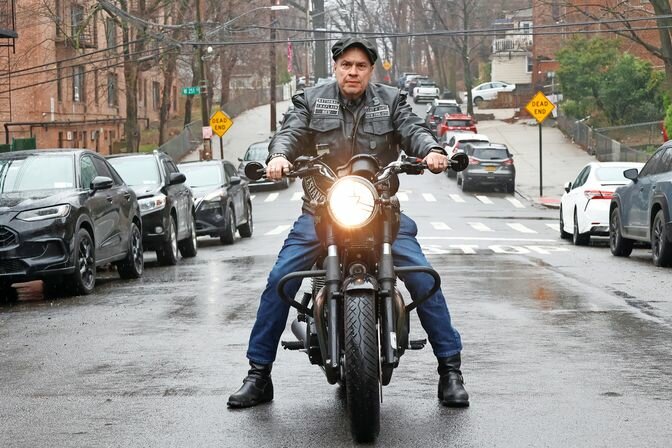
The roar of motorcycle engines can carry a certain reputation. Leather vests, stitched patches and tightly organized riding groups often conjure images of outlaw biker culture. But members of the Least of Saints Motorcycle Club, like Riverdale resident David Ramos, said their mission points in a different direction.
“We’re Christ-centric,” Ramos, a 62-year-old pastor who serves as the club’s national chaplain, said. “We’re about the Kingdom of God.”
The Least of Saints Motorcycle Club is a Christian riding organization that blends the traditions of motorcycle club culture with faith and service. Members wear the familiar leather “cuts,” follow the same protocols that govern many motorcycle clubs and ride together with chapters around the country. But the group’s central purpose, Ramos said, is ministry.
Founded by three brothers and their father, the club takes its name from a passage in the book of Ephesians in which the apostle Paul refers to himself as “less than the least of all saints.” The founders were searching for a name when one of their sons came across the verse while reading the Bible.
The phrase captured the humility the group hoped to embody.
Today the club operates within the broader traditions of what riders call Motorcycle Club, or MC, culture, a system based in ritual and respect that has roots stretching back to veterans returning from World War II who formed the clubs after the war.
“There’s what they call MC culture,” Ramos said. “There’s a hierarchy and there’s expectations of how MC protocol works — how people treat one another out there. There’s an honor code and a respect code.”
Even as a Christian club, the Least of Saints follows many of those traditions in a world defined by loyalty, hierarchy and an unwritten code of respect.
“Regardless of the fact that we’re a Christian club, we abide by the protocols of that culture,” Ramos said. “To acknowledge it and respect that world.”
Ramos himself came to motorcycling later in life. For decades, he had thought about riding but never acted on the idea.
After graduating from Princeton Theological Seminary, he became an ordained minister and built a career centered on pastoral work and spiritual counseling. The motorcycle remained an unrealized ambition until his late fifties.
“One gentleman said something funny, but he was right on,” Ramos recalled. “He said to me, ‘When are you going to do it? You’re getting older.’”
At 58, Ramos finally bought his first bike — a Honda VTX cruiser with an 1800cc engine.
“There’s this idea of buying smaller bikes and learning and working your way up to bigger bikes,” he said. “And I ended up buying what they call an 1800, which is like a huge, powerful engine.”
Learning to ride meant mastering a complicated series of motions. Managing the machine while navigating traffic and balancing the weight of the motorcycle was no easy task.
“Riding is complex,” Ramos said. “You have to deal with clutch, first gear, second gear. You have to switch gears while you’re watching lights, stop signs, people walking in front of you.”
Before he made the purchase, he practiced frequently during the pandemic, often riding in Staten Island, where his cousin had an extra bike he could borrow.
“I learned on that bike,” Ramos said. “We would ride at night because that’s after work. So I like night riding.The more you do it, the more it becomes part of you. People say you become one with the bike.”
Riding eventually led Ramos deeper into motorcycle club culture. His introduction to the Least of Saints came while organizing a motorcycle gathering known as Transmission, an event meant to bring riders together.
At the time he was still a relatively new motorcyclist and wanted experienced riders to attend. While searching online, he found a member of the club and reached out.
“I told him, ‘I’m a pastor and I’m a new rider, and I want to do this event called Transmission,’” Ramos said.
The rider said he could not attend but offered to send other members.
“They showed up,” Ramos said. “That’s how I got connected with them.”
Joining the club required going through the traditional stages of membership. New riders typically begin as “hang-arounds,” or spending time with members while both sides determine whether the relationship is a good fit. Those invited to continue may become “prospects,” a probationary period that can last months or longer before full membership is granted.
Ramos completed that process and eventually took on a leadership role within the club.
Over the past three years he has risen from chaplain of the New York State chapter to the club’s national chaplain.
Public service is central to the group’s mission. Members organize charitable efforts and help families in the motorcycle community when someone dies, raising money to help cover funeral costs and other expenses.
“We’ve sought to support people among the MC who pass away,” Ramos said. “Help them with funeral costs and help family members after their death.”
Ramos’s work outside the club often intersects with those moments of grief. In addition to his pastoral role, he serves as a spiritual care chaplain with VNS Health, formerly Visiting Nurse Service of New York, supporting hospice patients nearing the end of life.
“People face death and they have existential angst,” he said. “Part of it is spiritual care counseling.”
Within the motorcycle community, Ramos is known by the road name “Rev,” a nickname that plays on both his work as a reverend and the revving of a motorcycle engine.
And while the sight of riders in leather vests can still prompt wary looks from strangers, Ramos said the reaction often shifts once people understand the group’s mission.
“Sometimes we walk into a diner with our cuts on and people give us side glances,” he said. “But then they see us bow down and pray, and they realize all these guys are a bunch of Christians.”
Keywords
Least of Saints Motorcycle Club,
Christian bikers,
Bronx motorcycle club,
David Ramos,
Riverdale,
faith and ministry,
motorcycle culture