
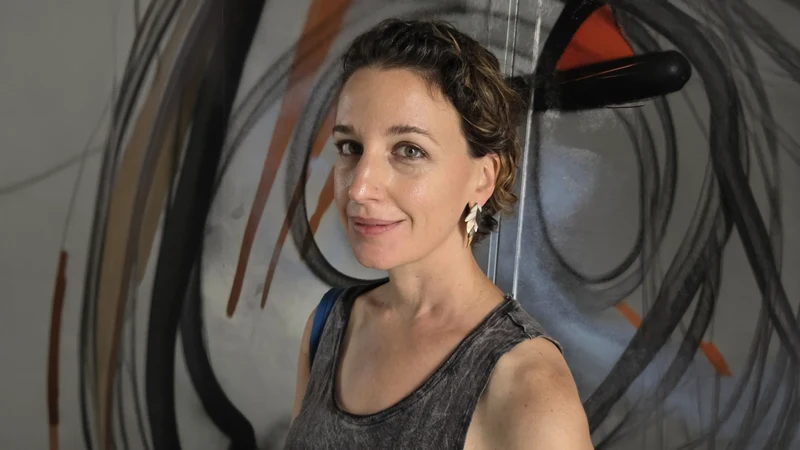
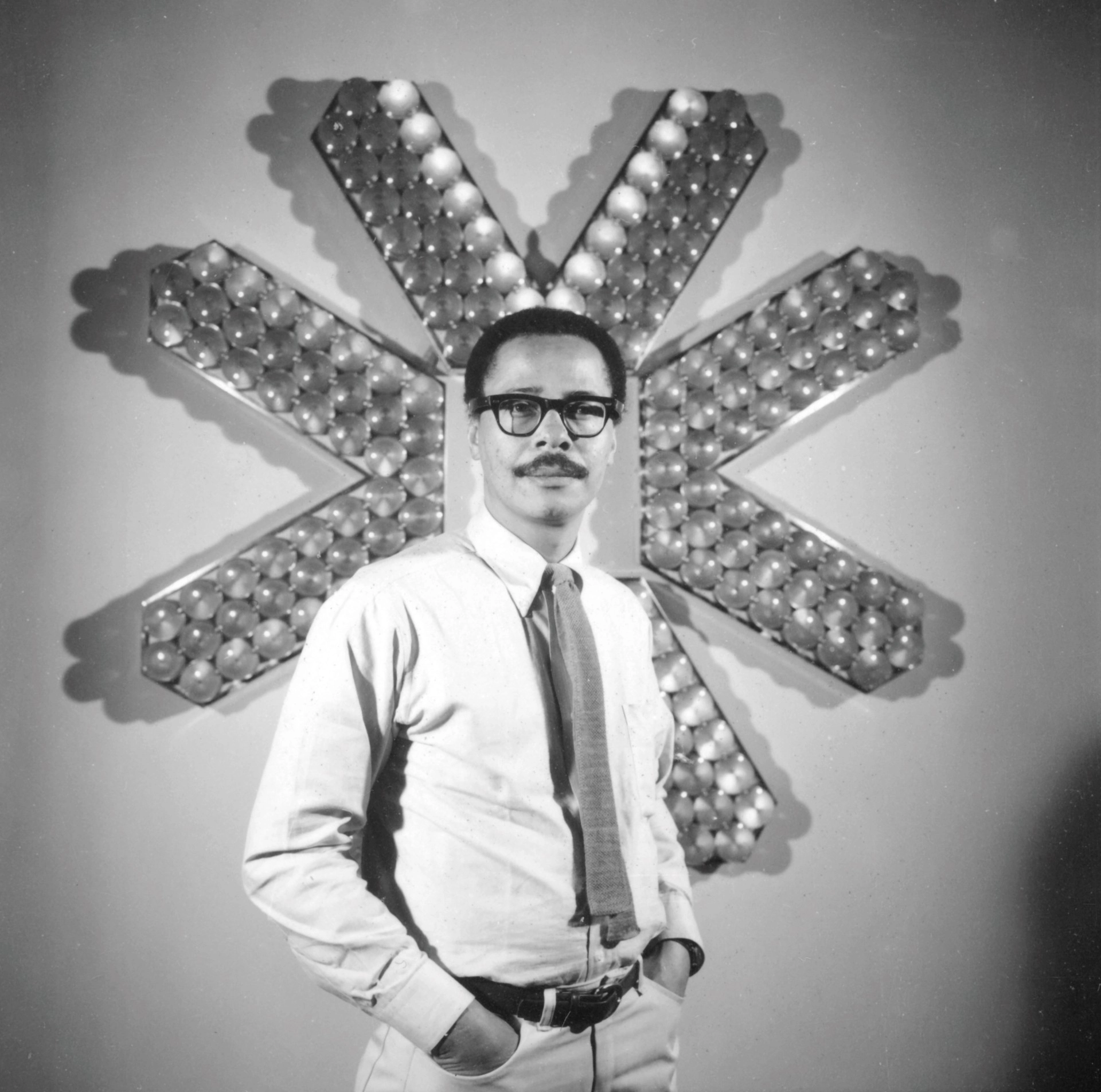
The Studio Museum in Harlem opened its impressive new building last November on West 125th Street with an exhibition by the late artist and community activist Tom Lloyd, a longtime resident of Jamaica, Queens — home to York College, CUNY.
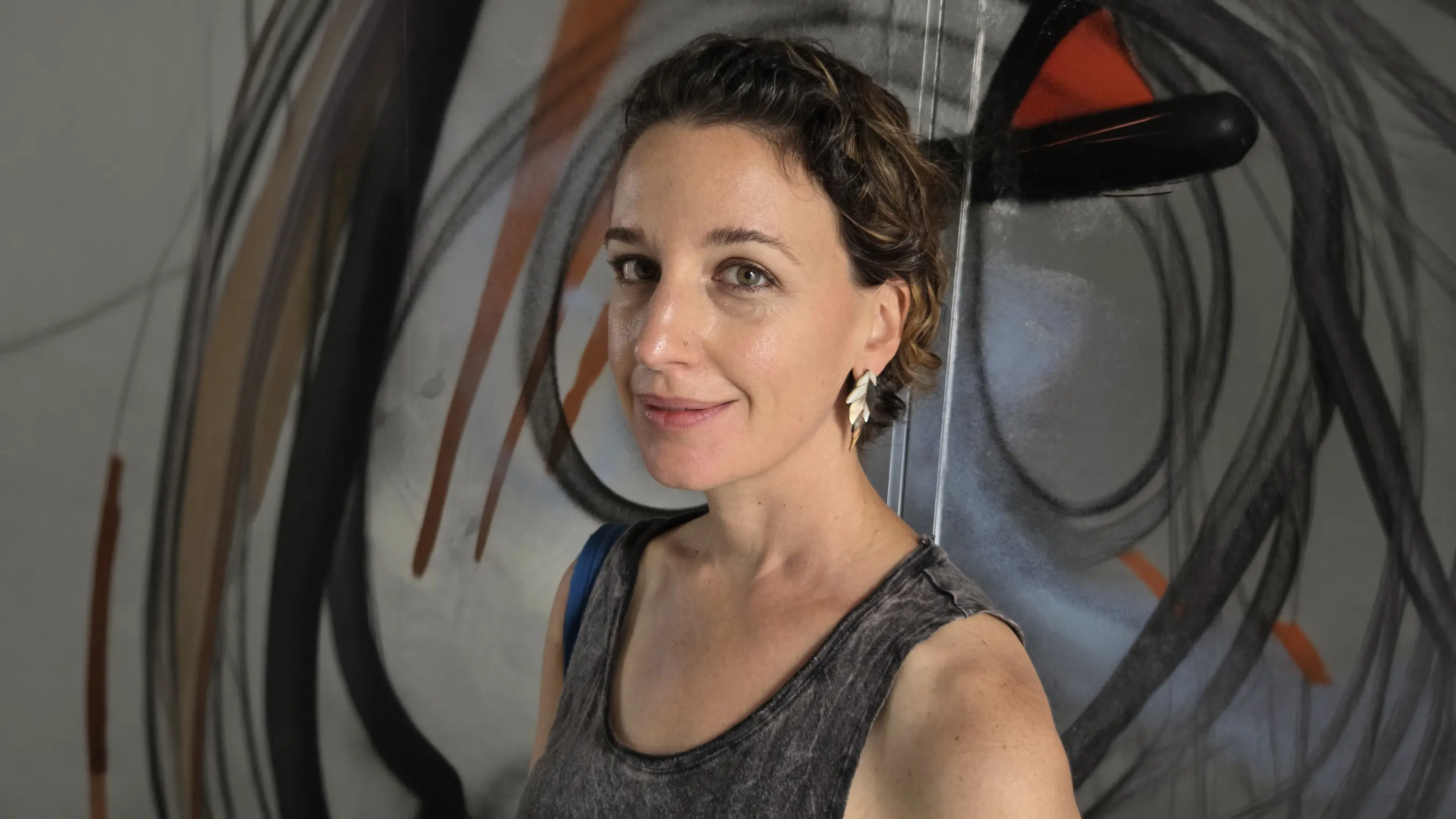
The exhibition’s closing program on Saturday, March 21, from 5:30 p.m. to 7 p.m., will feature Dr. Emily Verla Bovino, coordinator of York College’s Art History program, on a panel with art historian Krista Thompson and curator Habiba Hopson.
In 1971, Lloyd, together with some of York College’s first students, designed a museum of Black history, culture, and art for the campus called the Store Front Museum. Professor Bovino recently highlighted this history in a talk at the York College Faculty Forum on December 4, organized by Professor Linda Grasso of the English department.
The project is also part of Dr. Bovino’s research on York’s public art, conducted with students in FA 397 Contemporary Art last semester. Supported by a 2025 CUNY Research in the Classroom grant, the class created a display featuring photographs and a publication from Lloyd’s museum in the York College Library. As Dr. Bovino explained, before the current campus was built, Lloyd, known for innovative light installations inspired by local auto shops, ran the Store Front Museum for 15 years in a converted Goodyear tire shop.
After serving Jamaica, Queens with workshops, exhibitions, and festivals as the borough’s first museum, it was evicted in 1986 for construction of York’s Health and Physical Education building. The eviction, widely seen as avoidable, reflected shifting city politics and local corruption.
Longtime adjunct York professor Andrew “Sekou” Jackson recalls meeting Lloyd in 1983 at a borough-wide arts meeting alongside leaders like John Watusi Branch and Carl Clay. At the time, Lloyd proposed integrating the museum into the planned York campus, an idea supported by many students. However, plans for the Physical Education building took precedence, and efforts to preserve the museum were ultimately dismissed.
“I am most pleased that this research includes more than just name mention of Tom Lloyd and his commitment to the arts for South Queens, Jackson noted. “In 1983 as I was a new director at Queens Library’s Langston Hughes Community Library and Cultural Center, I looked to visit and learn about each of these established cultural institutions in Queens. At that time, Tom had proposed the Museum be established as a cultural component of York College as the campus was still in the design phase. Many evening students were also supporting this and promoted the Museum’s inclusion as part of our new campus when complete. Later I learned that the Physical Education building was to be housed on the same land as the Museum. No protests on Tom Lloyd’s part or that of activist students were taken into consideration for the benefit of preservation of the arts for South Queens. To this day, when I look at the Phys Ed facility, my mind’s eye still sees The Store Front Museum with African art in its large front window and wonders why a compromise could not be reached for the benefit of all.”
Though the building was demolished and its collections dispersed, Dr. Bovino’s research in the Store Front Museum Papers at Queens Central Library and York College’s Public Art Papers shows its legacy lives on in campus public art. At a time when Black artists faced exclusion from public commissions, Lloyd advocated for equity in arts funding tied to new construction. In response, York College developed a unique public art selection process involving both campus and community committees.
By 1989, following installations such as Martin Puryear’s Ark (1988), The New York Times recognized York as part of a growing Jamaica, Queens arts hub and a “center for work by Black artists.”
Thanks in large part to Lloyd’s advocacy, York was envisioned as a “museum-in-school,” featuring works by Romare Bearden, Elizabeth Catlett, Houston Conwill, Sam Gilliam, Richard Hunt, and Martin Puryear. Yet Lloyd himself was neither included in the final selection process nor invited to contribute his work, and his museum was not relocated.
For Dr. Bovino, remembering Lloyd raises important questions about the college’s values at the time. She encourages the community to honor his legacy, avoid repeating past erasures, and continue the longstanding efforts of Southeast Queens residents to uplift one another through art.
**Attend the closing program at the Studio Museum in Harlem on March 21 from 5:30 p.m. to 8 p.m. to reflect on the legacy of a Jamaica, Queens artist-activist who sought to reshape New York City’s cultural and educational institutions through Black art.
Mar 20, 2026 9:00 AM