
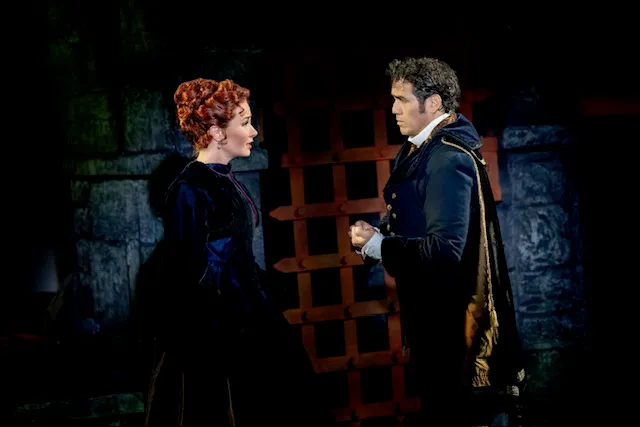
 Sierra Boggess and Adam Jacobs star in the world premiere of Monte Cristo (book and lyrics by Peter Kellogg, music by Stephen Weiner), directed by Peter Flynn for the York at the Theatre at St. Jean’s.
(© Shawn Salley)
Alexander Dumas’s 1844 novel of love and revenge, The Count of Monte Cristo, isn’t the must-read it used to be, yet many know the plot from its movie and TV adaptations. The book’s length can be daunting (my copy runs 1,243 pages of small print), but it’s a thrilling page-turner about a man who falls in love, is unjustly imprisoned, and returns home to seek revenge.
That’s darkly delicious material for a musical, as Sondheim proved, but the creators of Monte Cristo, which is now having its world premiere at the Theatre at St. Jean’s with a drop-dead cast, have taken Dumas’s story line in a sunnier direction. Peter Kellogg (book and lyrics) and Stephen Weiner (music) created a score that’s heavy on navel-gazing lyrics and familiar-sounding ballads, and light on pulse—using a story that, ultimately, has little resemblance to the spirit of the original.
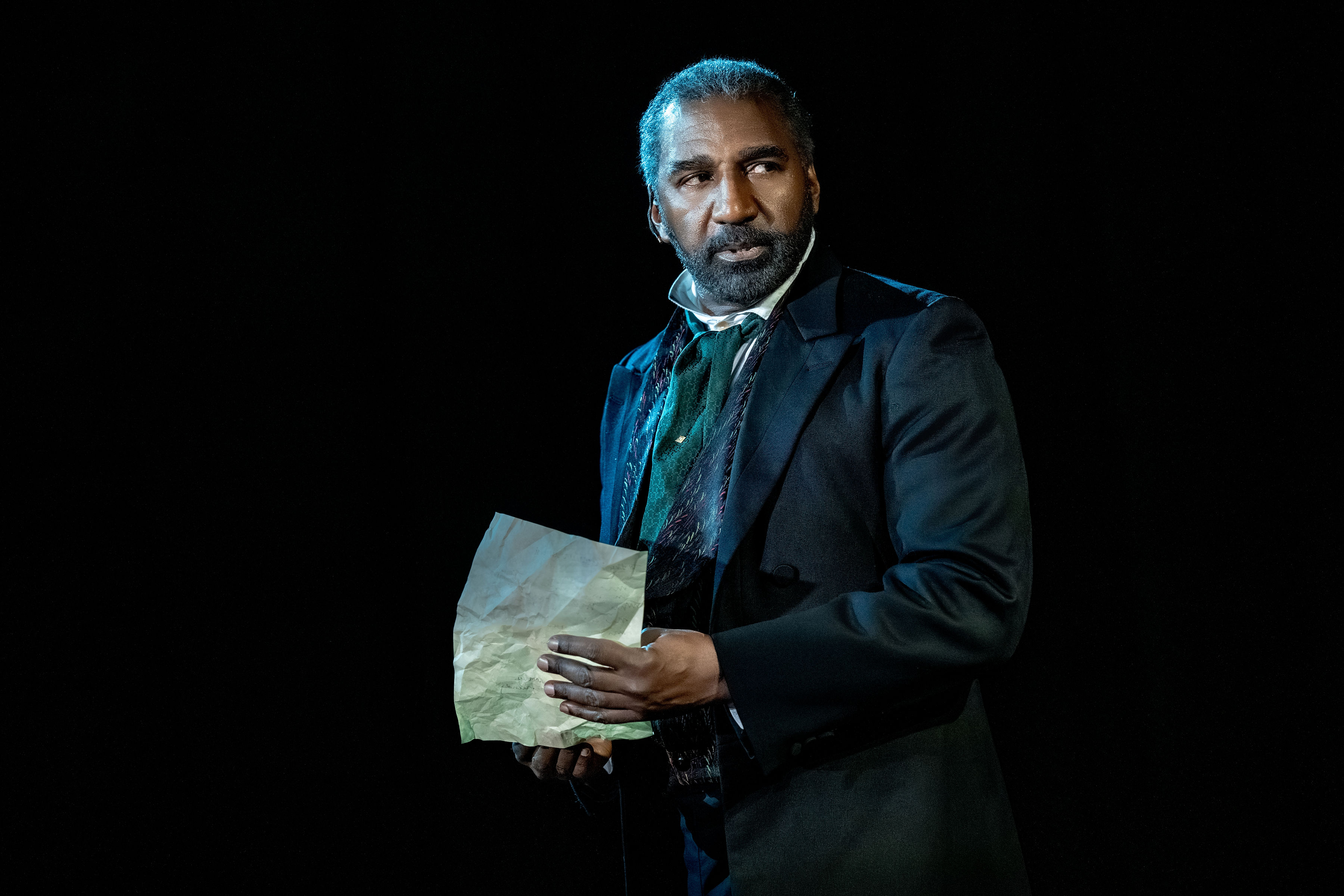 Norm Lewis plays Villefort in the world premiere of Monte Cristo at the Theatre at St. Jean’s.
(© Shawn Salley)
That last critique isn’t entirely fair, since even in Charles Fechter’s 5-hour play adaptation (which Kellogg and Weiner also used in formulating their version), much of Dumas’s story was cut and reshaped; and there’s only so much of the book that you can get into a musical clocking in at just over two hours. Unfortunately, what remains in their version is Disneyfied Dumas—a story that replaces dramatic tension with family-friendly humor, and malevolent motives with saccharine songs. Sweeney Todd this is not.
That’s too bad, because in the first act, director Peter Flynn gives us at least some hope for excitement. Adam Jacobs looks every bit the Count (a.k.a. Edmund Dantès) as he studies a chess board in the opening scene, just before the ensemble whisks us back 19 years with the ear-wormy “Dangerous Times.” In 1815 France, Napoleon is plotting his escape from Elba, where politically neutral Edmund, following orders, sails his ship to receive a letter from the exiled emperor.
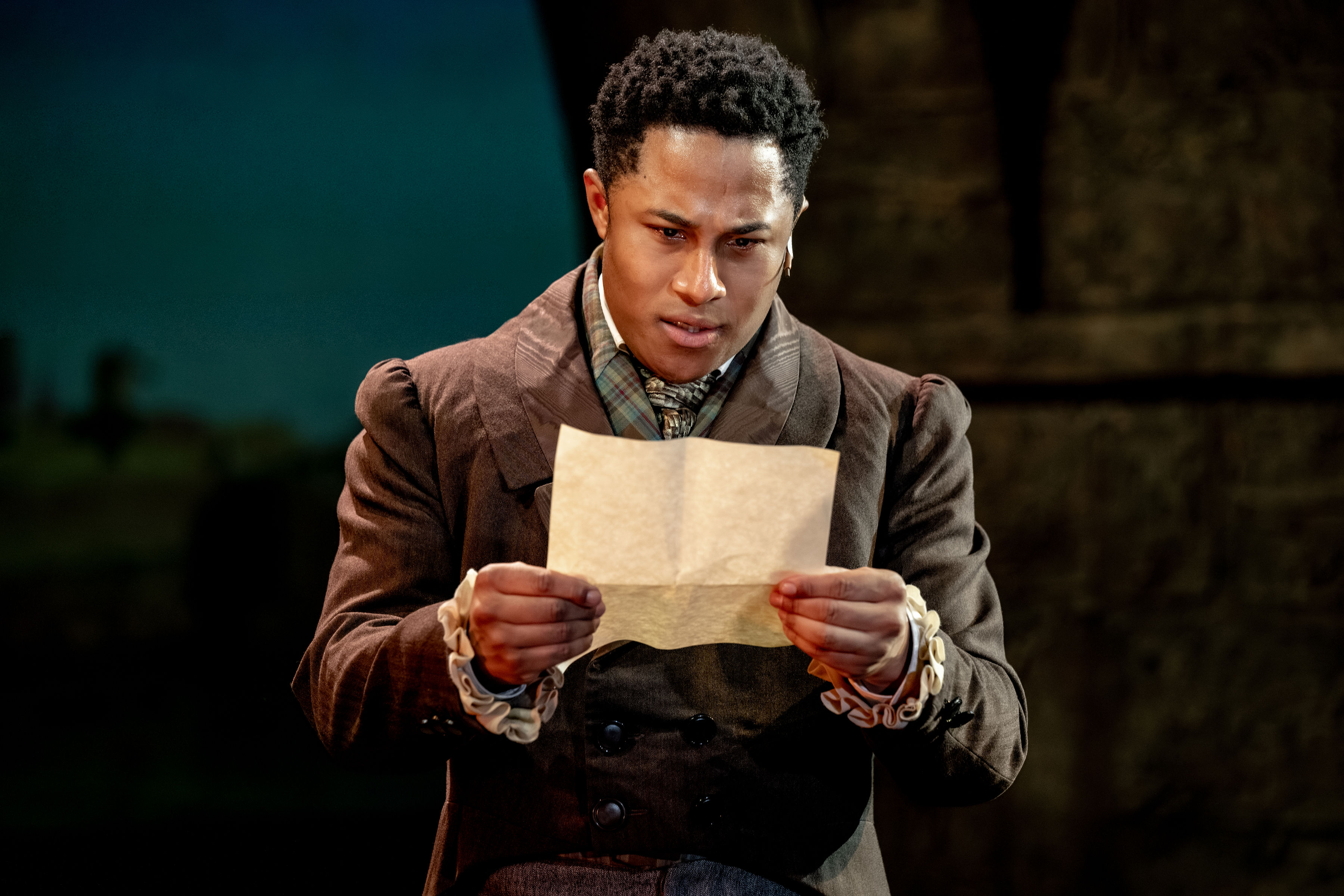 Daniel Yearwood plays Fernand in Monte Cristo at the Theatre at St. Jean’s.
(© Shawn Salley)
Little does Edmund know that three men are conspiring against him: Fernand (dashing Daniel Yearwood), a rival for the hand of Edmund’s fiancée, Mercedes (Sierra Boggess, her voice as gorgeous as ever); Danglars (James Judy), an envious shipmate; and Villefort (Norm Lewis), the lawyer whose fortunes are jeopardized by that seditious letter addressed to his father, Monsieur Noirtier (Eliseo Roman).
Through their treachery, Edmund is imprisoned for treason in the Château d’If (Anne Mundell’s versatile set comprises an impressively gloomy jailcell with shadowy lighting by Alan C. Edwards). There he meets the Abbe Faria (a scene-stealing Danny Rutigliano). Not only does this oddly jolly lifer teach unworldly Edmund science and a few languages (in the klezmer-inflected prayer “You Sent Me This”), he also tells him the location of a vast fortune hidden in the rocks of the uninhabited island of Monte Cristo. The Abbe’s sudden death allows Edmund to escape (Shawn Duan’s projections quickly transport us to the ocean where Edmund is tossed) and initiate his plans for revenge as the Count of Monte Cristo.
And that’s about as exciting as things get. The Count returns in Act 2 to find a remorseful Villefort who has been torturing himself for the past 19 years with the memory of what he did to Edmund, and he already seems on the verge of jumping off a bridge (Lewis’s hefty baritone struggles a bit with the last high notes in the strangely repentant “A Great and Noble Man”). You almost feel sorry for the guy when the Count issues a vague threat and Villefort walks offstage never to be heard from again. “One down!” says the Count. That was easy.
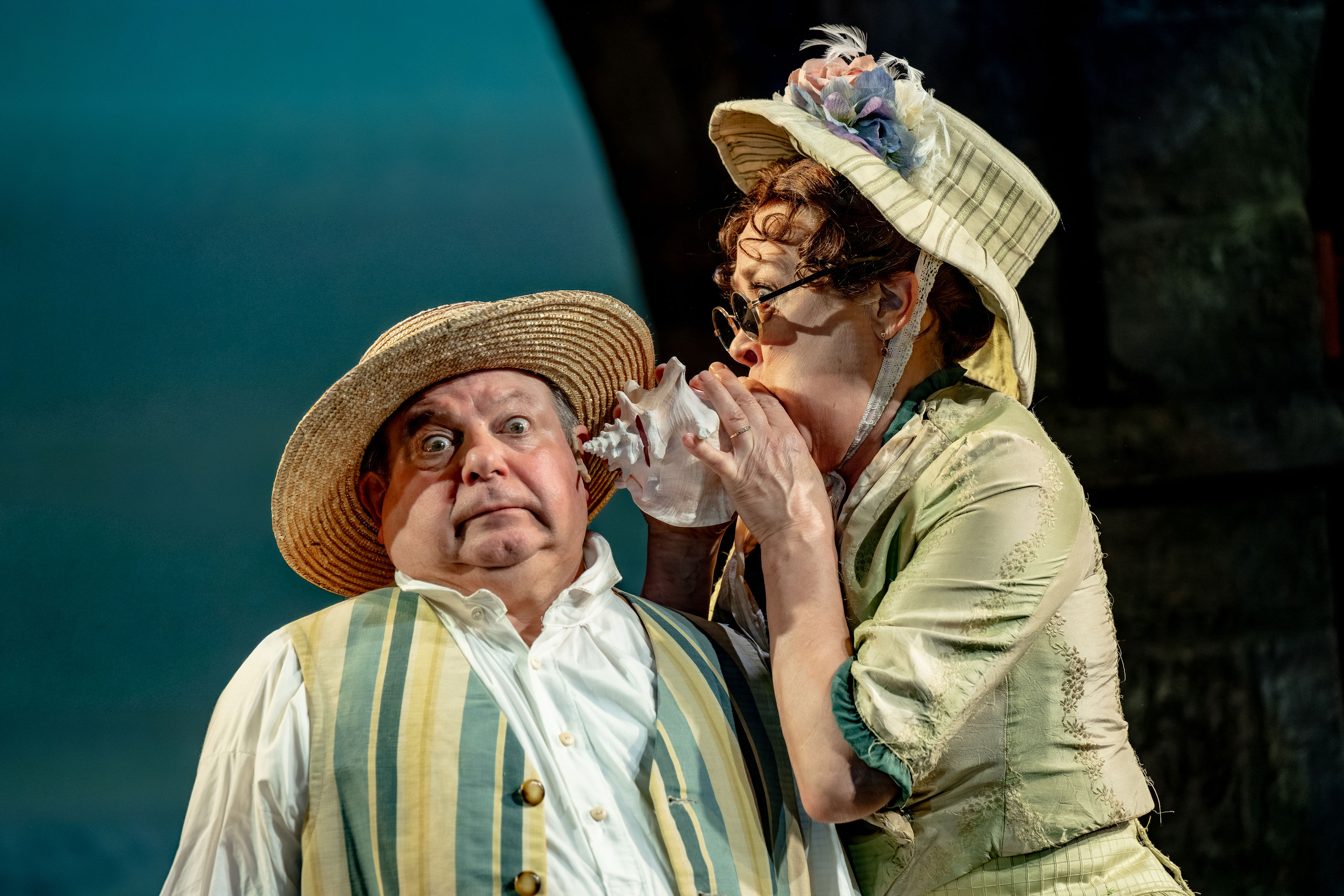 Danny Rutigliano and Karen Ziemba play Caderousse and Carconte in the new musical Monte Cristo.
(© Shawn Salley)
So goes the rest of the show, with new characters quickly introduced to check some of the plot’s boxes without giving us any reason to care about them. Young lovers Eugenie (Kate Fitzgerald) and Albert (Jadon Lopez) discover they play for different teams in “What If There’s More Than This?” (The more significant love story between Maximilien Morrel and Villefort’s daughter, Valentine, has been completely left out.) The Count’s companion, Haydee (Stephanie Jae Park), beautifully sings her soon-forgotten backstory in “Haydee’s Story.” Even the count seems tired of it all, inexplicably abandoning his plans for revenge with two enemies left. “Revenge is not as gratifying as I thought,” he says. For us neither.
At least the orchestra, led by David Hancock Turner, sounds incredible with the help of sound designer Joanna Lynne Staub. Marcos Santana and Betty Weinberger provide light, flowy choreography for the masquerade ball where the Count is introduced to Parisian society (period costumes by Siena Zoë Allen and Amanda Roberge). And there’s solid comedy thanks to Rutigliano and Karen Ziemba as the innkeeping couple of Caderousse and Carconte. Ziemba lights up the stage with her funny and heartwarming “This Stupid Man of Mine,” which becomes a duet with Boggess’s “This Stupid Heart of Mine.”
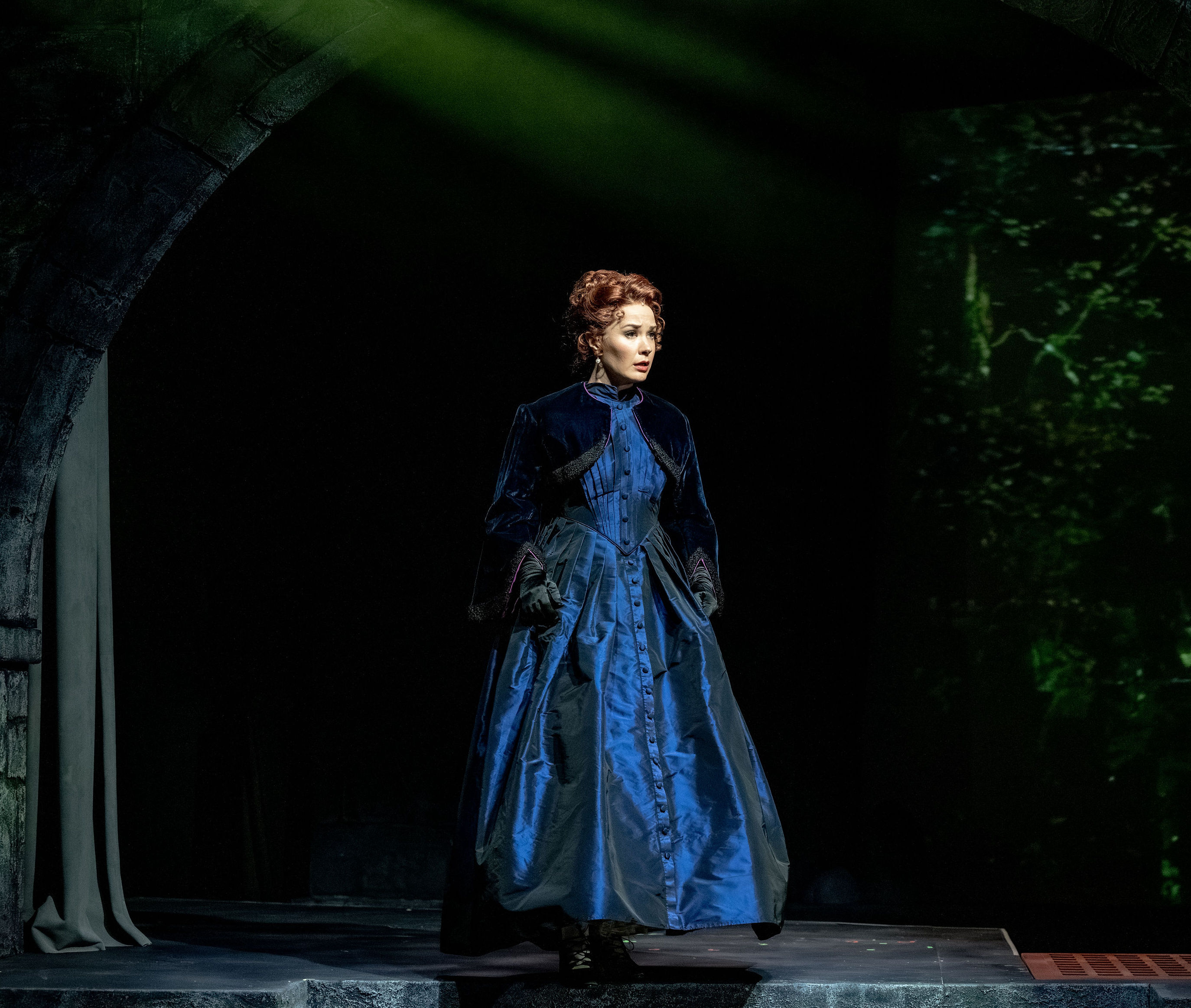 Sierra Boggess steals the show in Monte Cristo, directed by Peter Flynn for the York Theatre.
(© Shawn Salley)
Boggess (wearing a flaming red wig designed by Caitlin Molloy) is the hands-down draw in this production, her gorgeous soprano filling the theater with her unparalleled vibrato. Her duet with Jacobs in “Goodbye” goes a long way in helping us forgive much of what has come before. And isn’t that what The Count of Monte Cristo is really all about anyway? Forgiveness?
No. The fact that Jacobs, Boggess, and Lewis are Disney OGs (Jacobs, Aladdin; Boggess and Lewis, The Little Mermaid) is no accident. Such casting (by Andrea Zee of Zee-Casting) would seem to indicate that the creators were going for a musical that would shy away from the grownup themes (rage, vindictiveness, cruelty, bad feelings) that Dumas baked into his story, leaving us with a G-rated musical that feels “inspired by” rather than “based on.” Tweak the story to fit the stage if you must, but don’t lose its spirit.
Is there a three-hour, mature Count of Monte Cristo musical somewhere out there with the thrills and suspense of the original? Who knows? All we can do, in the words of Dantès, is “wait and hope.”