
The house with the blue door on Wyckoff Street, in Boerum Hill, got more mail than the neighbors’ homes. Envelopes heavy with manuscripts arrived at the ground-floor entrance, piling up on the dining table by the window, which doubled as a slush pile for the independent poetry press Hanging Loose. Founded in 1966 by a crew that included Robert Hershon, who owned the house, the press never had another office, and editors preferred to meet a few times a year in the backyard, as Hershon later recounted in a verse that takes on the voice of an inquiring neighbor:
“what are those
guys doing out back
sitting around the table
table full of papers
and one guy goes blah blah blah blah
and the others all shake their heads
and go ahum ahum ahum …”
The answer: sorting the mail and voting on whether to publish the first books of such writers as Eula Biss, Cathy Park Hong, and Ha Jin, among others. All told, 240 books and 117 magazines went past their eyes, many proofread in the kitchen, where pages could spread across the countertops while Hershon’s wife, Donna Brook, a poet, teacher, and editor herself, served mixed nuts and rooibos tea. Visiting poets were welcome to stay in the small bedroom toward the front of the house, on the third floor, which earned the nickname Sherman’s Room for Sherman Alexie, who began visiting in 1992 when he was so young he forgot to bring a coat to New York in winter and had to borrow one from the man he called his “poetry father.” That became a running gag, as did the California poet Gerald Fleming’s penchant for home repair. “Unlike all us New York poets, he enjoyed fixing things,” remembers Joanna Fuhrman, who lived in Carroll Gardens in the aughts, when she was a frequent guest at Donna and Bob’s. Dinners might include neighbors Lynn Nottage or Maggie Nelson (who also published with Hanging Loose). The doorbell might ring with a request for Bob or to hand back something borrowed. “He was the mayor of the block and everyone would talk to him,” Fuhrman says.
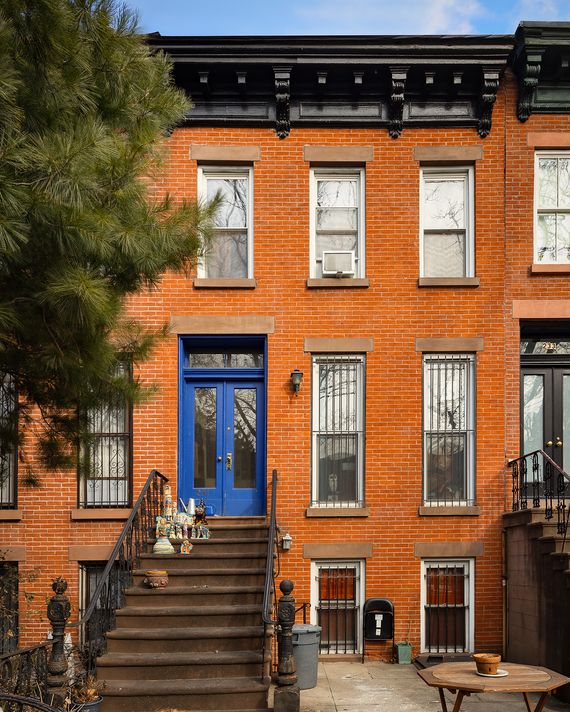
The family was one of the first, if not the first, on Wyckoff to paint their door blue — which seemed to start a trend.
Photo: Hayley Ellen Day
Hershon was a Brooklyn native, born in Bushwick in 1936, and he moved to Wyckoff Street in 1972 with his first wife, the painter Michaeleen Carson. They’d been living in a cramped apartment with their two children, Jed and Elizabeth, near the kids’ school at St. Ann’s, where Hershon had taught. The three-story brick house had room to spread out, lovely old fireplace mantels, exposed wood beams, and an overgrown backyard. The affordable price — just $31,000 — accounted for the neighborhood. “We were all mugged,” remembers Elizabeth, a fact that was immortalized in Fortress of Solitude, by Jed’s childhood playmate Jonathan Lethem, and thrown onto canvas by Elizabeth’s school buddy Jean-Michel Basquiat.
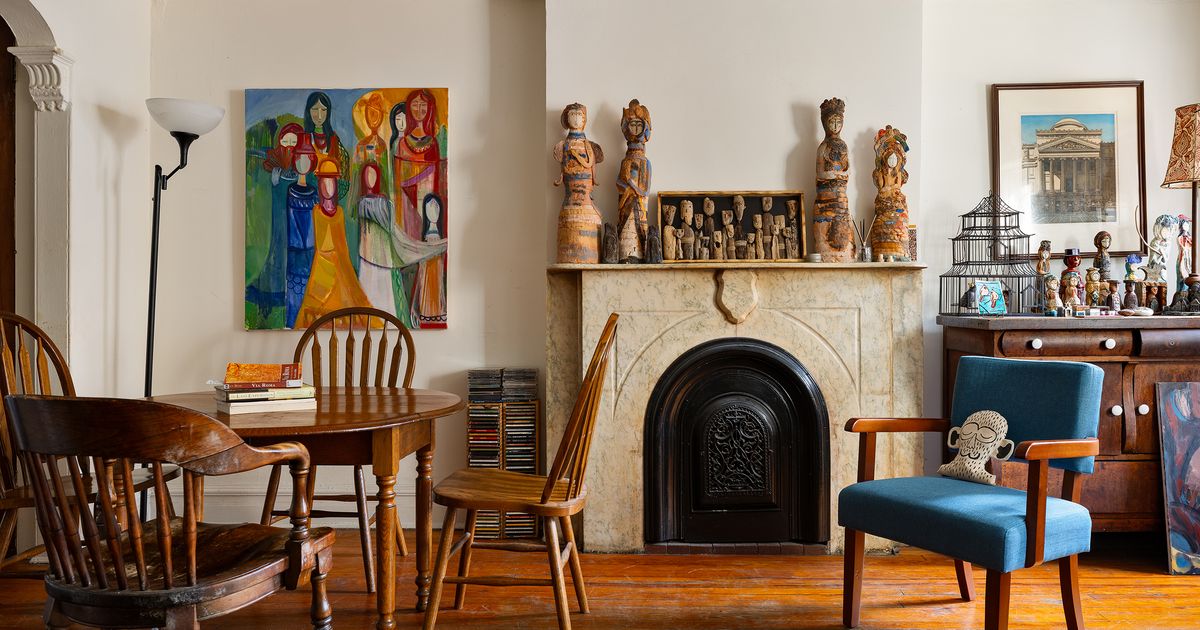
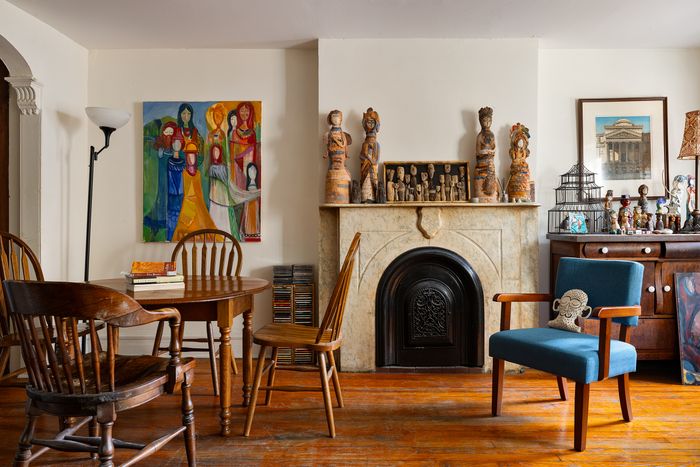
The house dated to the 1870s and had been broken into apartments, but the family didn’t fuss over it much. The room by the grand main entrance on the parlor level became Hershon’s office, and an overflow of books sealed off the door itself — which had never been used much anyway. Décor wasn’t so important, either, and furniture came from local rummage sales. Brook, who Hershon married a decade later, after the kids had moved out, wrote of their “shared hatred / of anything on the walls but white paint and art.” The art was by their friends or by Elizabeth, a working artist who also painted covers for their books, as her mother had done. Her father bought some of her paintings and would talk them up with guests. “I remember how proud he was to display her paintings,” Fuhrman says.
Hershon took his inspiration from Wyckoff itself — including a closely observed ode to a pile of black garbage bags that “form innumerable little craters which fill with rainwater and reflect the gray sky, with each fleeting bird repeated over and over.” A poem about Atlantic Avenue winks at glass towers of “juliet balconies and ophelia lap pools and lady macbeth sinks.” And one of his most well-known works, “The Driver Said,” is a portrait of gentrification in 21 words:
“boerum hill?
it used to be
gowanus
this ain’t no
neighborhood
if ya butcher
comes to ya funeral
that’s a
neighborhood.”
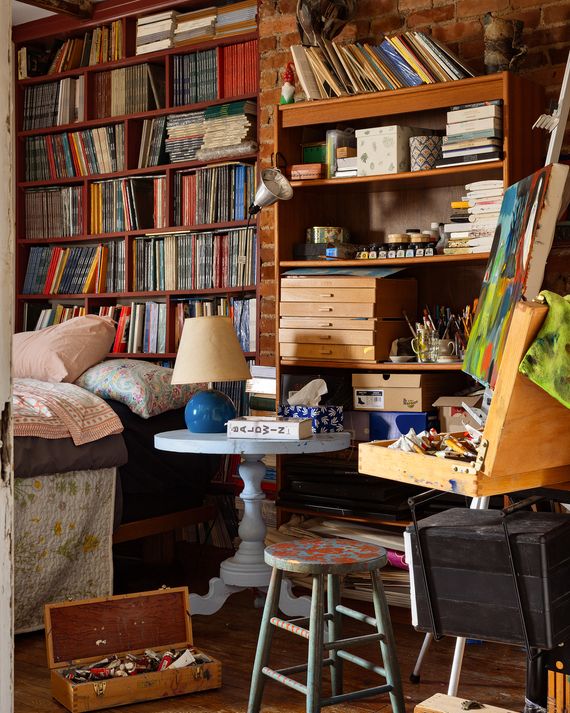
Photo: Hayley Ellen Day
Price: $2.5 million ($656 in monthly taxes)
Specs: 3 bedrooms, 2 bathrooms
Extras: Backyard, front yard, basement
Ten-minute walking radius: Brooklyn Inn, Rucola, Public Records
Listed by: Jessica Quinn and James Fierro, Compass
Elizabeth, who left home when she was 17, came back to care for Robert when he got older, and then Donna, who had a series of strokes. Jed, who became a local bookseller, had died unexpectedly in 2014 at age 50. Robert died in 2021; Donna died last summer. And Elizabeth, an artist like her mother, is now the last one left in the old house. She has filled the wall space with her figurative, riotously colored dreamscapes, as she has cleared the shelves of her father’s books and papers — headed to friends and library archives. When the work is over at the end of the day, she retires to the smallest bedroom in the house, where original wood beams stripe the ceiling. She could sleep anywhere, of course, but there’s a sense of comfort in the guest room, used by hundreds of poets. Before it was theirs, she says, “it was mine.”
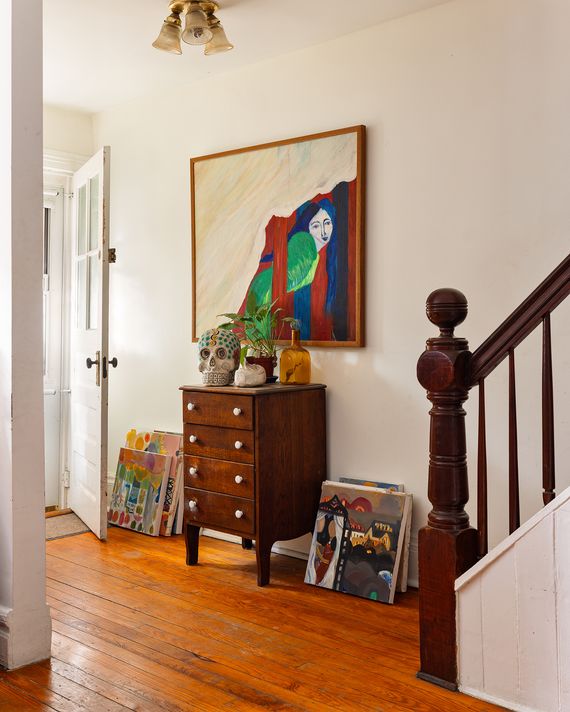
Elizabeth Hershon’s paintings by the entrance.
Photo: Hayley Ellen Day
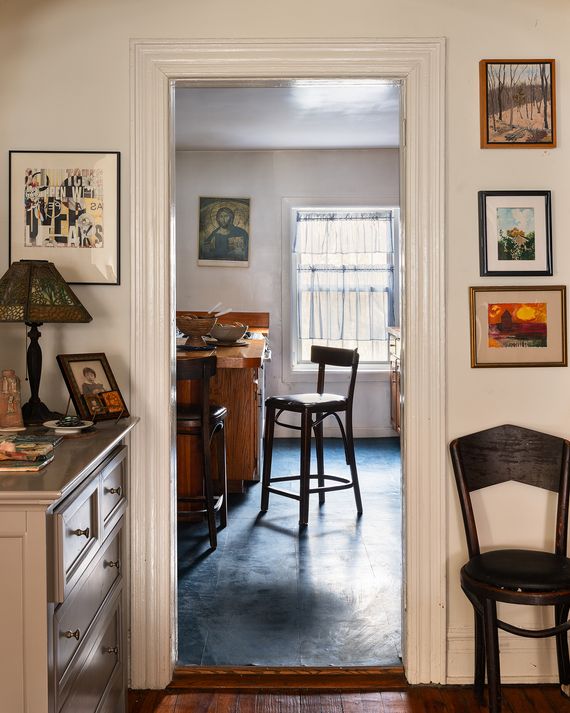
Donna Brook was responsible for adding blue floors and blue countertops to the kitchen, where poets would hang out drinking tea as they looked over manuscripts and talked.
Photo: Hayley Ellen Day
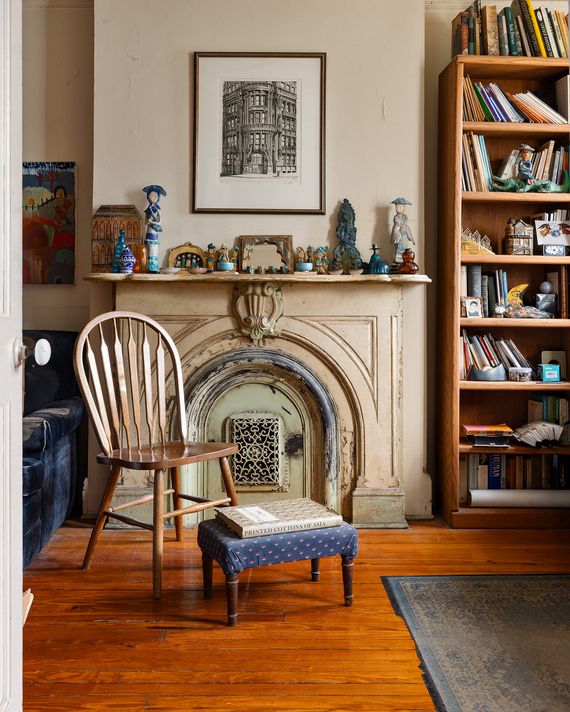
The fireplace mantel in the parlor-level living room. The family didn’t care much for redecorating and left the house fairly intact.
Photo: Hayley Ellen Day
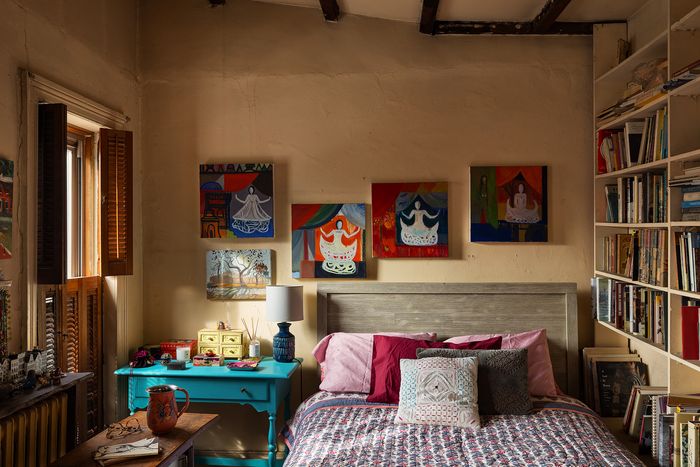
Beams on the ceiling on the third floor are original.
Photo: Hayley Ellen Day
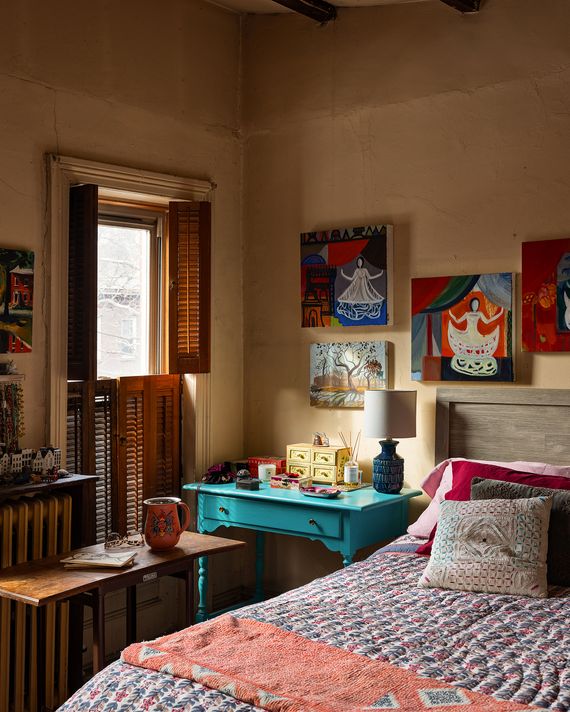
There are two bedrooms on the top floor, and the one near the front was Elizabeth Hershon’s childhood bedroom.
Photo: Hayley Ellen Day
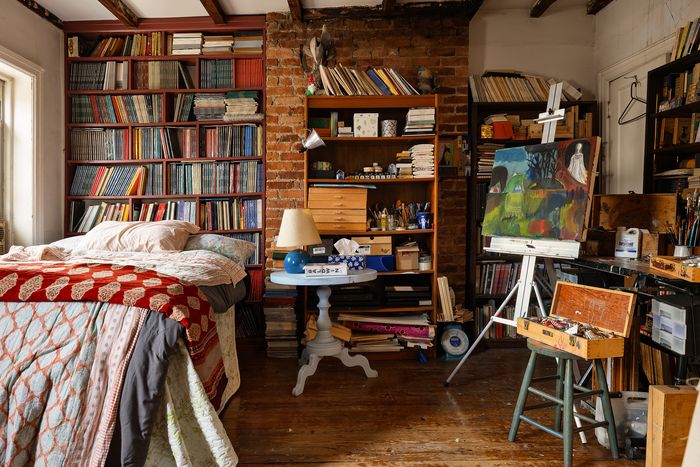
Elizabeth Hershon used this room as a studio. At one point, it was considered a guest bedroom for poets.
Photo: Hayley Ellen Day
Sign Up for the Curbed Newsletter
A daily mix of stories about cities, city life, and our always evolving neighborhoods and skylines.
Vox Media, LLC Terms and Privacy Notice
Related