
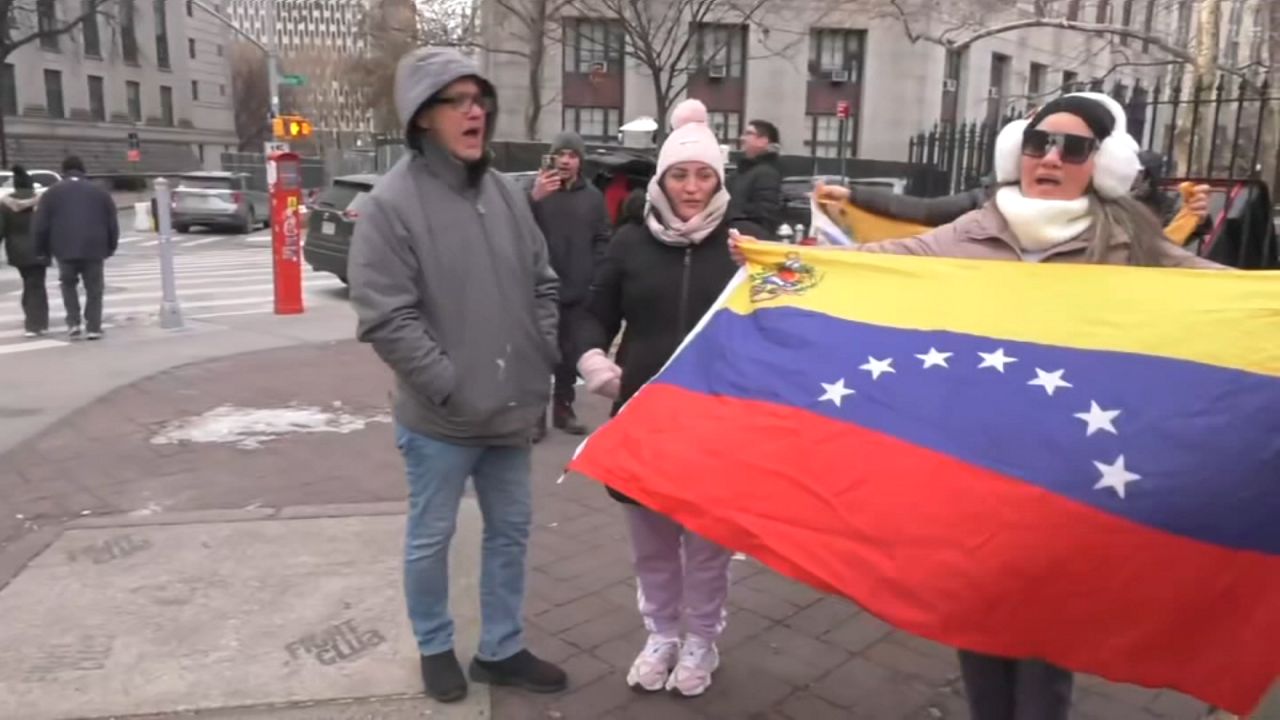
When Nicolás Maduro was captured and brought to the United States in January, Daniela Hernandez joined hundreds of Venezuelans in New York City celebrating what many saw as a turning point for their home country.
Hernandez, who came to the United States seeking political asylum from Venezuela as a young teenager in 2024, said she remains hopeful weeks later as she watches developments from afar.
“They’re excited and there is a change, you know, we all feel like there’s something different going on and like, you feel it, like people are able to breathe a little bit more easily,” she said.
What You Need To Know
Venezuelan immigrants in New York say Nicolás Maduro’s capture has sparked hope for change back home
Many, like Daniela Hernandez, say they hope the shift could allow them to reunite with family in Venezuela
Some report early signs of change, including the release of political prisoners and increased public protests
Maduro remains in U.S. custody facing federal charges, while Venezuela’s political future is still uncertain
Maduro was captured Jan. 3 in a U.S. military operation and taken to New York to face federal charges, an unprecedented move against a sitting foreign leader.
Hernandez has not returned to Venezuela since 2014 and said the distance from her family has been painful.
“It’s really hard not being able to, especially for the important moments, like Christmas, birthdays, special occasions, cousins getting married, weddings. I hope that we can get that back someday and embrace our family members. I hope I get to see my grandma before she goes,” she said.
Hernandez said Maduro’s capture has given her hope that she may one day reunite with relatives in Caracas, even as Venezuela’s governing system remains in place.
“Taking Maduro has kind of uplifted this dark, like energy around our country,” she said. “So many people my age, they’re not afraid anymore to be speaking up because they know the eyes of the world, they’re in Venezuela, and now they know that someone is being held responsible for something.”
Carlos Egaña, another Venezuelan living in New York City, said he has also noticed signs of change since January.
“We’ve seen hundreds of political prisoners be released. We are seeing people actively out on the streets demanding for several rights, mainly political participation for a new election to be held in the country. this would have been unimaginable in December, when the surveillance state apparatus of Venezuela was operating at peak levels,” Egaña said.
Egaña said he is still frustrated that some Americans do not fully understand why Venezuelans reacted with celebration to Maduro’s capture.
“Often times our issues are framed in very simplistic ways in this country by what a friend of mine calls anti-imperialist imperialists, folks that under the banner of anti-imperialism end up defining our lives and treating our issues in a way that is,” Egaña said.
He plans to attend Maduro’s upcoming court hearing, scheduled for Thursday in New York.
“I’m definitely going with the expectation of hearing a very strong case against Nicolas Maduro and those charges being pursued in a way that is adequately argued and that does reflect the reality that we Venezuelans have lived and that other folks that have been affected indirectly by Maduro have lived,” he said.