
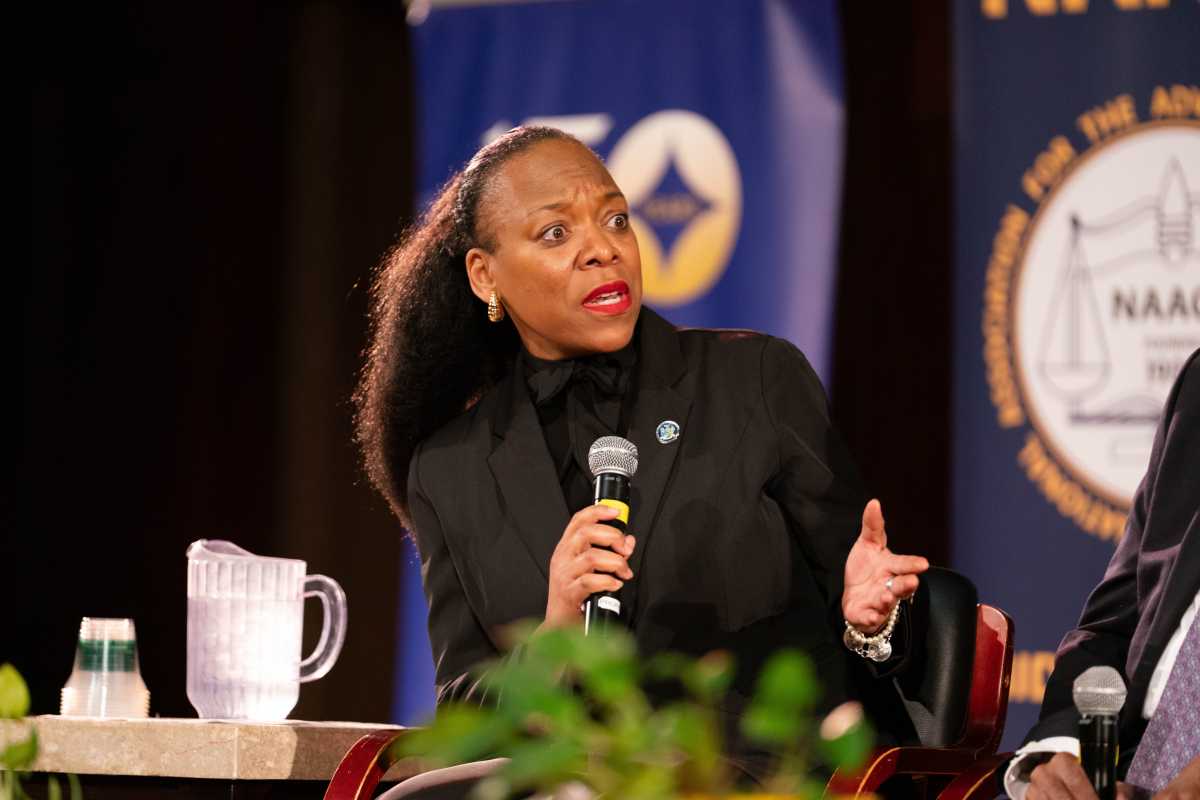
New York State Supreme Court Justice Machelle Sweeting speaks at a Metropolitan Black Bar Association panel on the need for more Black male judges.
Jay McClinton
Black men make up less than a fifth of New York City’s judiciary. That’s a problem, the Metropolitan Black Bar Association and NAACP say, particularly because Black men are often more likely to appear in criminal court than any other demographic.
“Our goal is to make sure that the bench reflects the people who actually live here, so that everybody that comes into court gets a fair shot and sees a judge who may look like them,” said election attorney Arthur Greig during a Thursday evening panel held by the Metropolitan Black Bar Association and NAACP in a panel discussion.
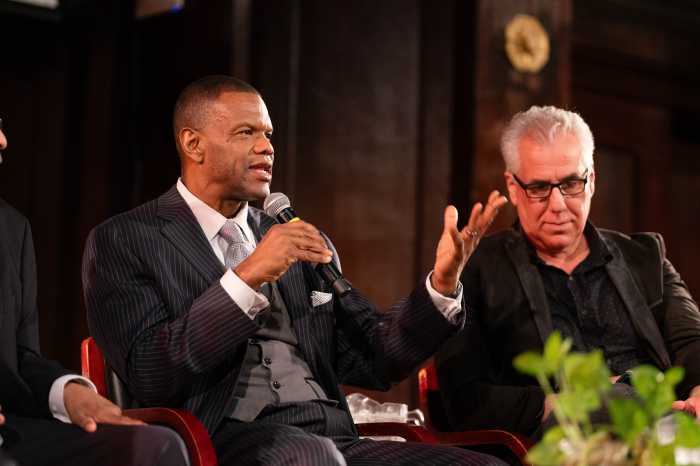 Acting Manhattan Supreme Court Justice Guy Mitchell speaks at the Thursday evening panel on the need more Black male judges. He said he’s served on benches where he’s the sole Black man.Jay McClinton
It’s important for people to see themselves on the bench, Manhattan Supreme Court Justice Machelle Sweeting said, because it helps build trust in the court system when people feel confident it includes and understands them.
“When people enter the courtroom and say, ‘I want to see someone who looks like me,’ what they’re really saying is, ‘I want to see someone who understands my lived experience, someone who is going to listen to both sides and not pre-judge or pre-determine cases,” Sweeting said. “They’re saying, ‘I want someone who is going to issue decisions that are fair and just consistent with the law.’”
That makes people more likely to put stock in decisions that are made, respect the institution, show up to court and participate in proceedings, panelists said.
“Something really kind of magical happens when there’s increased Black judges in a predominantly white courthouse,” said Michael Oliva, a judicial election consultant. “It’s a collegial effect. The ultimate cure for racism is exposure.”
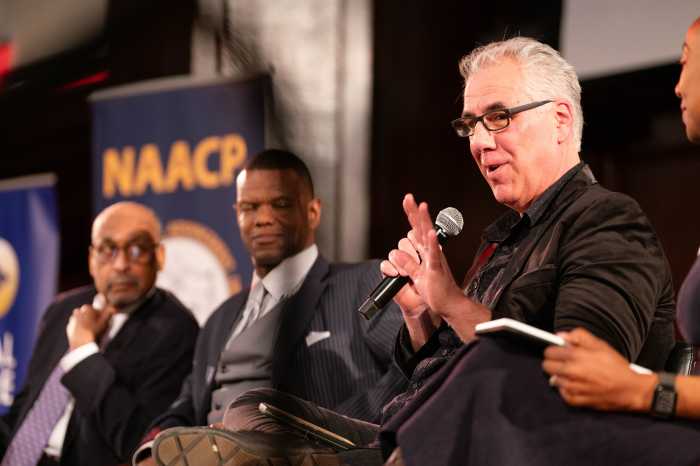 Michael Oliva speaks at the NACCP and MBBA panel on the need for more Black judges.Jay McClinton
He said studies show white judges start to look at Black defendants “more as human beings” and “understand the importance of being less punitive and alternatives to incarceration,” when they share the bench with Black judges.
But, to get there, the court system, advocacy organizations and law schools need to be creating a pipeline for Black men to get to the bench. That starts by meeting young kids in their schools and neighborhoods, panelists said, both to educate them on the value of becoming a judge and to reverse the negative perception of the court system many young Black people justifiably hold.
“Sometimes, for young Black people, their first time being in a court space is when they’re with their parents, who are standing there trying to defend themselves,” said Nicole Lester Arrindell, president of the Metropolitan Black Bar Association. “We have to get them to see that this is a place that they can see themselves working in, when it might be viewed as a barrier to housing, a complicated matter between parents.”
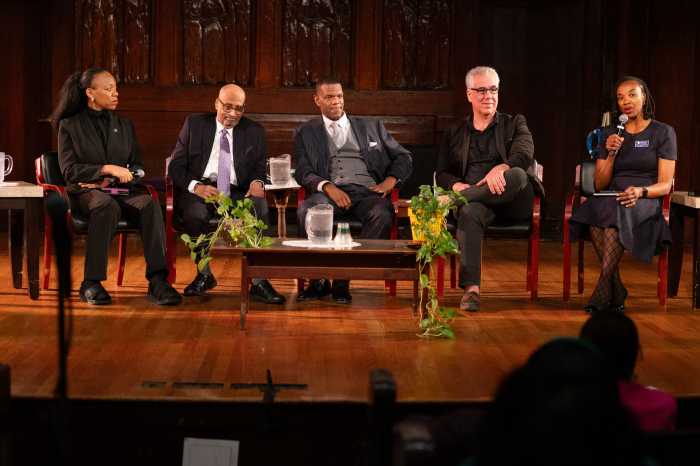 Nicole Lester Arrindell, president of the Metropolitan Black Bar Association, asks panelists questions as she moderates the evening event.Jay McClinton
Sweeting said she runs internships and programs where middle schoolers come into her courtroom and carry out mock trials, creating an environment they feel they have a place in.
“When they enter the building, they come not because they have a case, but because they have an appointment with the judge,” Sweeting said. “We have to increase that youth outreach.”
From there, she said, law schools and advocacy groups need to conduct more targeted outreach to Black men who have chosen to pursue a career in law, providing them with the information necessary to point them to the path to the bench.
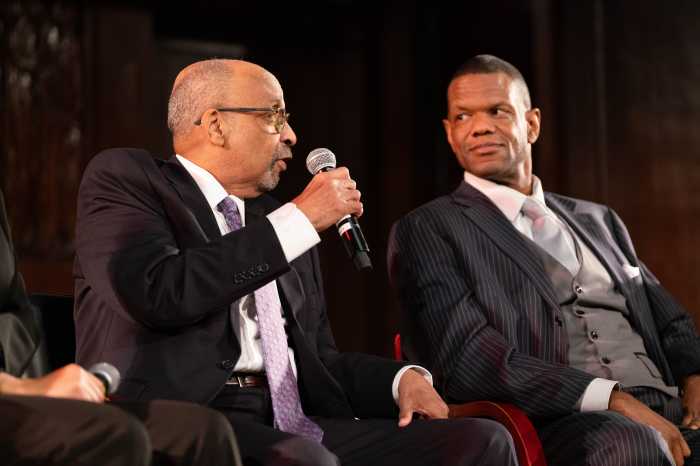 Election attorney Arthur Greig and Acting New York State Supreme Court Justice Guy Mitchell speak at Thursday’s panel.Jay McClinton
But what might be even more critical is convincing Black men that judgeship is a worthy pursuit after law school. One thing that frequently stops people from turning to it, panelists said, is that public service doesn’t pay like private practice does.
“It’s important to talk about the fulfillment that you get from public service,” Greig said. “There are certain things that come along with serving the public and helping people that … you couldn’t do anywhere else. Judges can’t help somebody, per se, but they can apply the law correctly and evenly and fairly … which helps people in our society, in our community.”