
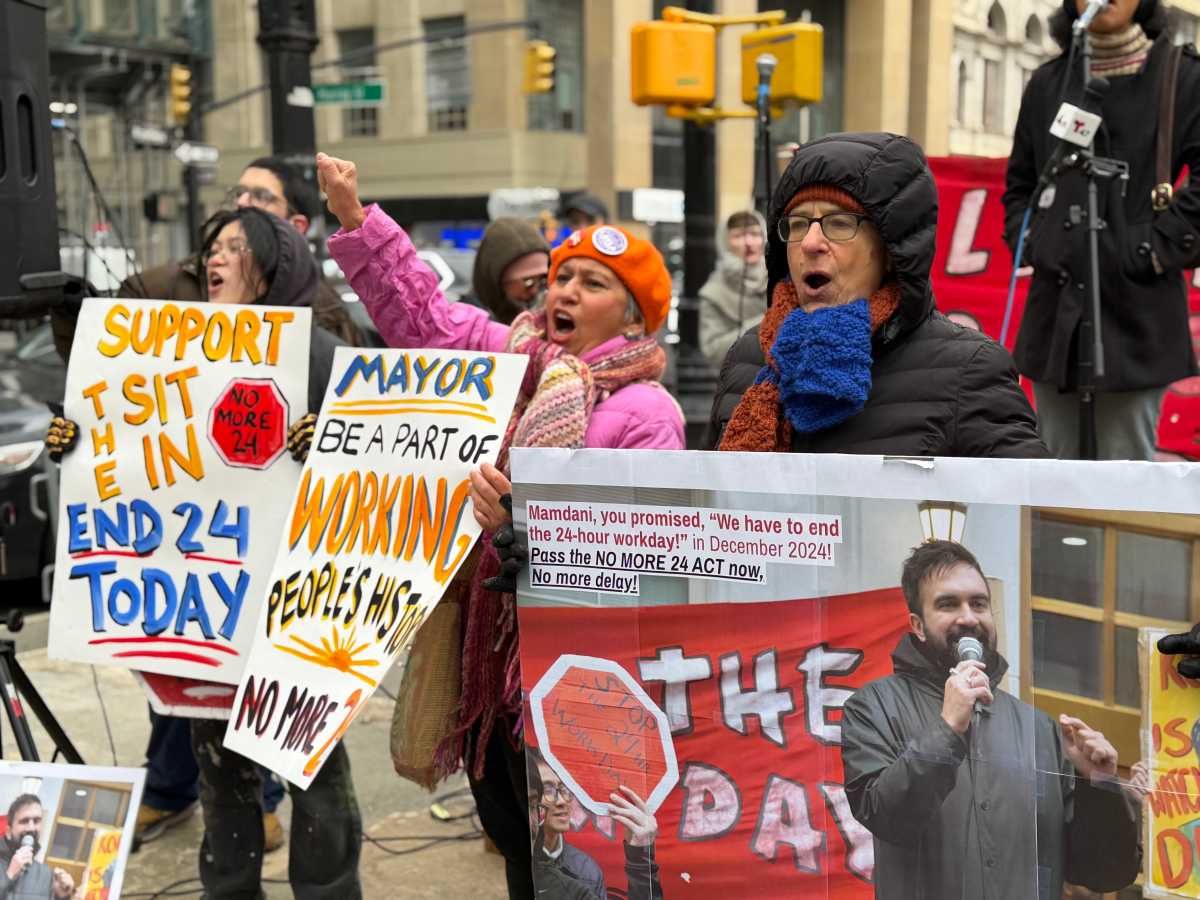
Dozens of protesters gathered at City Hall this week to demand the immediate passage of the No More 24 Act, continuing a daily sit-in campaign to pressure City Council and Mayor Zohran Mamdani to end the 24-hour workday.
There are roughly 130,000 home care workers in New York City — about 90% of whom are women, and about 70% of whom are immigrants.
Labor organizations and home care workers — who are disproportionately impacted by the 24-hour workday — originally announced their intention to organize daily sit-ins starting March 18 during a protest earlier this month.
“I have been working 24-hour shifts for 16 years, and it has ruined my health,” said Tan Yinghao, a home care worker who attended Thursday’s protest. “There is no such thing as a 24-hour workday anywhere in the world, and it must stop immediately. Today, I am very proud to sit in peaceful protest with my fellow home care workers in front of City Hall.”
Later during the March 18 protest, Speaker Julie Menin addressed the crowd with Manhattan City Council Member Christopher Marte, the sponsor of the No More 24 Act, and announced a tentative schedule for the bill to be passed by mid-April — after which protesters cheered.
“I feel like we can see the light at the end of the tunnel, you know?” Marte said. “I feel like we’re getting close.”
Menin and Marte both promised that no changes would be made to the bill’s language that abolishes the 24-hour workday entirely, although the effective date has been changed from October 2026 to April 2027.
The bill’s enforcement process has also been amended to align with all other New York City Department of Consumer and Worker Protection complaint system — so if a worker is coerced into working extra hours, they would file a complaint with the DCWP, which would investigate and take action against the employer if necessary.
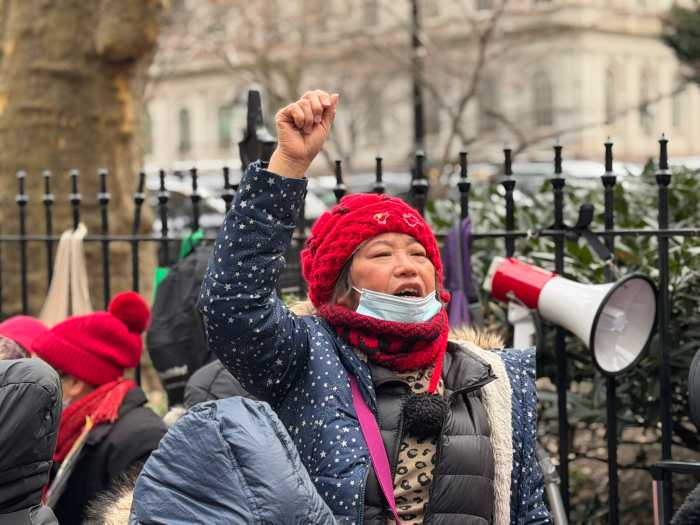 Protesters said the 24-hour work day takes a deadly toll on workers — especially home care aides who are required to stay with their patients overnight and remain on call the entire time.Photo by Renee DeLorenzo
The No More 24 Act, introduced by Marte three times since 2022, would require employers to schedule workers for no more than 12 hours a day unless certain criteria are met, including a one-week notice — originally two-weeks before amendments were made to the bill — and written consent from the worker.
It would also limit those additional hours to no more than 2 hours per day, capped at 10 hours per week.
Marte said an updated version of the bill will be uploaded to Legistar in the upcoming weeks.
Supporters of the bill explained that not only are workers not paid for a full 24-hour shift as a result of the state’s 13-hour rule — which allows employers to pay only 13 hours of a 24-hour workday, claiming breaks for meals and sleep — but the physical toll it takes on their bodies can be deadly.
“I am here to support the home health aides whose lives and bodies have been and continue to be broken and destroyed by the inhumane practice of a 24-hour work day, and the immoral and indecent practice of only paying them for 13 of those hours,” said Raquel Irizarry, who works with the New York State Poor People’s Campaign. “I have heard workers testify that their health can never be recovered by these brutal practices, and no amount of money can buy it back for them.”
Irizarry emphasized that these workers take care of everyone’s neighbors, families, and loved ones in their time of need.
Home care workers argued that it’s not just about wage theft, but rather about work-life balance, dignity, and quality of life.
Protesters expressed that when workers are scheduled for 24-hour shifts, they lose precious time with their families and suffer a physical burden that diminishes their quality of life.
“It’s about reclaiming our time,” said Vittoria Fariello, a district leader of the Democratic Party in Manhattan. “It’s about making sure that people are not only paid for every hour worked, but that they’re not stuck at work for 24-hour shifts. It’s unacceptable.”
Home care workers also argued that when they are sleep deprived and physically impaired by the 24-hour workday, it robs patients of the quality care they deserve.
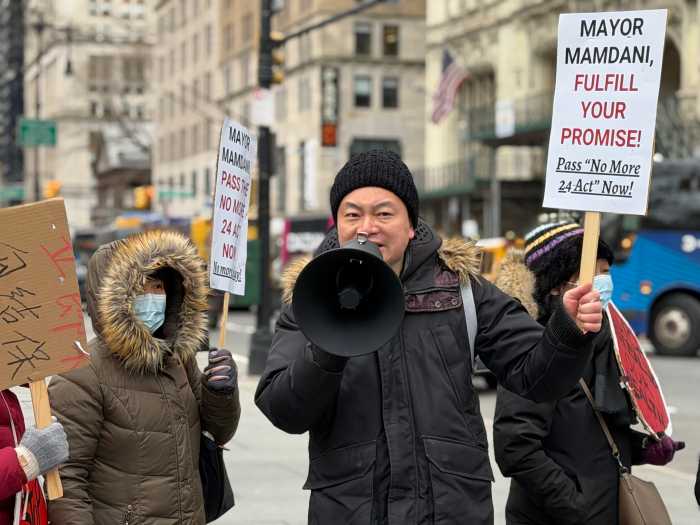 Home care workers called on the New York City Council and Mayor Zohran Mamdani to finish negotiations and allow the bill to come to a vote.Photo by Renee DeLorenzo
“There have been huge labor movement victories for the eight-hour workday, making sure we have weekends and holidays,” Marte stressed. “But for New York City to be one of the most progressive cities in our country and allow the 24-hour workday is a stain on our reputation.”
The bill is currently sitting in the council’s Committee on Civil Service and Labor, where its final language is being negotiated by committee members and a legal representative from Mamdani’s team.
“We’ve been diligently talking to the speaker’s team, to stakeholders, and going back and forth with the [Mamdani] administration, as well,” Marte emphasized.
Mamdani has previously expressed strong support for home care workers, attending a December 2024 rally demanding an end to the 24-hour workday.
Marte said he feels confident that the mayor will stand with the workers.
“I think [Mamdani] deeply cares about this issue,” the councilman said. “At our office, we’re keeping the doors open, and we’re happy to have conversations with every stakeholder to end this crisis.”
From the protesters’ perspective, however, they are concerned that the longer negotiations continue, the more the bill could potentially be weakened and leave workers vulnerable to more wage theft.
“Our position has always been no changes to the bill,” said Sarah Ahn, a labor organizer for the Flushing Workers Center who attended the protests. “We partnered with lawyers, the council and Christopher Marte. This is a strong bill the way it is.”
Many of the protesters called on Mamdani to stop delaying its passage and end negotiations so it could be voted on immediately.
“Mamdani — we are humans, not machines,” said Yuyi Chen, one of the protesters. “The 24-hour workday must stop. Do what you promised and pass the bill.”
 Even in freezing weather, protesters kept the energy high and stood in solidarity with the home care workers impacted by the 24-hour work day.Photo by Renee DeLorenzo
DocumentedNY reported that the Legal Aid Society, a nonprofit that provides free legal services, argued that the No More 24 Act could potentially harm patients who rely on 24-hour care.
Belkys Garcia, staff attorney for the nonprofit’s Civil Law Reform Unit, was quoted in the report saying the Legal Aid Society supports the effort to protect home care workers, but “meaningful reform requires alignment between city action and state authority.”
However, protesters said this effort to delay the bill was shameful, and its passage should not rely on lawyers who have never worked a 24-hour day.
Marte blamed “special interests” of big insurance companies and home care agencies as one of the main reasons why it’s been such a fight to get the bill passed.
“They want to keep the status quo,” he said. “The status quo is having immigrant women work 24-hour shifts and only get 13 hours of pay. The status quo is horrendous.”
Ahn said the daily sit-in campaign would continue each day until the bill is passed, demonstrating to the City Council and Mamdani that workers will hold them to their word.
“We are continuing to call on Mamdani to keep his promise and support No More 24,” she said. “No more delay.”
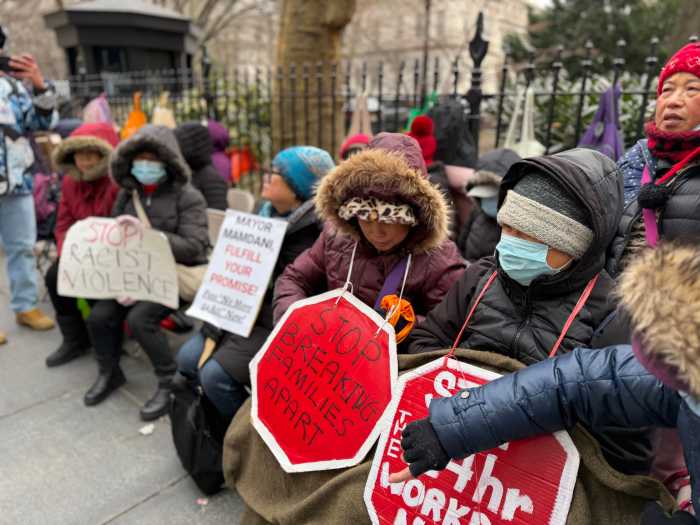 Protesters said they would organize a sit-in every day at City Hall until the bill passes City Council and Mamdani signs it.Photo by Renee DeLorenzo
  Photo by Renee DeLorenzo
 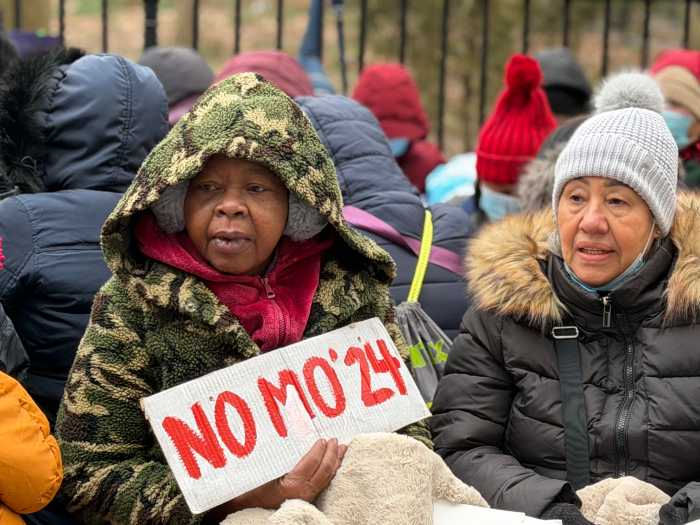 Photo by Renee DeLorenzo
 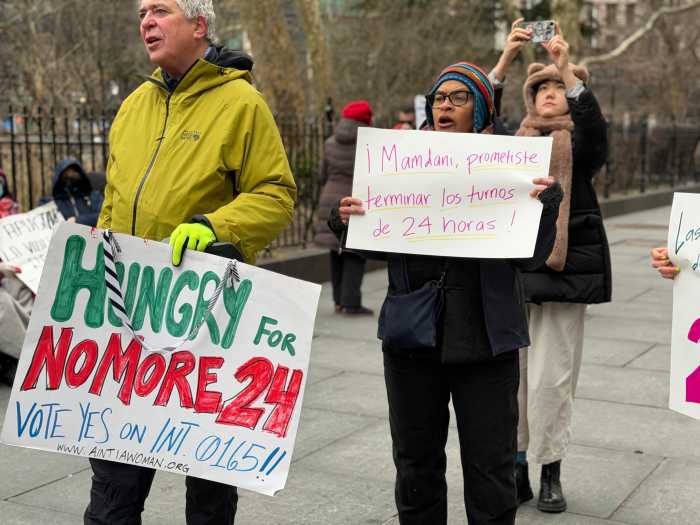 Photo by Renee DeLorenzo
 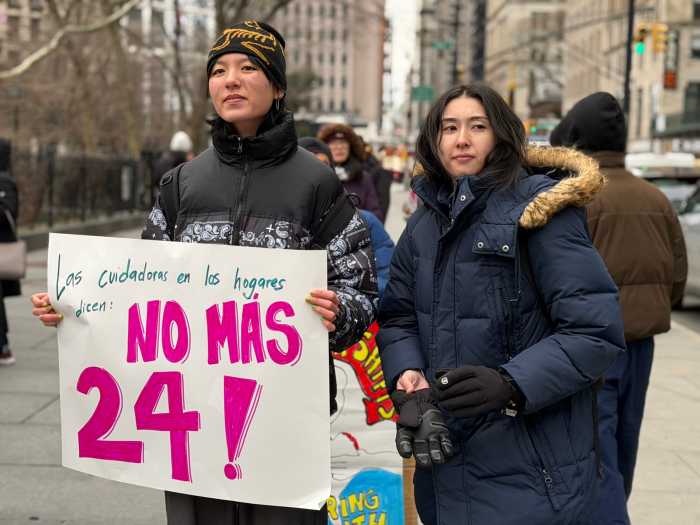 Photo by Renee DeLorenzo
 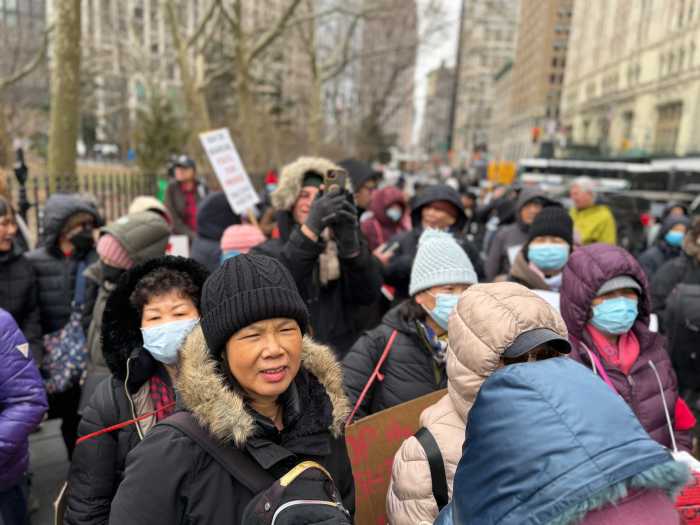 Photo by Renee DeLorenzo
 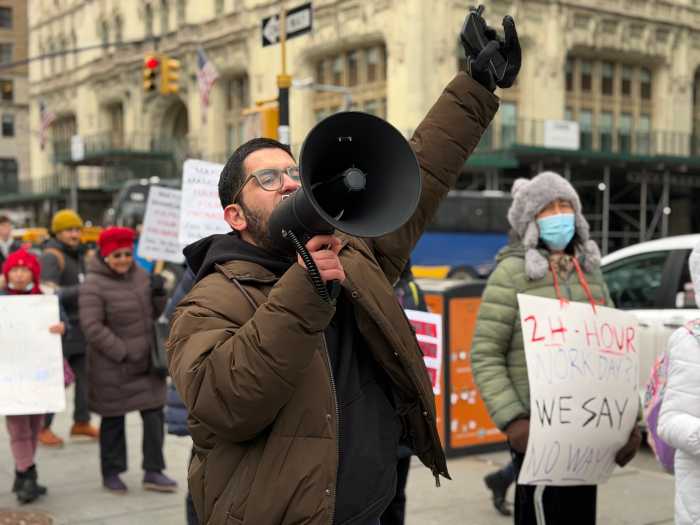 Photo by Renee DeLorenzo
 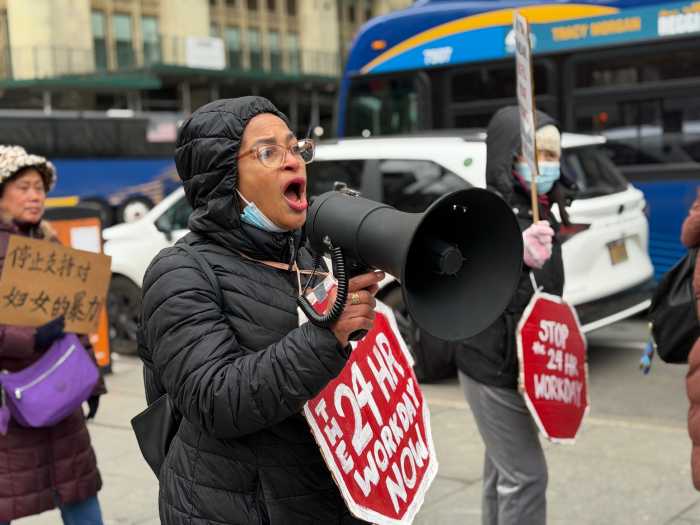 Photo by Renee DeLorenzo
 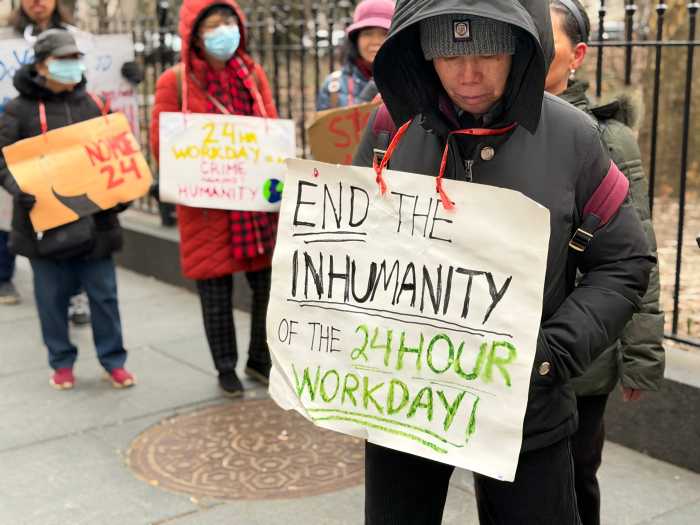 Photo by Renee DeLorenzo
 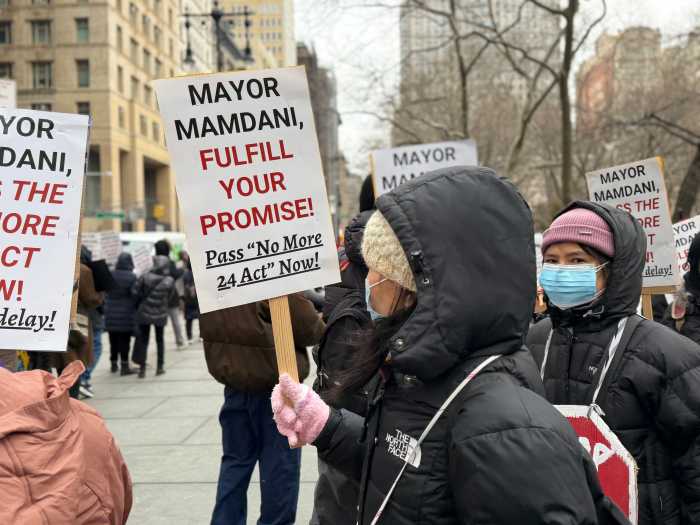 Photo by Renee DeLorenzo