
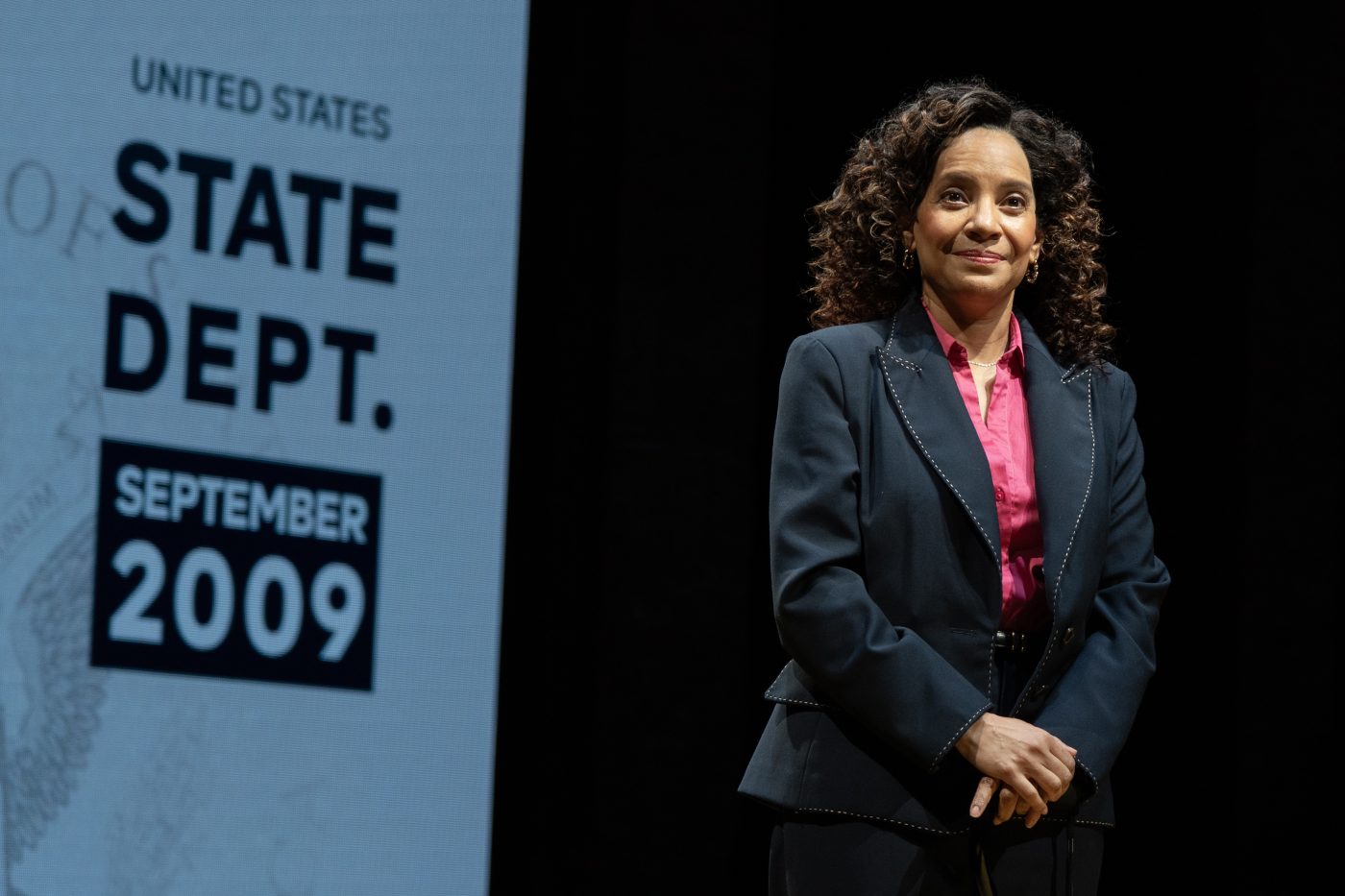
Public Charge, a new play by Julissa Reynoso and Michael J. Chepiga, directed by Doug Hughes at the Public Theater, arrives with strong material and a capable production. The staging is clear, the direction disciplined, and the acting consistently solid. It is a story worth telling. The problem is that the writing undermines it, diminishing both the character and the audience’s investment.
Set during the Obama administration, the play traces Reynoso’s path from immigrant child to a senior role in the State Department, moving through Haiti, Cuba, immigration policy, and the machinery of American diplomacy. It centers the story of a Latina diplomat rising through the highest levels of government, a perspective that feels both timely and necessary.
But the writing keeps undercutting its own premise.
The central issue is one of framing. Julissa Reynoso enters as a Harvard-educated lawyer stepping into a senior State Department role, yet the script consistently renders her as tentative and still finding her footing. In trying to make her relatable, the play undersells her. Instead of watching a capable operator navigate a difficult system, we’re watching someone still learning how it works, a portrayal that doesn’t align with the level of the position she holds.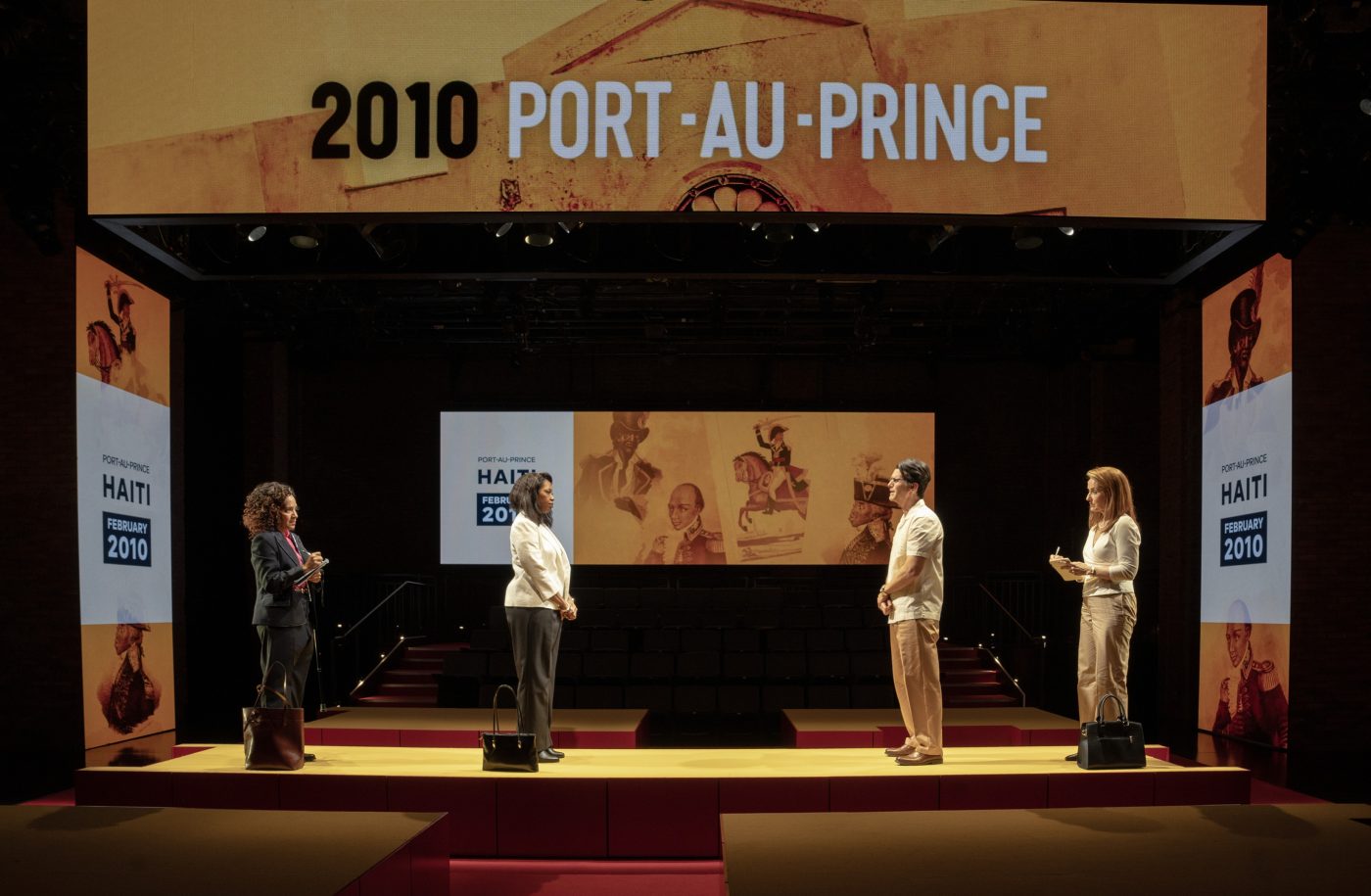
Even setting that aside, the choice is dramatically thin. That framing might have landed differently in another era. In 2026, it feels like a missed opportunity. Audiences have spent years watching how power is exercised, negotiated, and abused. The idea of a protagonist discovering that system no longer carries much dramatic weight.
More problematically, the play locates much of its conflict inside Reynoso herself. Her hesitation, her self-doubt, her reluctance to push forward are framed as central obstacles, as though the primary barrier is her own uncertainty rather than the system she is navigating. That could be a compelling choice if the script did the work to make that interior struggle vivid and consequential. Instead, it reads as a softening of the character. The result is a protagonist who feels less like someone confronting power and more like someone held back by her own hesitation, and the play never gives us enough reason to care.
Zabryna Guevara gives a grounded, committed performance, holding the center even as the writing pulls the character toward uncertainty. Marinda Anderson’s Cheryl Mills arrives with authority and precision, but the role amounts to a recurring intervention. Each time Reynoso wavers, Mills is there to tell her to pull it together. It works once. By the third or fourth time, you start agreeing with her, which is not where the play wants you to be. The repetition confirms the problem: the script keeps resetting its protagonist to a place of doubt so that someone else can supply the resolve she should already have.
Public Charge wants to affirm that government, at its best, can be capable, principled, and effective. The production supports that idea. The script does not trust its central figure enough to make us believe it.
Public ChargeBy Julissa Reynoso and Michael J. Chepiga
Directed by Doug Hughes
Venue: The Public Theater, 425 Lafayette Street, New York, NY
Run: Through April 12, 2026
Performance Schedule:
Tuesday–Sunday at 7:00 PM
Saturday and Sunday at 1:00 PM
Tickets:
publictheater.org
212-967-7555