
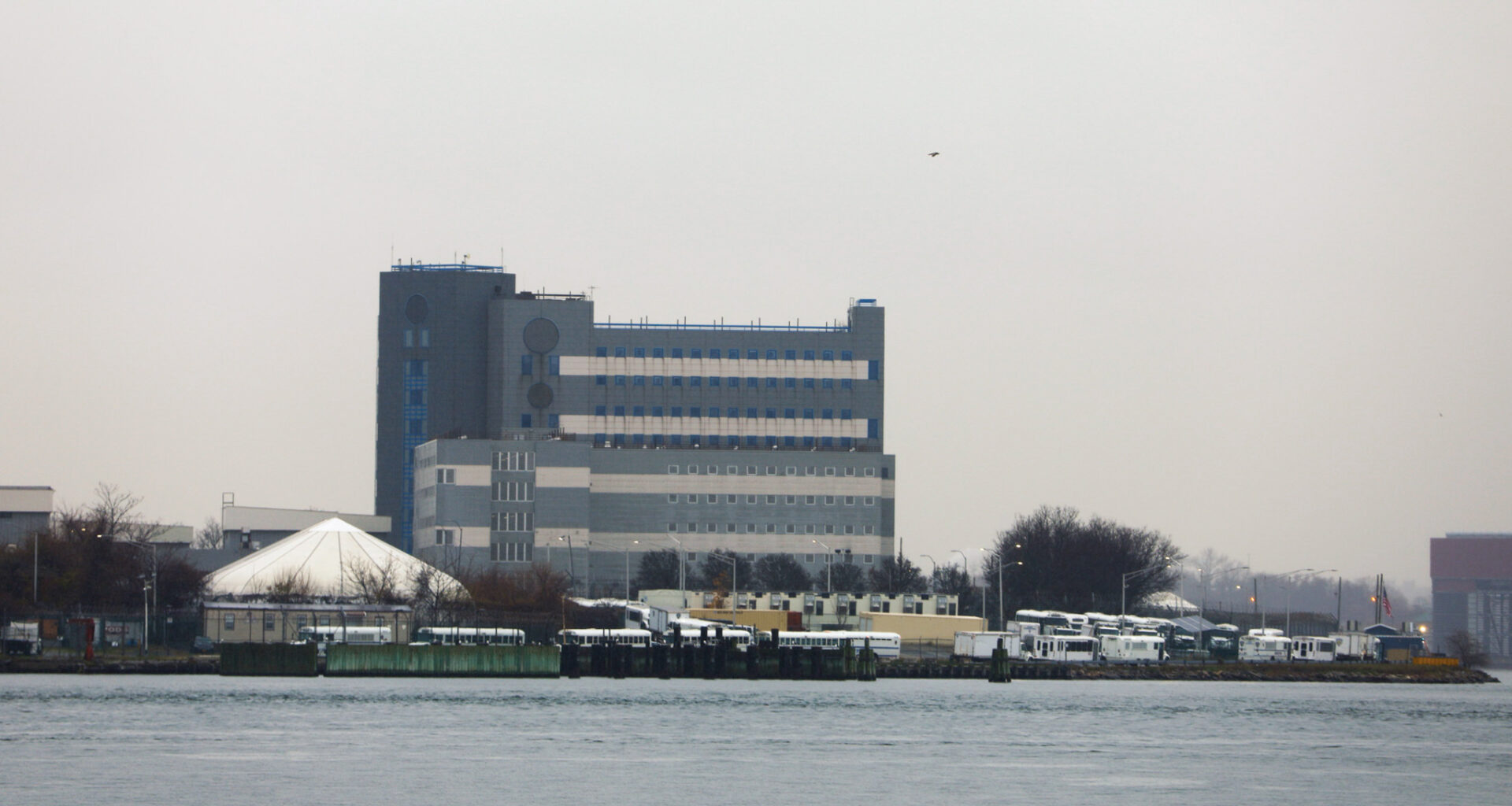
Fixing Rikers Island won’t happen fast.
Manhattan federal court Judge Laura Swain says it could take up to seven years to turn around the city’s troubled jail system after she recently appointed a former Vermont prisons chief to lead the overhaul. Nicholas Deml, who also once served in the CIA, must submit his initial plan by late May.
The timeline underscores the magnitude of the task ahead: reversing nearly a decade of failed reforms at city jails where violence, deaths and dysfunction have only worsened since a 2015 consent decree was supposed to fix things.
Swain emphasized that the timeline is not all-or-nothing.
As the city demonstrates it can meet court-ordered benchmarks in specific areas such as use of force and de-esclation policies, authority over those functions will be returned to the city’s Department of Correction, she wrote in her 28-page order formally announcing Deml’s selection.
The judge did not explain how she arrived at the seven-year timeline.
Some jail advocates and corrections experts questioned how long it should take to ensure the basic civil rights of the thousands of people held inside the island’s 10 detention facilities.
“New York City jails remain in crisis, with people suffering extreme harm on a daily basis and languishing for months and years while awaiting their day in court,” Anisah Sabur of the HALT Solitary Campaign told THE CITY.
“The longer we take, the more lives we’re going to lose,” she added. “We urgently need different pathways, resource allocations and programs to create true public safety.”
Sixty-three detainees have died behind bars on Rikers over the past five years.
The length of similar court interventions in jail and prison systems across the country has varied widely.
In California, a court-appointed receiver overseeing prison medical care has remained in place since 2006. In a case involving the District of Columbia Jail, a federal judge capped the receivership at five years, ending it in 2000.
As for Rikers, a leading national jail reformer, Dean Williams, also questioned the timeline.
“Time is needed, sure, but the real currency to fix the mess is courage to make painful decisions and then follow through on those decisions,” Williams, who formerly led lockup systems in Alaska and Colorado, told THE CITY.
Williams was one of several candidates who applied for the remediation manager role.
Advocates have argued for years that the department needs someone with more power than a traditional commissioner in order to ram through real change.
Deml’s authority goes well beyond that of past Correction Commissioners in several key areas.
He can hire, fire, promote and transfer staff, create or eliminate positions and rewrite policies and procedures across 18 areas of the jail system that city officials failed to fix despite a decade of court orders. That includes use of force policies, investigations of violent incidents, staff discipline, protection of young people in custody and supervision requirements.
 Former Vermont Department of Corrections Commissioner Nicholas Deml was picked Rikers Island remediation manager. Credit: Via Wikimedia Commons
Deml can also direct the commissioner, Stanley Richards, to take specific actions. Additionally, he answers to Swain, not the mayor or other city officials.
He’s been charged with overhauling everything from how force is used and investigated to how officers are disciplined and how young detainees are protected. He must also improve basic jail operations, including supervision inside housing units, staffing levels and the use of de-escalation tactics.
Swain ordered Deml to submit an initial “Remediation Action Plan” that is supposed to lay out concrete steps to address 18 core areas where the city was found in contempt of court orders. Those include how the department investigates violence, punishes rogue officers and protects kids locked up on Rikers.
Deml’s appointment has been in the works for more than a year.
Last May, after nearly a decade of ineffective oversight by a court-appointed monitor, Swain announced that she would appoint an independent remediation manager who will have broad powers and report directly to the court to enact long-stalled reforms.
She noted that “use of force rates and other rates of violence, self-harm, and deaths in custody” were “demonstrably worse” than when she ordered a monitor to oversee the department in 2015.
The department has had five correction commissioners since 2020: Cynthia Brann, Vincent Schiraldi, Louis Molina and Lynelle Maginley-Liddie.
They have each come up with turnaround plans, but none came close to fully succeeding as violence surged over that same period.
Similarly, Steve Martin, the Texas-based federal court monitor, has also spent close to a decade trying to implement a series of Rikers reforms, including revamping the department’s disciplinary system and how officers react to detainees who refuse direct orders.
Deml’s plan won’t be the only roadmap shaping the future of Rikers Island.
City officials are also facing looming legal deadlines to produce their own plans. Under a law passed last year, the mayor’s office must outline how it intends to close Rikers — including policy and budget changes — by May 1. A separate report from the Department of Correction detailing internal reforms is due on the same timeline.
The DOC has already submitted a plan on how it plans to drastically reduce the use of solitary confinement. That plan offered few details and essentially just laid out a timeline for when some of the unknown changes must be put in place.
The overlapping timelines reflect a broader challenge: balancing urgency with lasting reforms, said Zachary Katznelson, executive director of the Independent Rikers Commission, which advocates for the closure of the jails by the East River
“There’s a real tension between the urgency to improve safety and operations in the jails and the need to make changes that actually last,” he told THE CITY. “This has to be a permanent shift — and that takes time — but everyone also understands the need to make progress as quickly as possible.”
Katznelson added that while Swain has suggested the work could take years, “hopefully, it takes less than seven.”
Related