
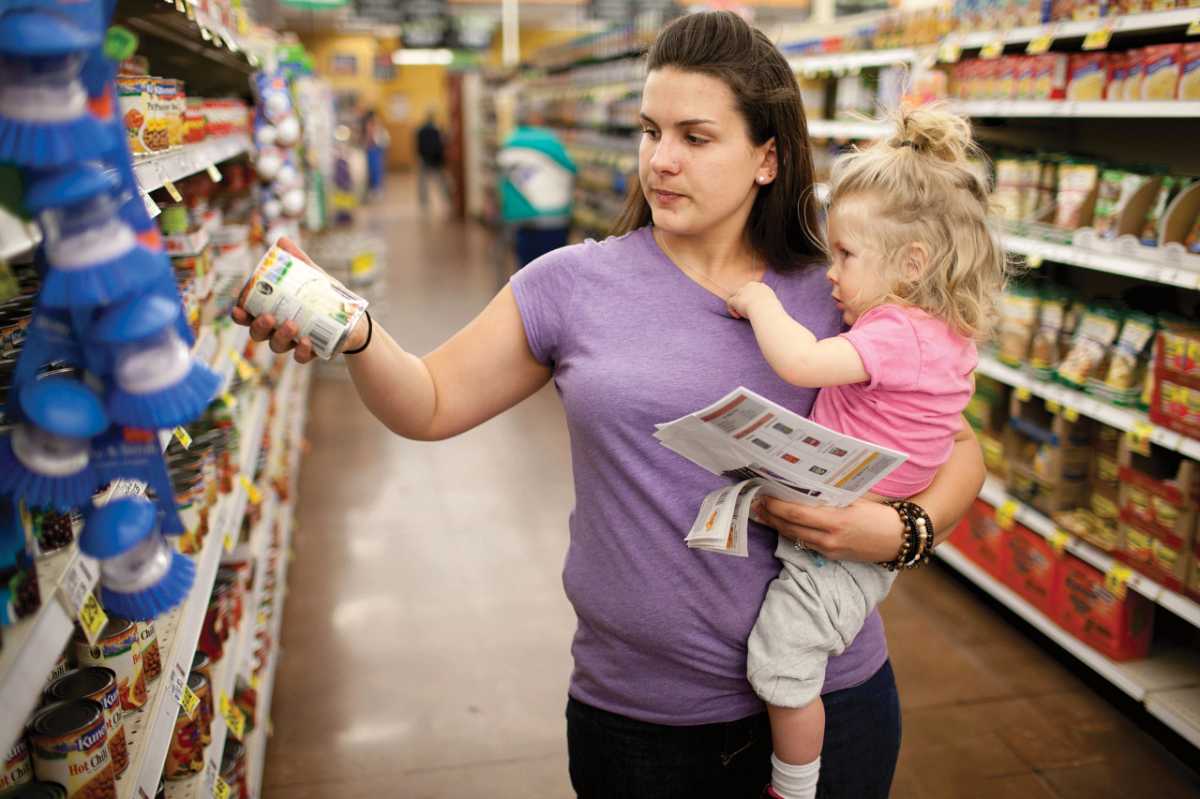
A majority of New Yorkers have been forced to choose between buying enough nutritious food or paying their rent, utility bills and other necessities in the past year according to a new poll commissioned by No Kid Hungry New York.
The poll found that 67% of residents and 74% of families with children reported making this difficult trade-off between paying for groceries and covering basic household expenses amid the growing affordability crisis.
Overall, 74% of New Yorkers reported their financial situation had suffered in the past year due to the cost of food.
According to citywide takeaways from the poll, 52% of New York City residents have taken on additional debt in the past 12 months due to the rising cost of food.
And, a majority of New York City residents said rising costs have impacted their health in more than one way — 54% said it impacted their physical health, 60% said it impacted their mental health, 53% said it impacted their social connections, and 78% said it impacted their financial health.
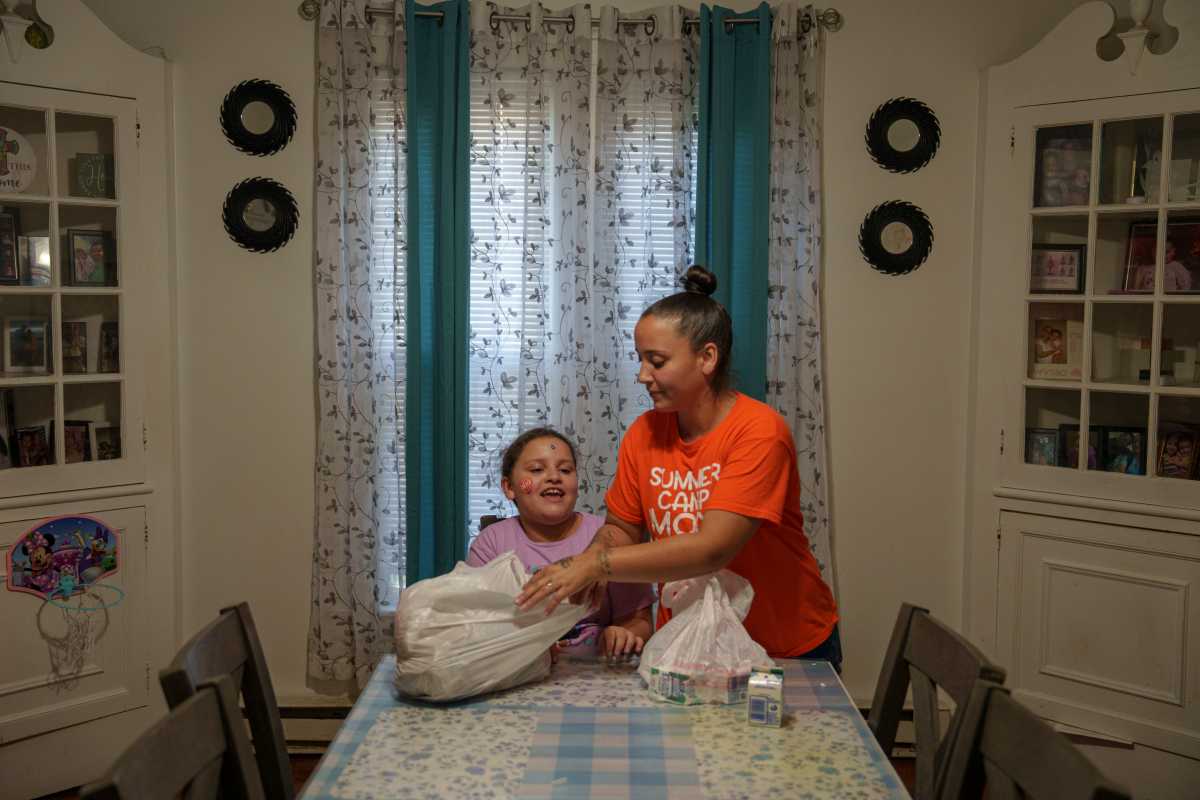 Queens residents said they’ve been feeling the impact of the rising cost of food amid the affordability crisis across the city, sometimes opting for less healthy choices or items that are potentially spoiled.Photos courtesy No Kid Hungry
Queens residents responded to the poll sharing their struggles to feed their families amid the affordability crisis.
One of the survey’s respondents, who identified as a biracial male parent aged 35-49, emphasized the difficulties his family faces amid rising food costs.
“We’ve had to restrict the variety of proteins and fresh veggies,” he wrote. “Our purchases are driven by what’s on sale much more than what we would prefer nutritionally.”
Another respondent, who identified as an Asian American/Pacific Islander female parent aged 35-49, said she has been forced to buy cheaper low-grade foods that may have been polluted by mold, such as cheap berries, non-organic produce and low-grade non-grass fed cheese high in omega-6.
“Basically, I avoid overpriced good foods that I used to buy because the prices make me feel scammed — though I know that may affect my health,” she wrote.
One Queens resident, who identified as a white woman aged 50-64 with no children, said she chooses between feeding herself and feeding her dog.
“I cannot afford to feed both myself and my dog well,” she wrote. “I choose to feed him, and I eat scraps or go without. I have lost weight when I didn’t need to lose weight and have gotten sick more often.”
Another Queens resident, who identified as a Black woman aged 35-49 with no children, said her strategy is to buy non-perishable items that will sustain her for longer.
“I try to buy less perishable items on a case by case basis,” she wrote. “I don’t want to buy fresh produce since the cost is higher and they may spoil faster. I try to freeze items or go for canned items if possible.”
Hidden in plain sight
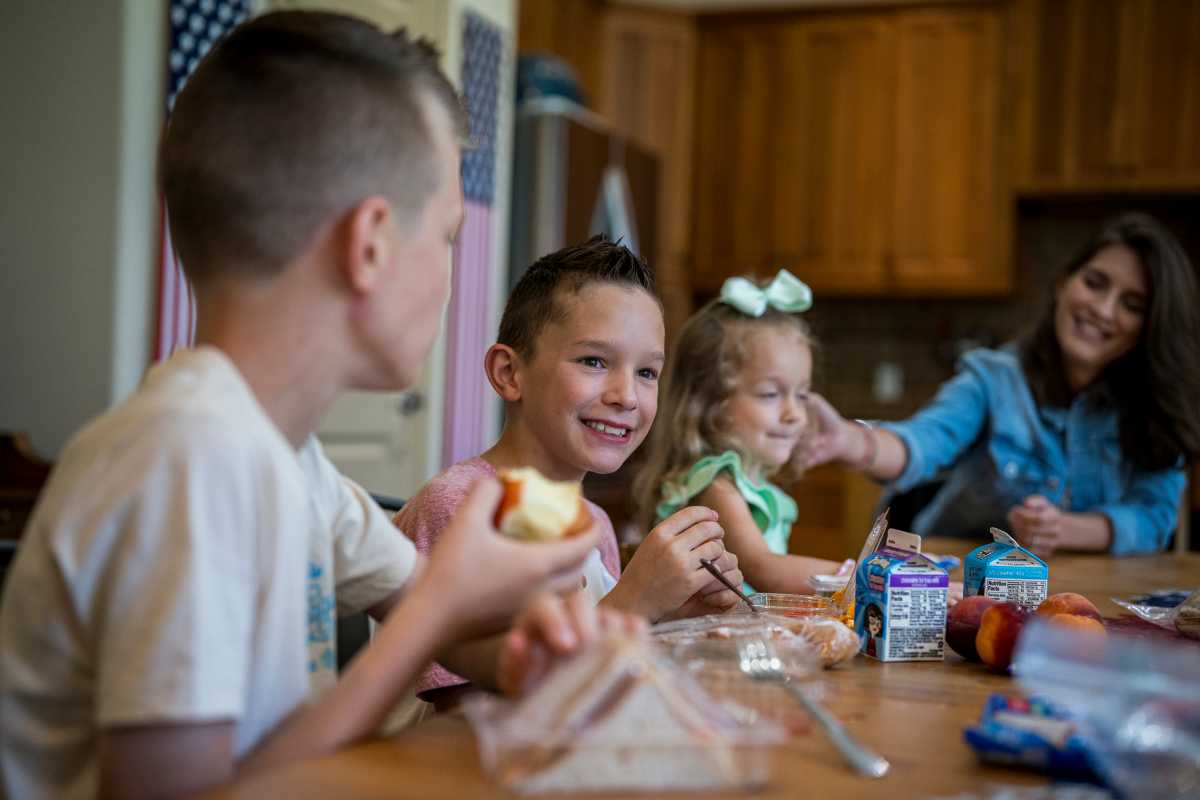 Over 14 million children face hunger nationwide — a struggle that Rachel Sabella, director of No Kid Hungry New York, said hides in plain sight.Photos courtesy No Kid Hungry
According to the U.S. Department of Agriculture’s latest hunger survey, 14 million children face hunger nationwide.
Rachel Sabella, director of No Kid Hungry New York, explained that hunger is an issue that “hides in plain sight.”
While some families may appear to be financially stable — such as those that own a home — she said neighbors would have no way of knowing whether they are making difficult choices between keeping a roof over their heads or paying for high-quality groceries.
“It’s your neighbor, or the person on line at your grocery store,” she said. “But this is a solvable problem.”
Sabella said the recent increase in food insecurity is due to a few reasons.
Not only are rent prices going up, she explained, but transportation costs and utilities have gone “through the roof.”
Sabella said New Yorkers are also struggling with job prospects, especially after the Covid-19 pandemic. After losing their jobs, she said many returned to the job market unable to find jobs with comparable wages or full-time hours.
“It’s all of these things happening at once,” Sabella said. “I think what’s happening is that people see food as something they can ‘play’ with in their budget. But with rising grocery costs, it’s even harder.”
Sabella said as a Queens resident herself, she sees firsthand how many shoppers pick up items, check the price and immediately put it back on the shelf. When they get to the register and see their total, she said even more ask to remove it from their cart.
As a result, Sabella said residents opt for processed foods, removing more expensive items such as protein and fresh produce.
Some parents even skip breakfast altogether to ensure their children can eat, she said, or they eat half-portions so their children can feel full.
One respondent, Sabella noted, said they even hide food from their children so they can make it last longer for the household.
“It’s heartbreaking and unacceptable,” she said.
The federal threat
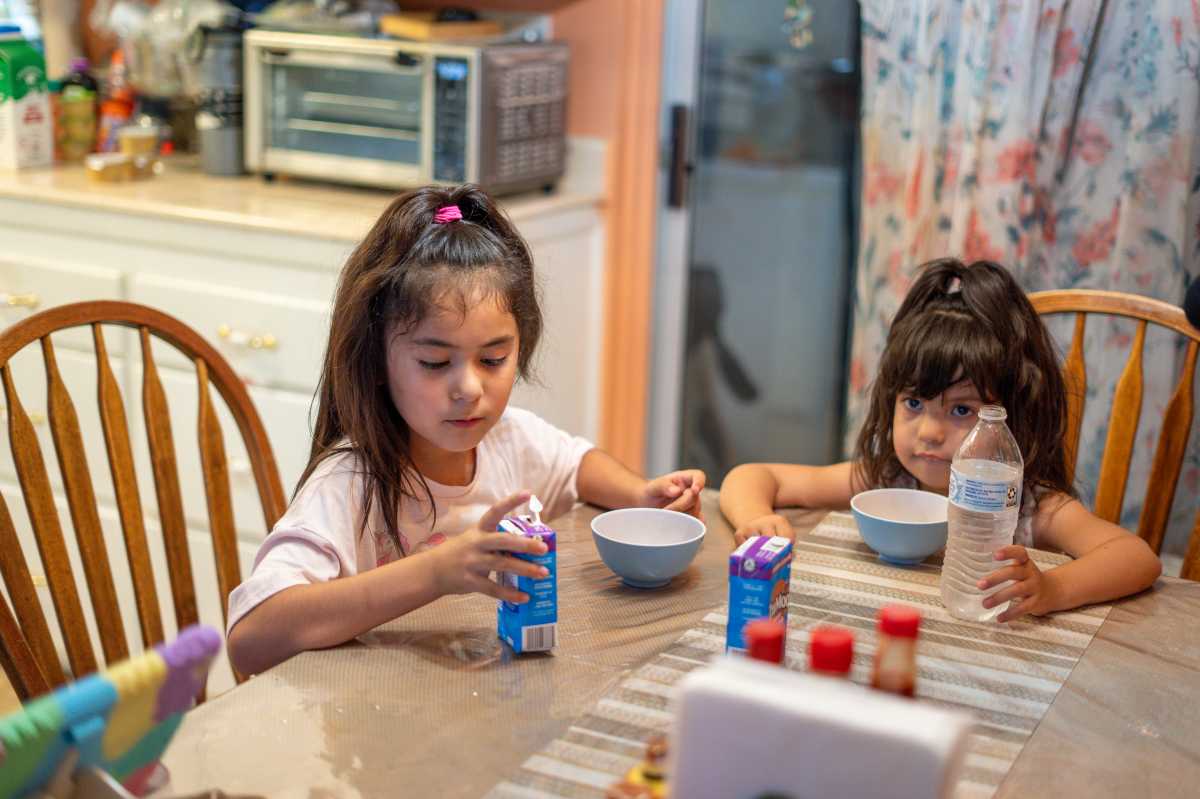 Recent federal cuts to SNAP and Medicaid outlined by the One Big Beautiful Bill — or H.R. 1 — have threatened food insecurity across the nation, according to No Kid Hungry.Photos courtesy No Kid Hungry
According to No Kid Hungry, the poll findings come as rising food costs and federal cuts to critical food assistance programs push even more children and families into hunger.
The findings also come as the U.S. House of Representatives’ Agriculture Committee considers the Farm Bill — a critical opportunity to reverse millions of dollars in federal Supplemental Nutrition Assistance Program (SNAP) funding cuts.
Sabella said SNAP already has strict eligibility requirements despite it being the first line of defense against hunger. Not only does SNAP help families purchase groceries, but it gives them the dignity of purchasing the grocery items they want.
She pointed to the Trump Administration’s One Big Beautiful Bill Act — H.R. 1 — that proposed nearly $200 billion in cuts to SNAP, as well as stricter work requirements that make it harder and more complicated to qualify for benefits.
Changes to the program outlined from the bill, which will come into effect in October 2026, also requires more cost-share from the state governments to fund SNAP.
Currently, both the federal and state governments each contribute 50% of the cost of the program. However, under the new bill, the federal government would only fund 25% of the program, leaving the remaining 75% to be funded by the state government.
As a whole, Sabella said the financial impact of these SNAP cuts on New York State would be $250 million — $100 million of which funds New York City’s program.
“This is devastating,” she stressed. “The city and state governments have stood together to address hunger. Unfortunately, we haven’t seen that same bipartisan support from the federal government.”
However, the No Kid Hungry poll found overwhelming, bipartisan support among New Yorkers for critical food assistance programs.
According to the poll, 62% of New Yorkers oppose federal cuts to SNAP.
Among survey respondents, 74% believe SNAP helps low-income families afford healthy foods, and 67% said it prevents them from taking on debt.
In addition, 80% of respondents agreed SNAP helps ensure parents can afford enough food for their families. Broken down by political party, this includes 91% of Democrats, 78% of Independents and 66% of Republicans.
Among New York City residents, 77% oppose federal cuts to food assistance programs, including SNAP, WIC and Summer EBT.
“New Yorkers stand up for each other,” Sabella said. “I think about this hunger crisis and the bipartisan support when New York State approved universal school meals last year. We know when people are struggling, and we want to make sure they have the food and nutrition to thrive.”
Community-wide impact
 Sabella said SNAP is the first line of defense against hunger, so she said expanding the program is essential to addressing food insecurity amid the growing affordability crisis.Photos courtesy No Kid Hungry
Not only will the cuts impact families that rely on the program, Sabella explained, but it will impact the local economy as a whole.
When SNAP benefits didn’t go out last November, Sabella said No Kid Hungry spoke with owners of local grocery stores, some of which told them up to 70% of their monthly revenue came from SNAP benefits.
Some of the solutions proposed by No Kid Hungry, Sabella said, paint a holistic picture of addressing hunger along with other facets of the affordability crisis.
Many SNAP recipients are also eligible for Medicaid, she pointed out, meaning expanding the Medicaid program could help ease costs for families that rely on it.
Expanding SNAP helps families reinvest funds directly into the local economy through food vendors, grocery chains and local farms that provide food to the community.
Universal school meals is another important piece of addressing hunger, Sabella continued, because families no longer need to spend additional money on groceries for breakfast and lunch and provides more wiggle room for them to budget for other larger costs.
For now, as city and state officials draft their budgets, Sabella said there’s been a lot of advocacy around funding for emergency food providers, such as food pantries and soup kitchens.
“Every day, they’re seeing their lines grow longer,” Sabella said. “In many cases, they’re seeing people that have never had to use a food pantry before because the crisis is hitting them so hard.”
Sabella emphasized the importance of working with partners across the city and state to address the solvable issue of hunger in the nation, such as school districts, community organizations, government agencies and everyday New Yorkers.
“Hunger is a solvable problem,” she said. “As a society, we need to do better. That’s why I work with partners across the state to do just that.”
For more information about No Kid Hungry, visit NoKidHungry.org.
 For more information about No Kid Hungry, visit NoKidHungry.org.Photos courtesy No Kid Hungry