
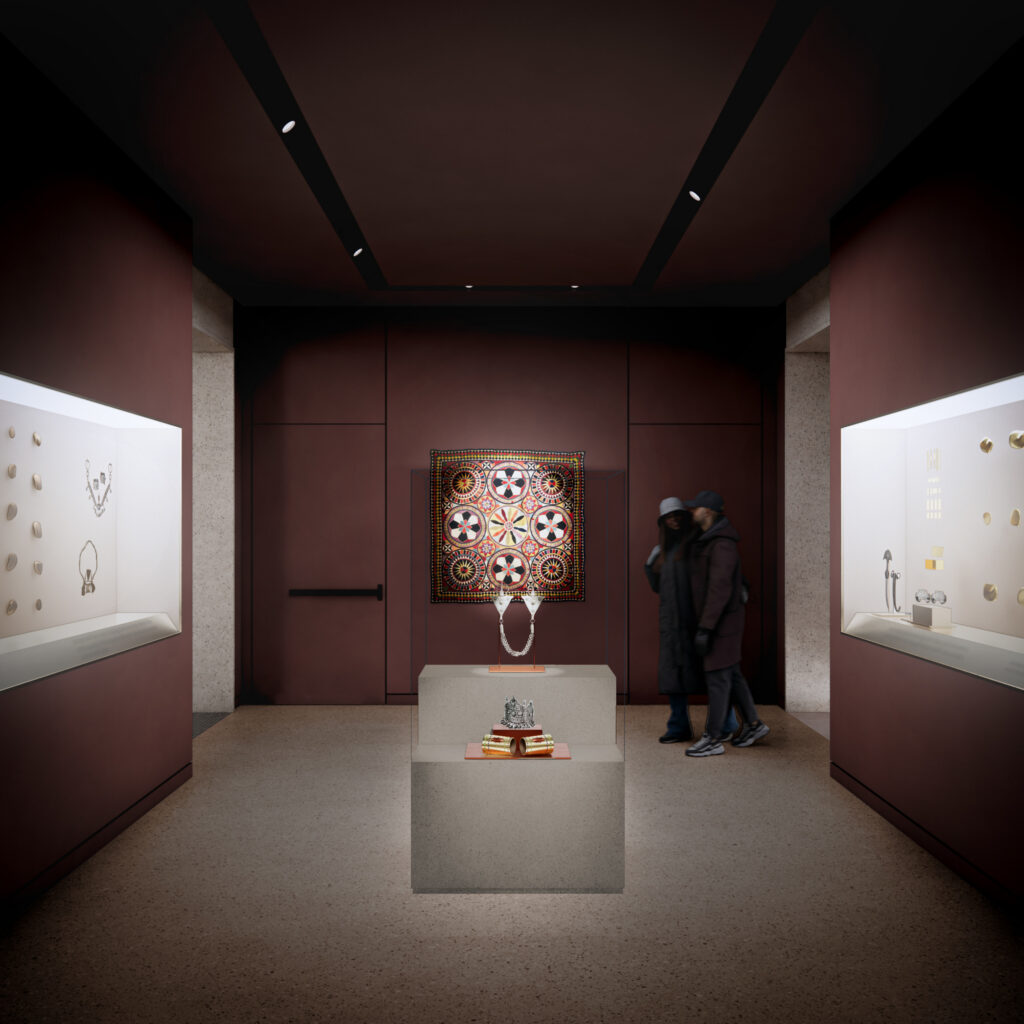
 EASTERN PARKWAY — The Brooklyn Museum is launching a major new project to renovate and design permanent galleries for its historic African art collection, one of the largest and most renowned in the United States.
The revamped 6,400-square-foot galleries, located on the museum’s third floor adjacent to the iconic Beaux-Arts Court, will feature an inaugural installation of over 300 works from antiquity to the present. The project marks a new milestone for the 200-year-old institution as it transforms previously underutilized spaces, which served as onsite storage, into vibrant galleries that will bring more art on view.
For the first time, the installation will connect seamlessly with the museum’s Egyptian art galleries, uniting North Africa with the rest of the continent, offering visitors an expanded and cohesive vision of Africa’s rich artistic legacy.
To realize this ambitious vision, the museum partnered with Brooklyn-based architectural firm Peterson Rich Office (PRO), known for adapting established institutions for 21st-century audiences, in consultation with Beyer Blinder Belle on historic preservation.
 Rendering of Arts of Africa Galleries. Photo: Peterson Rich Office
The approximately $13 million project is funded by the City of New York and federal grants with additional support from the Ford Foundation, the Sills Family Foundation and individual supporters. Renovations will begin in summer 2026, and the galleries are expected to open in fall of 2027. Zubatkin Owner Representation, a Cumming Group Company, will serve as owners’ representatives on the project.
“This is more than a new collection gallery — it’s a bold reframing of how African art is understood and celebrated in American museums,” said Anne Pasternak, Shelby White and Leon Levy director of the Brooklyn Museum. “At the same time, this renovation is a major step in our larger vision to revitalize the entire museum, creating spaces that will allow us to continue to entice and engage a breadth of audiences with distinctive art experiences. Ultimately, this transformation strengthens our role as a civic and cultural anchor in Brooklyn, deepening our relationship with our community and expanding what a museum can be for the public we serve.”
Over the past few years, the museum has quietly undertaken essential building improvements, from behind-the-scenes work of making the building more cost- and energy-efficient to renovating public spaces like the education galleries and lobby café, improving the building’s functionality and strengthening the museum’s ability to serve the community. The new Arts of Africa galleries will further advance this vision to revitalize gallery spaces, enhance visitor engagement and bring more art on view.
The museum has already made significant progress in preparing for the new galleries. In recent years, the museum appointed Ernestine White-Mifetu as Sills Foundation curator of African Art and Annissa Malvoisin as associate curator of African Art; their scholarship is collectively shaping new approaches to how African art is displayed and interpreted. The curatorial team has conducted comprehensive collection reviews, extensive research and planned conservation treatments for works that have not been displayed since entering the collection. The Arts of Africa project is an important step for future transformative renovations that, with continued fundraising, will revitalize more of the building for future generations.
 Rendering of Arts of Africa Galleries. Photo: Peterson Rich Office
Originally designed in 1893 by the architects McKim, Mead & White, the Brooklyn Museum has undertaken a number of renovation projects in the last 25 years, including the comprehensive decade-long transformation of the second floor galleries dedicated to Arts of Asia and the Islamic world; the renovation of the first floor Great Hall in 2016; the establishment of the Elizabeth A. Sackler Feminist Center in 2007; the opening of the Visible Storage and Study Center in Luce Center for American Art in 2001; and the major reconstruction of the Rubin Pavilion and Lobby in 2004.
Building project
The Brooklyn Museum presents the Arts of Africa collection as living and active, representing a wide range of forms, materials, time periods and geographic regions. The installation integrates classical sculpture with contemporary art from across the continent and the diaspora, layering old and new to reflect the complexity and diversity within African arts. This framework is also mirrored in the architectural expression of the new galleries.
PRO’s approach centers on celebrating the distinctive character of each space rather than imposing uniformity across the galleries. Constructed at different times during the museum’s architectural history, these galleries vary dramatically in ceiling height, proportion, structural systems and historical details.
Designed by McKim, Mead & White in 1904, the first gallery, located in the historic East Wing, boasts 25-foot ceilings and 23-foot windows, allowing ample filtered daylight to illuminate the room, complemented by traditional moldings highlighting the building’s Beaux-Arts heritage.
The adjacent galleries, built in the 1920s, offer more intimate scales and distinct spatial qualities. Each room tells a story of the museum’s evolution. PRO’s design strategy aims to honor these individual narratives while uniting them into a cohesive new gallery experience.
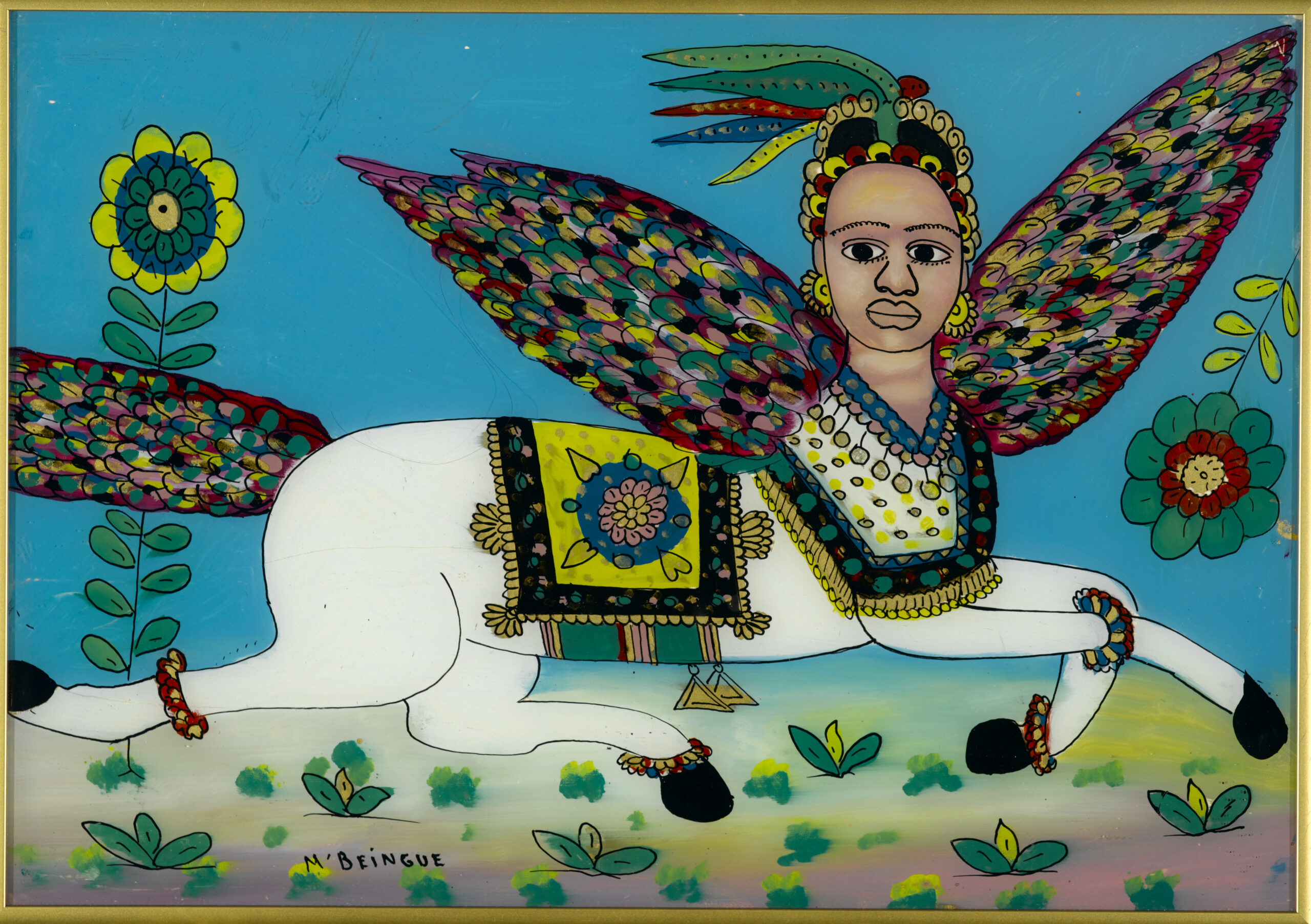 Gora Mbengue (Senegalese, 1931–1988). Al-Buraq, 1975. Glass and paint. Gift of Blake Robinson, 2004.52.21. © Estate of Gora Mbengue. Photo: Brooklyn Museum
Contemporary layers in historic spaces
The renovation introduces contemporary infrastructure throughout the galleries, including lighting systems and climate control. Rather than concealing these modern necessities, PRO exposes and celebrates them as a new architectural layer. All new metal elements will be finished in a rich accent color, creating bold contemporary contrasts within the space. This strategy transforms functional systems into intentional design, establishing a clear visual language that distinguishes new forms from the historical. The contemporary layers serve as an honest expression of the building’s continued life, acknowledging that the museum continues to evolve and adapt while respecting the architectural integrity of its past.
This dynamic interplay across the galleries — where historical plaster ceilings and moldings coexist with contemporary materials, traditional proportions frame modern display strategies, and natural daylight blends with calibrated artificial illumination — mirrors the approach to present the collection’s embrace of diversity across time, geography and artistic tradition.
Through material expression, spatial sequence and restored connections, the Arts of Africa galleries reflect PRO’s belief in creating dialogue between old and new. The spaces honor the museum’s layered architectural history while establishing a flexible framework that accommodates the collection’s continued growth and evolution. The architectural concept lends itself to the museum’s broader mission of presenting African art as part of an ongoing, dynamic conversation that continues to shape our world and engage diverse audiences.
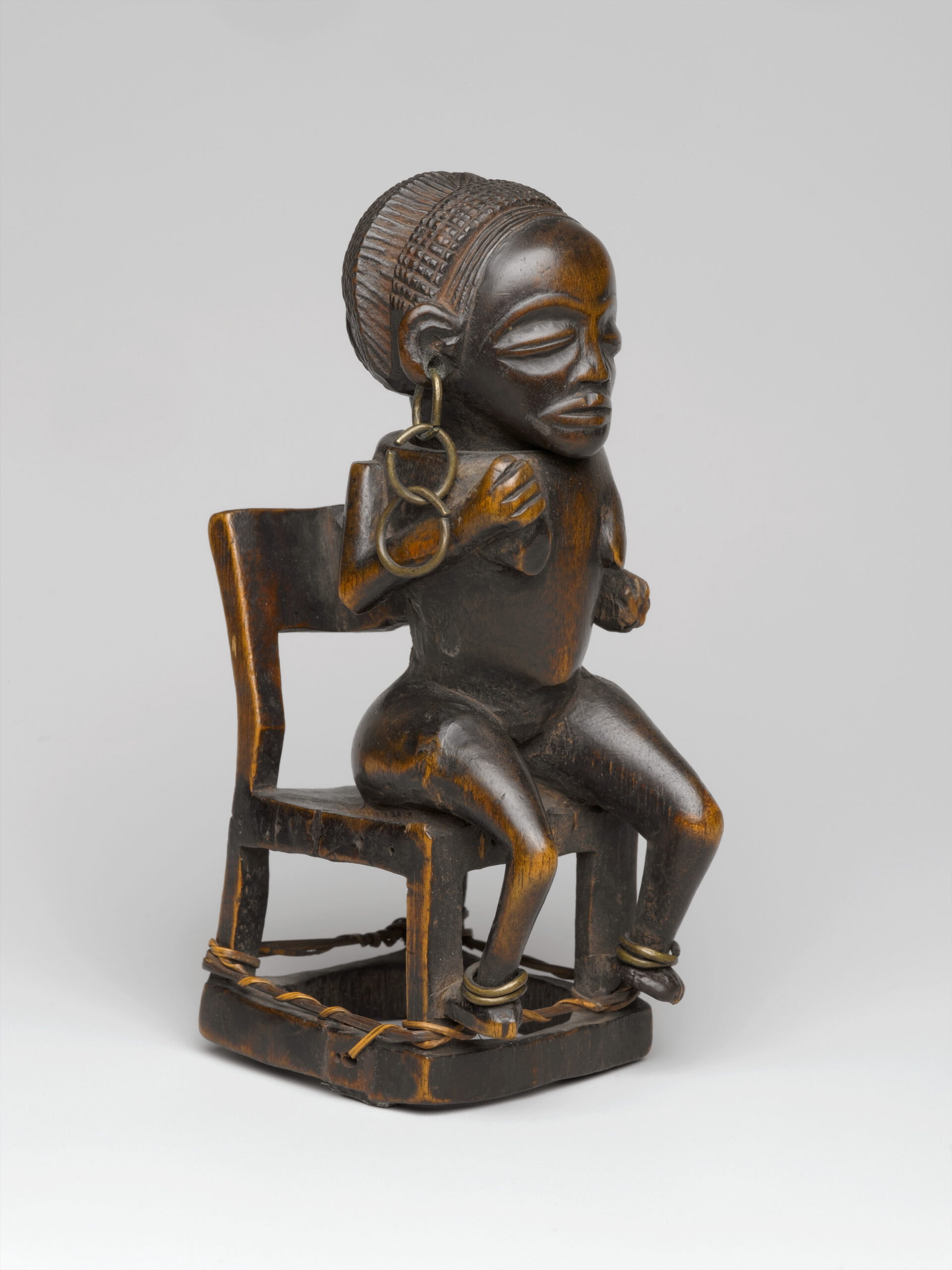 Chokwe artist. Tesa Ya Ma Kanya (Snuff Container), Northeast Angola or Bandundu Province, Democratic Republic of the Congo,19th century. Wood, iron, and fiber. Museum Expedition 1922, Robert B. Woodward Memorial Fund, 22.1089. Photo: Brooklyn Museum
Restoring historic connections
A critical component of the project will be the reopening of an original enfilade that once connected the spaces around the museum’s iconic Beaux-Arts Court. By removing doors and clearing infilled openings, PRO will restore both the visual sightlines and historical circulation paths that were once part of the museum’s 1893 design, creating a continuous loop of exhibition spaces.
The architectural gesture also carries profound programmatic significance by directly connecting the museum’s world-renowned Egyptian collection galleries to the Arts of Africa galleries.
Visitors will experience North Africa and the broader continent as a cohesive whole, redressing traditional cultural geography and the art-historical narrative. This spatial reunification reflects contemporary scholarship but remains rare in encyclopedic museums, where these collections are typically presented separately.
History of the Brooklyn Museum’s Arts of Africa collection
The first works from Africa entered the collection in the early 1900s, making the Brooklyn Museum one of the first institutions in the United States to build a collection of African art.
In 1923, under the stewardship of Curator of Ethnology Stewart Culin, the museum displayed works from the African continent, emphasizing their artistic qualities rather than treating them as ethnographic specimens. The presentation was not only groundbreaking for its novel approach to contextualizing African creativity, placing it on the same plane as other cultural collections — a first for an American museum in the 20th century — but also by being one of the first museum presentations of African art in the United States.
Throughout the century, the collection continued to grow and was featured in various exhibitions, including “Masterpieces of African Art” (1954–55) and “African Art of the Dogon” (1973). Over its 100-year history, the museum’s holdings have expanded to include modern and contemporary African art alongside historical works. By the late 20th century and early 2000s, the African holdings covered approximately 2,500 years of history.
Today, the museum’s Arts of Africa collection is one of the largest and most renowned in the country. Comprising over 4,500 objects, it is distinct in its holdings of works that embody the technical craftsmanship of their makers, reflect the stunning imagery of diverse cultures, and represent ongoing cultural and artistic practices.
Featuring a wide range of objects varying in material and form, the collection mirrors centuries of African cultural history and artistic practice through some of the oldest and most appreciated works in a U.S. collection.
Inaugural installation
Developed by curators Ernestine Mifetu-White and Annissa Malvoisin, the curatorial framework of the new galleries emphasizes the African continent’s global impact through the movement of people, ideas and materials across major natural and cultural corridors, such as the Atlantic Ocean, the Mediterranean Sea, the Niger River, the Nile River, the Loango Coast and the Sahara Desert. This framing reveals the deep interconnections among African cultures and the world.
The installation will feature over 300 works, including highlights such as ancient Meroitic ceramics, Ethiopian qäqwami mäsqälät (processional crosses), Imazighen tizerzai (fibula), a Yorùbá paka egúngún (masquerade costume), and one of the oldest Kuba ndop figures, guiding visitors through a physical and conceptual journey across the continent’s culturally diverse landscapes.
Visitors will experience Africa’s artistic legacy as one defined by both exchange and continual innovation, from ancient Egypt to contemporary New York. Alongside traditional art forms, the galleries will showcase contemporary media, including photography and video, offering a fuller, more nuanced understanding of African and diasporic art. Interdisciplinary collaborations with other museum departments will further enrich this dynamic narrative.
The curatorial team worked with an international advisory committee of curators and scholars from various disciplines, ranging from Byzantine history to cultural and postcolonial studies, along with community organizations. This diverse expertise enriched the curatorial process and foregrounded the transdisciplinary approach of the installation.
The installation and the renovation of the Arts of Africa Wing are made possible through the philanthropic leadership of the museum’s donors. Leadership support is provided by the Sills Family Foundation and the City of New York, with support from the NYC Mayor’s Office, NYC Department of Cultural Affairs, the New York City Council and the Brooklyn Borough President. Major support is provided by the Ford Foundation and the U.S. Department of Housing and Urban Development.
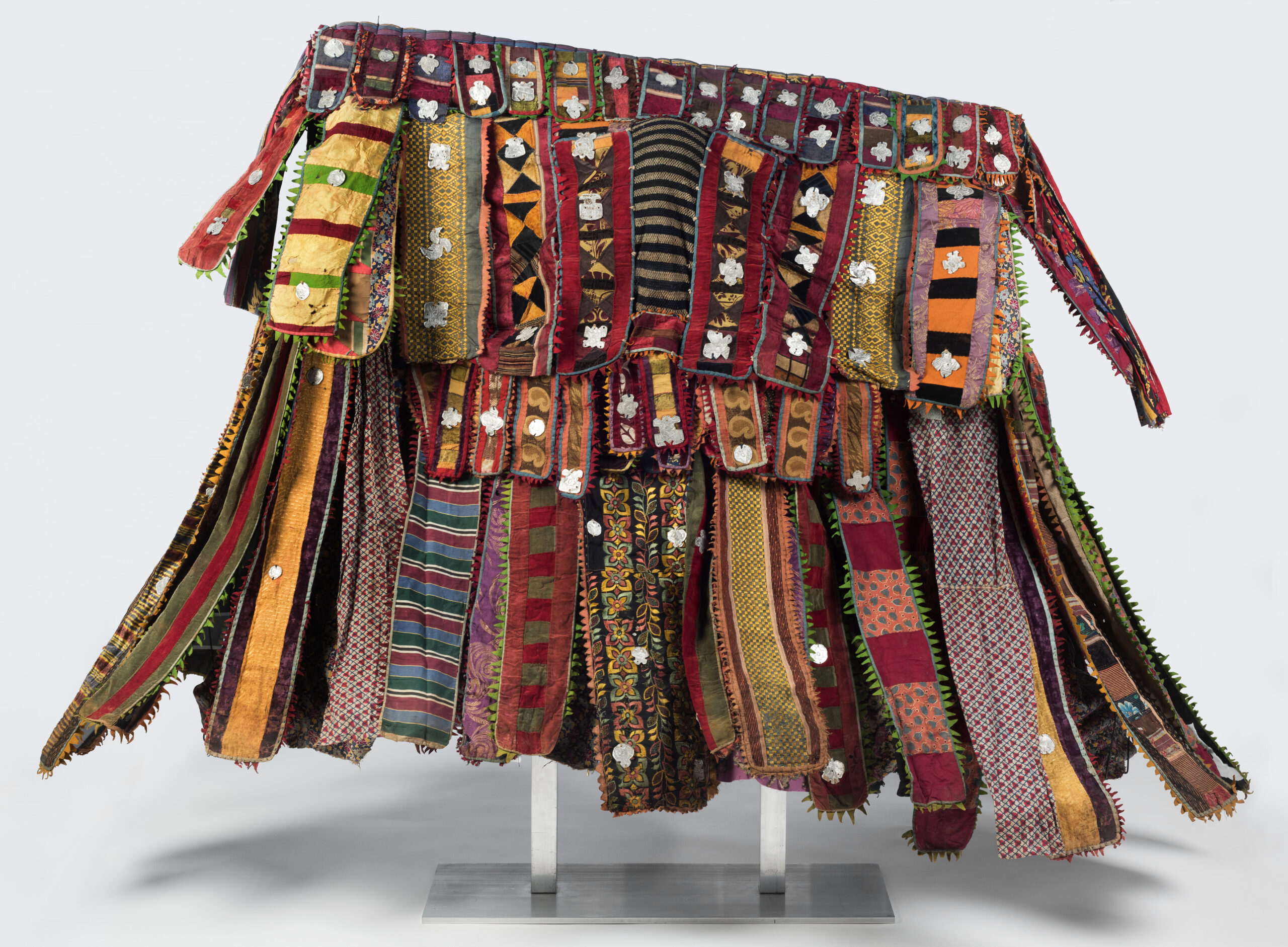 Yorùbá artist. Paka Egúngún (Masquerade Dance Costume), Lekewọgbẹ compound, Ògbómọ̀ṣọ́, Ọ̀yọ́ State, Nigeria, ca. 1920–48. Cotton, wool, wood, silk, synthetic textiles, indigo, and aluminum. Gift of Sam Hilu, 1998.125. Photo: Brooklyn Museum
About the Brooklyn Museum
For 200 years, the Brooklyn Museum has been recognized as a trailblazer. Through a vast array of exhibitions, public programs and community-centered initiatives, it continues to broaden the narratives of art, uplift a multitude of voices and center creative expression within important dialogues of the day.
Housed in a landmark building in the heart of Brooklyn, the museum is home to an astounding encyclopedic collection of more than 140,000 objects representing cultures worldwide and over 6,000 years of history, from ancient Egyptian masterpieces to significant American works, to groundbreaking installations presented in the only feminist art center of its kind.
As one of the oldest and largest art museums in the country, the Brooklyn Museum remains committed to innovation, creating compelling experiences for its communities and celebrating the power of art to inspire awe, conversation and joy.
About Peterson Rich Office
PRO is an architecture and design practice recognized for cultural and publicly engaged projects at multiple scales. Since establishing the firm in 2014, principals Miriam Peterson and Nathan Rich have led a diverse team in realizing projects for leading clients in the cultural, residential, retail and public sectors.
The firm has developed a significant body of work around adaptive reuse, especially with projects that introduce new elements into structures of historic significance. Through this work, PRO has developed an architectural vocabulary that embraces context and finds richness in it as a point of departure for creating something new rather than something to be smoothed over or erased entirely.
In May 2026, the Metropolitan Museum of Art will unveil PRO’s design for the new 12,000-square-foot Condé M. Nast Galleries, adjacent to the Great Hall. The galleries will serve as the new home for the Costume Institute’s annual spring exhibition, along with presentations from other departments. PRO is also designing the galleries’ inaugural show, “Costume Art,” exploring fashion as a connected, embodied form. Phase two of the project re-envisions the ground-level public concourse, including new dining and retail spaces and a new 83rd Street entrance, marking the museum’s first major investment in public spaces in more than 30 years.
Other recent projects of note include the MoMA Design Store in Soho, the Shepherd Gallery & Arts Center in Detroit, the Pruzan Art Gallery at Wesleyan University, and artist studios for Nina Chanel Abney and Mickalene Thomas.
Through an ongoing multiyear partnership that started in 2014, PRO works with the New York City Housing Authority on inclusive community design initiatives that inform improvements to the nation’s largest public housing system and advance design excellence across renovations in all five boroughs.