
The project to build a new $16 billion Hudson River rail tunnel has made up for lost time after a two-week shutdown, as Gov. Mikie Sherrill detailed significant progress made on a number of fronts,
“Hundreds of pieces of the first tunnel boring machines are set to be assembled, the slurry wall, at the Hudson County Shaft, is finished creating the dry, protected shell where future work will proceed,” she said at the Gateway Development Commission meeting Monday. ”And most important, 1,000 workers are back on the job. It’s a big deal.”
The progress includes completion of the first of five projects under-construction in New Jersey, a bridge that carries Routes 1 and 9 over the new tunnel mouth.
Equally as significant is a total of $254.6 million in frozen funding federal officials froze. A U.S. federal judge ordered the funds restored after New Jersey and New York took the U.S. Transportation Department to court, commission officials said.
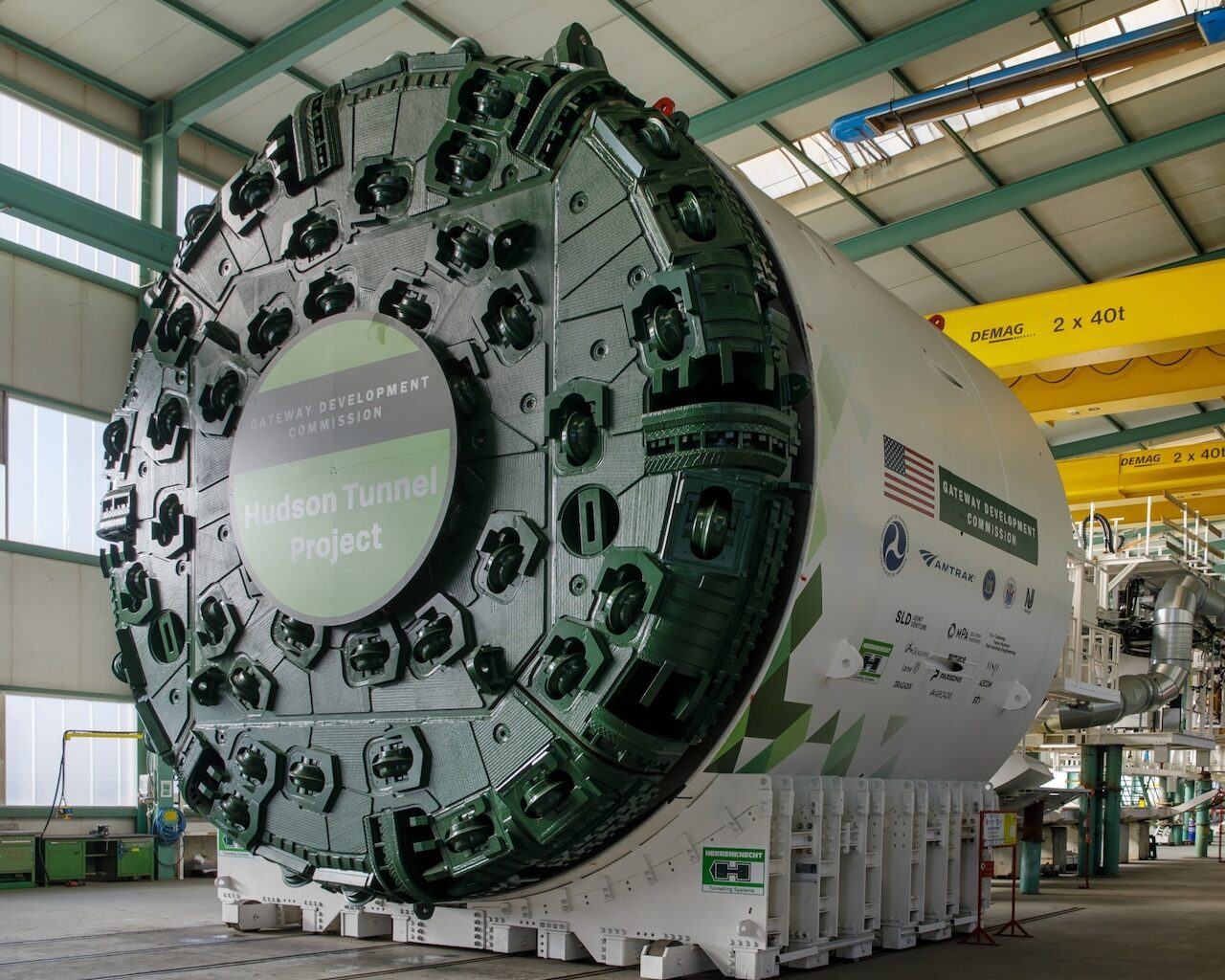
The $16 billion project to build a new two-track rail tunnel under the Hudson and related projects in New Jersey and New York hit multiple milestones. It is getting ready to launch the first tunnel boring machine in the second quarter of the year, said Tom Prendergast, Gateway CEO.
The first modern tunnel boring machine is on site in North Bergen and being assembled by workers and the second is in transit, he said.
“There’s a big event for that, because we want to show the whole world that this is a specific piece of equipment that is going to bore through the Palisades,” Prendergast said.
That launch, which could happen in the second or third quarter of 2026, would mark the first tunnel boring work on the Gateway project.
On the other side of the Palisades in Weehawken, which the twin boring machines will drill through, concrete has been poured for the circular slurry wall that supports a shaft where these tunnel boring machines will be lifted out.
Two other tunnel boring machines designed to dig through the Hudson River bottom will be lowered through that shaft to begin work on that tunnel.
In New York, the floor of a third tunnel box between the High Line and Hudson Yards has been poured and is connected to the first and second tunnel boxes to Penn Station.
The federal funding freeze delayed plans to award the contract to drill the actual tunnel under the Hudson River, which the commission was poised to do early this year.
While that’s been pushed back, the court rulings have given them “the ability to go forward and award the contracts,” said Jim Starace, Gateway chief of program delivery.
“The boring under the Hudson River is closer to completion in terms of making an award … we’re trying to make those as soon as possible,” he said.
While Gateway officials reiterated that another interruption in federal funding could cause another pause in construction, they are ready to fight it in court again.
In addition to finding the federal government had breached its contracts with commission, the court also made it clear that the court would provide expedited review of similar claims if they arose in the future, said Robert Hickman, Gateway chief administrative officer.
Sherrill said that’s part of the state’s next argument in federal court on April 16, to ensure the federal funding agreed to in July 2024 continues to be available.
“We’re seeking a final ruling to make clear, for good, that the federal government has no legal right to withhold any of these funds,” she said. “This project needs the Department of Transportation to pay what it owes on time. It needs that to keep this project on scope, on schedule, and on budget.”
The exact price to secure and shut down the five construction sites on Feb. 6 when funding ran out is still being calculated, but Starace said millions of dollars were spent to do that.
Reimbursement of those costs is the next part of the commission’s lawsuit being heard in the U.S. Court of Federal Claims under a lawsuit the commission filed on Feb. 2.
In conjunction with that, the commission’s board approved hiring Milbank LLC of New York to continue representing the commission in its lawsuit. Board Co-Chair Balpreet Grewal-Virk abstained from voting because her first cousin, former state attorney general Gurbir Grewal is a partner in the firm and lead counsel.
“They have a stellar reputation and the expertise needed to litigate this type of case,” Prendergast said.