
“Nothing good happens after midnight,” says detective Pete Panuccio in Homicide: New York Season 2. “That’s a true statement.”
The true crime docuseries from Law & Order creator Dick Wolf returns to NYC to reexamine five harrowing murders from the perspectives of those directly involved: detectives and prosecutors who discuss the complicated paths to justice, as well as families of the victims, who reflect on the loss of their loved ones. This season features cases about a serial offender who targeted victims in Central Park, a dubious drowning at Soho House, and an unfiltered recounting of 9/11 from the officers who were at Ground Zero.
Adam Kassen (Cold Justice) returns to direct Homicide: New York Season 2. Keep reading for more on the cases covered this season and brush up on cases from Homicide: New York Season 1 here and Homicide: Los Angeles here.
Episode 1: “Soho Horror”
In the summer of 2010, 33-year-old Sylvie Cachay seemed poised to take over the world. The rising fashion designer, whose resume included working at Tommy Hilfiger and Victoria’s Secret, had just started dating Nicholas Brooks, the 24-year-old son of Oscar-winning composer Joseph Brooks. The two were an odd couple, according to Cachay’s friends. She designed full-time for Anne Cole while hustling on the side to relaunch her own label, Syla, whereas Brooks was unemployed and smoked weed all day. Six months later, the whirlwind romance had become a volatile on-again, off-again relationship. In December of that year, the pair checked into an exclusive members-only hotel after a minor fire in Cachay’s apartment. Soon after, Brooks left the hotel room to party with a new friend. Around the same time, the guest in the room below Cachay’s complained to the hotel about a water leak. When the hotel manager went to investigate he found Cachay alone and unresponsive in the tub. The presence of prescription pill bottles pointed to an accidental drowning or suicide, but police noted strange bite marks on Cachay when they arrived at the scene. Was this an overdose or a homicide? The first step in their investigation: Find Brooks to question him.
What happened to Nicholas Brooks?
Brooks was arrested by police in December 2010 and sentenced in 2013 to 25 years to life in prison for the murder of Cachay.
Episode 2: “Party Monster”
For 26-year-old Joey Comunale, Nov. 12, 2016, started like any other weekend. Comunale, a Connecticut local and Hofstra grad, headed into Manhattan with some friends to hit the club scene. After dancing the night away in the meatpacking district, Joey went to a friend of a friend’s party with a few women he’d met that night. But Comunale never made it home from James Rackover’s lavish Sutton Place apartment. When attendees gave differing accounts of the evening, police quickly realized this missing persons case might be a homicide. The women who brought Comunale to Rackover’s said they last interacted with Comunale when he put them in a cab and assumed he had returned to the party, but another guest, Larry Dilione, contradicted their claim — insisting Comunale left at the same time. Meanwhile, partygoer Max Gemma swore he fell asleep early and didn’t see anything at all. But the building’s security footage told a different story.
What happened to James Rackover, Larry Dilione, and Max Gemma?
In 2018, Rackover was sentenced to 28 years to life in prison for the second-degree murder of Comunale and related charges. Dilione pleaded guilty to manslaughter in January 2019 and received 23 years in prison. One month later, Gemma was handed a six-month sentence after pleading guilty to hindering the prosecution but only served four months and was released in August 2019.
Featured
The docuseries revisits some of the city’s biggest cases.
By Roxanne Fequiere
March 26, 2024
News
The latest installment of Dick Wolf’s series covers LA’s most headline-grabbing crimes in history.
By Amanda Richards
July 16, 2024
Trailer
Uncover real-life murder tales through the eyes of detectives and prosecutors.
Episode 3: “Mother Knows Best”
Irene Silverman, an 82-year-old socialite, was the Upper East Side’s hostess du jour in 1998. The former Radio City Music Hall ballerina had married into money, and after the death of her husband, often rented out converted apartments in her five-story limestone to wealthy friends and acquaintances. But that summer, her newest tenant, Manny Guerrin, gave her cause for concern. Silverman caught him trespassing on her floor, eavesdropping on her conversations with staff, and jotted a note in her diary that said, “He looks like jail.” Staff noticed that he often sneaked an older woman named Eva into his apartment at night. Silverman wanted Guerrin out, but before she could evict him, disaster struck. On July 5, Silverman told her housekeeper, Marta, she was going to lie down for an afternoon nap, but when Marta went to check in on her around 5 p.m., Silverman — along with her ID, keys, and $10,000 in cash — was gone. At first, police suspected Silverman might have simply left without telling anyone, but her staff insisted she never left the limestone alone and alerted detectives to her concerns regarding Guerrin. When authorities searched his apartment, they saw that his bed had been stripped of its comforter and found a spool of rope and wads of used duct tape discarded in the trash, pointing to an abduction. But catching Guerrin was complicated, as he and his mother — con artists with a long list of crimes under their belt — were already in federal custody thanks to a warrant issued in Utah under their real names: Kenneth, aka Kenny, and Sante Kimes.
What happened to Kenny and Sante Kimes?
Despite never finding Silverman’s body, prosecutors convinced a jury to hand down a guilty verdict to both Kenny and Sante, who were sentenced to 120 years to life in prison, respectively. Sante died in 2014 at the age of 79 while still in custody.
Episode 4: “Your Eyes or Your Life”
In 1989, New York City experienced a brutal crime wave. The most infamous incident of that summer became known as the Central Park jogger case, in which victim Trisha Meili was assaulted and left for dead. Meili miraculously recovered from brain trauma, and five young teenagers were arrested and sentenced for the horrific crime that made national news. Those teenagers became known as the Central Park Five. Decades later, they were exonerated after DNA evidence proved that a man named Matias Reyes was Meili’s assailant.
This episode of Homicide: New York is about Reyes’s other victims, and the use of technology to connect the cases of the serial sexual assailant, as well as its limits. Reyes attacked at least five women in 1989 and killed one, a young mother of three named Lourdes Gonzalez. In emotional interviews, her children recount the story of Reyes gaining access to their apartment by asking for her partner, the superintendent of the building. Pushing his way into their home, he asked, “Your eyes or your children?” This question eventually led police to Reyes after other survivors reported hearing similar queries from him.
What happened to Matias Reyes?
Reyes was caught when Meg (whose full name is withheld in the episode), a woman he assaulted, made a break for her apartment door in the middle of the incident. Reyes chased after her until he was stopped by her super and another person, who held Reyes down until police arrived. With DNA technology that was new at the time, detectives were able to tie him to Gonzalez’s murder as well as three other assaults. Reyes pleaded guilty and was sentenced to 33 years to life in 1991. It wasn’t until 2002 that Reyes confessed to attacking Trisha Meili in Central Park, which DNA evidence also confirmed. The five men who went to jail for the Central Park jogger case had their sentences overturned and became known as the Exonerated Five.
Episode 5: “9/11/2001”
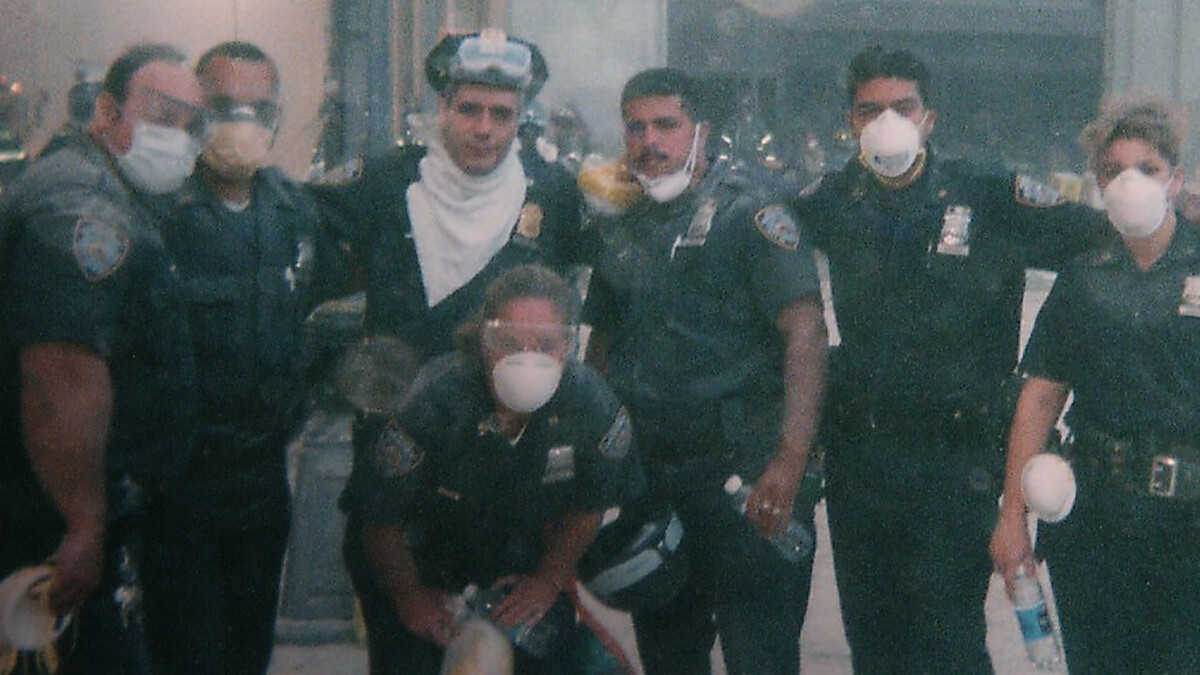
America changed forever on Sept. 11, 2001, when terrorists hijacked two commercial flights and piloted them into the Twin Towers. The finale of Season 2 zeroes in on law enforcement officers who rushed toward danger on that day. These first responders, interviewed for the episode, reflect on the confusion, terror, and desperation of that day. But the officers also recount moments of hope among the despair, such as finding each other in the midst of the chaos, being thanked by a grateful civilian, or making it home to hug their families when so many of their colleagues didn’t. For many of them, the tragedy of 9/11 reignited their belief in the power of helping people and reminded them why they joined the force to begin with.