
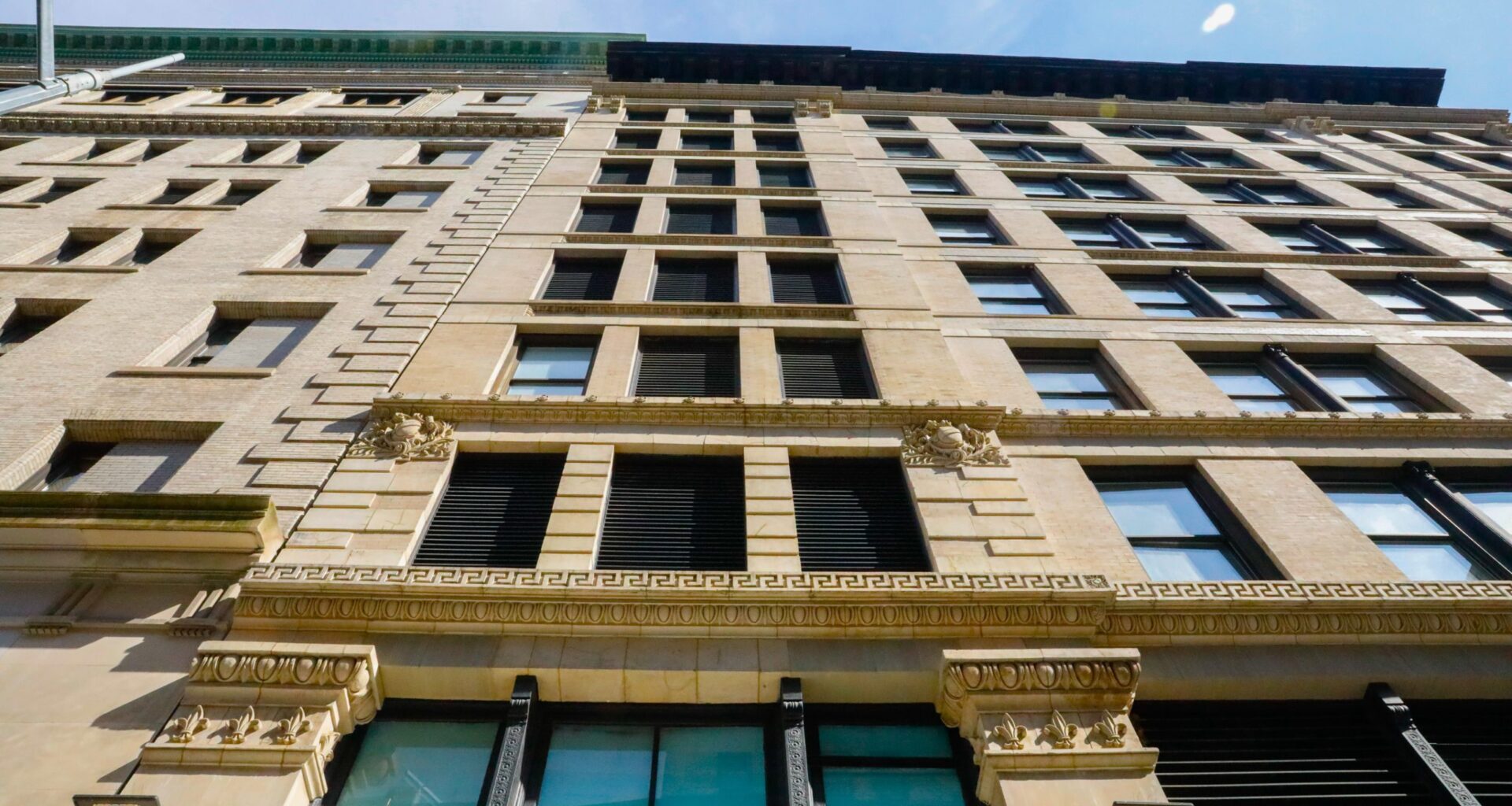
Inside a building in Greenwich Village, NYU Ph.D. and postdoctoral students follow a familiar routine. They take the elevator to a laboratory on the top floor, where they sit for hours perched over glass slides and microscopes, observing fruit fly cells and ant brains.
They’re studying aging and brain development in social insects to understand how they function, and what it could reveal about humans.
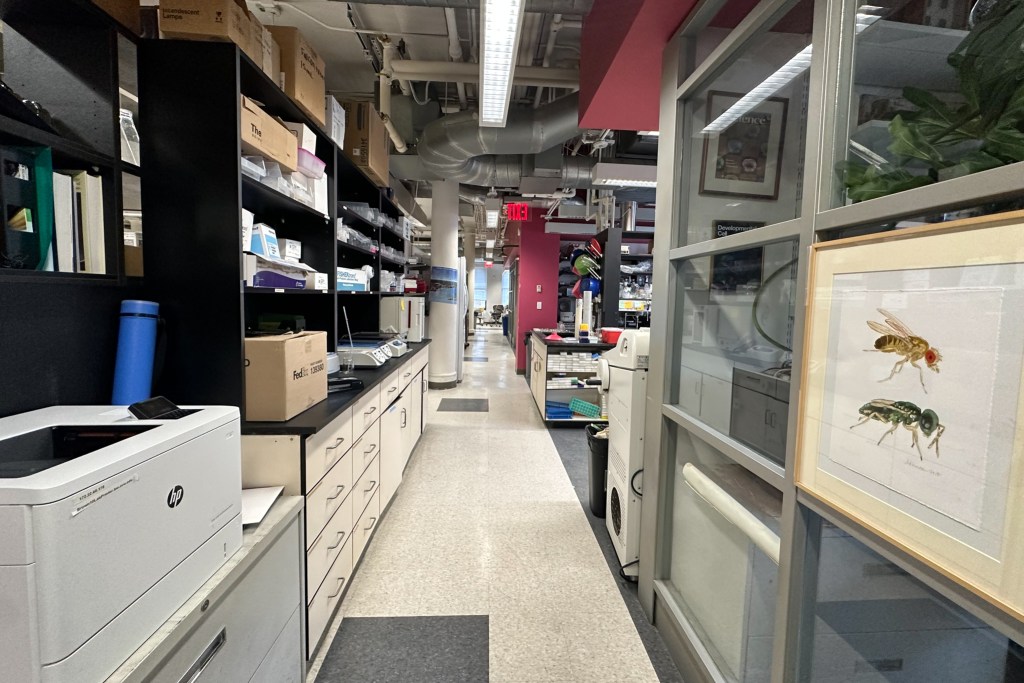 An NYU lab is housed on the same floor where the Triangle Shirtwaist Factory fire happened more than 100 years ago, March 24, 2026. Credit: Lilly Sabella/THE CITY
In the same building 115 years ago on Wednesday, women and girls entered into the same floors to work in a factory. For hours, they leaned over sewing machines and cutting shears, cranking out women’s blouses at crowded, long tables.
The site of the Triangle Shirtwaist Factory fire became infamous on March 25, 1911, when 146 workers died there, most of them young immigrant women.
The building is still intact and active, housing chemistry and biology laboratories as NYU’s Brown Building. Claude Desplan, a professor of biology and neuroscience, is the director of the tenth floor’s Center for Developmental Genetics, operated on one of the floors where the fire claimed so many lives — now a site for studying life.
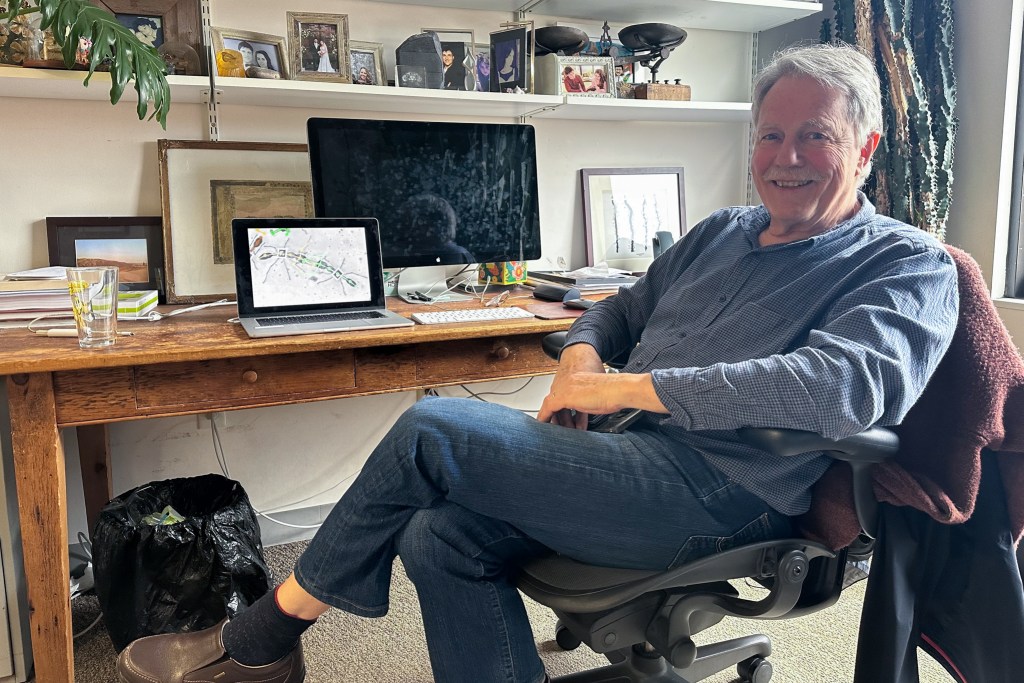 NYU professor Claude Desplan directs the Center for Developmental Genetics, which is housed in the same building where the Triangle Shirtwaist Factory fire happened more than 100 years ago, March 23, 2026. Credit: Lilly Sabella/THE CITY
“I think it’s a very good use. It’s a good use,” he said about what those floors house today: young scientists gathering new insights into lifespan extension, thanks to funding from the federal government’s National Institute on Aging.
They research the biological phenomenon of what certain organisms reveal about aging — like Harpegnathos saltator, a species of jumping ants found in India that fight for reproductive status, Desplan explained, with those who win increasing their own life expectancy from seven months to four years.
“They are working toward a new knowledge,” he said.
Outside on the ground level, a memorial created by the Remember the Triangle Fire Coalition has sat on a corner of the building since 2023. Reflections gleam in its glossy black surface, displaying the names and ages of the fire’s victims, as well as eyewitness testimonies.
Sangram Kadam, who researches biophysics in the building, said he did not know about the fire before he came to NYU, but thinks about it when he passes the memorial.
“It was just so sad. They were trapped inside,” he said.
For the fire’s 115th anniversary, coalition members, union leaders and lawmakers will gather at the memorial to read the victims’ names. A fire truck ladder will also be raised to the building’s sixth floor, the highest point one of them reached in 1911 — two stories below where the fire had started.
The 1911 fire transformed labor and safety laws in the United States. Things we take for granted today, like fire sprinklers, workplace safety training and outward-swinging emergency doors, all came about in the aftermath of the fire, said Brendan Griffith, president of the New York City Central Labor Council.
To Rose Imperato, the treasurer of the group behind the memorial, the fire’s continued relevance is why it’s important for her to keep telling its story.
“Western culture has exported the problem, and we’re hearing very similar Triangle-like stories happening in Bangladesh,” referencing the 2013 Rana Plaza collapse that crushed 1,100 workers in an eight-story building. “They jumped out windows; there were doors locked. I mean, it was freakishly similar,” Imperato said.
‘How to Be American’
When seeing the memorial, Desplan marvels at the list of victims and their ages — mostly teenagers, younger than the new scientists he oversees in the lab now.
“If you look at the names, it is quite amazing. It is Italian and Jewish names only,” Desplan said.
The new immigrant women worked long hours in cramped conditions while their male bosses loomed over them, forcing them to perform the monotonous seam sewing faster, explained Daniel Levinson Wilk, a professor of social sciences at the SUNY College of Fashion and Technology.
Despite the grueling conditions, the women built a community working six days a week, he said.
“They were making friendships. They were learning — because so many of them were immigrants — how to be American in these factories,” he said.
The fire began at approximately 4:45 p.m. on the eighth floor and traveled quickly up the 10-story building. Most historians believe the factory bosses locked in the women who worked on the ninth floor “to keep out labor organizers and to keep people from stealing fabric or clothing,” Levinson Wilk said.
“Afterwards, there were many bodies found piled up against that door, asphyxiated.”
Some women ran out the window to the poorly installed fire escape that collapsed under their weight. Others reached a stairwell to the roof, where NYU law students from the neighboring building helped get them across. But many, many more jump from the building to their deaths, witnessed by hundreds of firefighters and spectators.
To commemorate them, the Remember the Triangle Coalition raised over $2 million for the permanent memorial now in place, Imperato said, including $1.5 million from the state, pledged by former Governor Andrew Cuomo in 2015.
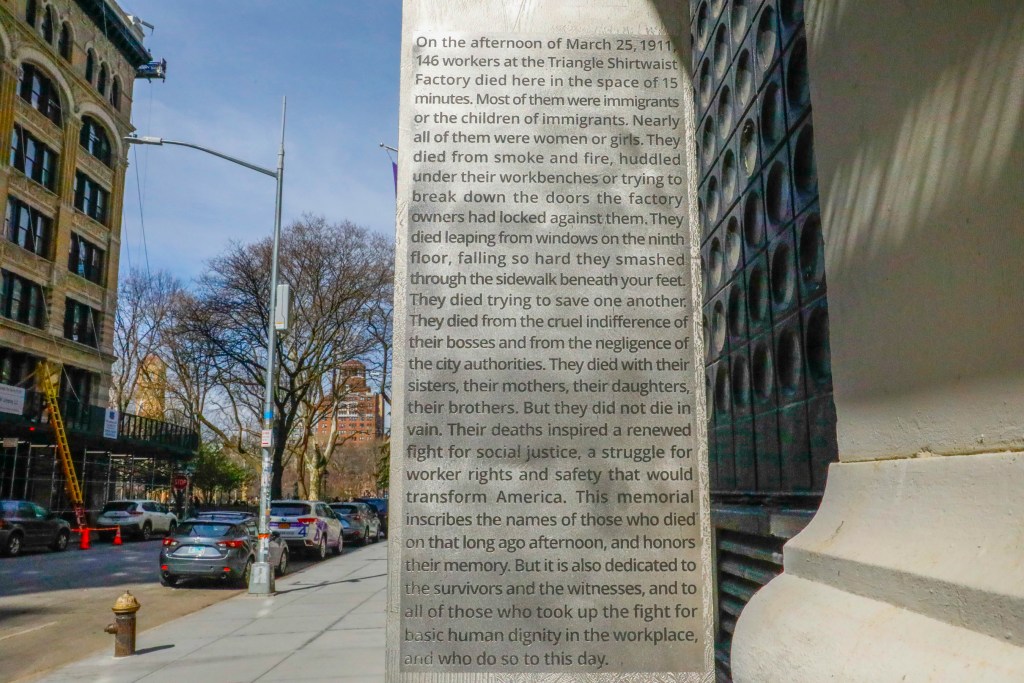 23 Washington Pl inscription of the triangle shirtwaist factory fire deaths, March 20, 2026 Credit: Alex Krales/THE CITY
Levinson Wilk said that “these women were martyrs to this huge cause, not just, factory safety, but the New Deal,” he said, adding the government protections put in place afterwards represented “the idea that the government’s got to look out for all of us and we expect and demand that it does.”
“America was made by immigrants in so many different ways, but one was this fire,” he told THE CITY.
For Anthony Calderon, 23, a chemistry grad student who studies in the building, the fire’s anniversary is a testament to life-saving progress.
“Fire safety is a huge component of our work,” he said. “It’s good how, from 100 years ago to today, safety is much more prevalent. There are a lot of precautions so a disaster like that will never happen again, whether it’s at NYU or another building.”
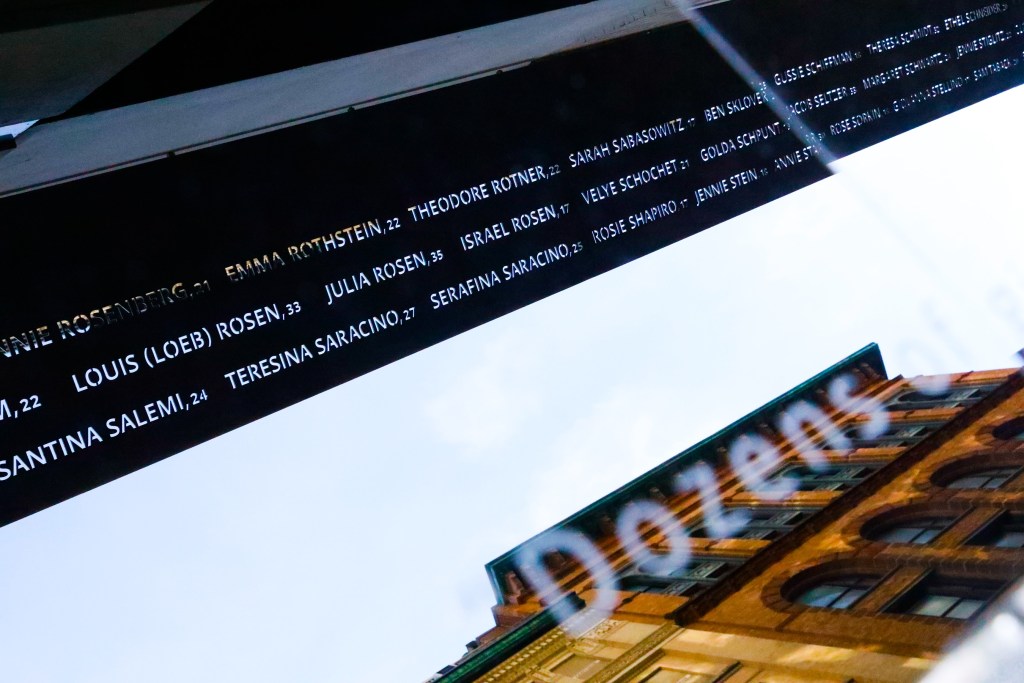 Triangle Shirtwaist Factory national memorial features the names of those who died in the fire, March 20, 2026 Credit: Alex Krales/THE CITY
Noah Zeitlin, an NYU sophomore in the liberal studies program, stopped at the memorial on an afternoon before the anniversary, slowly looking over the stainless steel.
“I pass by it every so often, and I look at the names — just how young they were,” he said. “It makes me think about the way this had to happen for some of the worker protections to really go into place. Eventually, a lot of good stuff did come out of it, but it’s still such a travesty.”
Related