
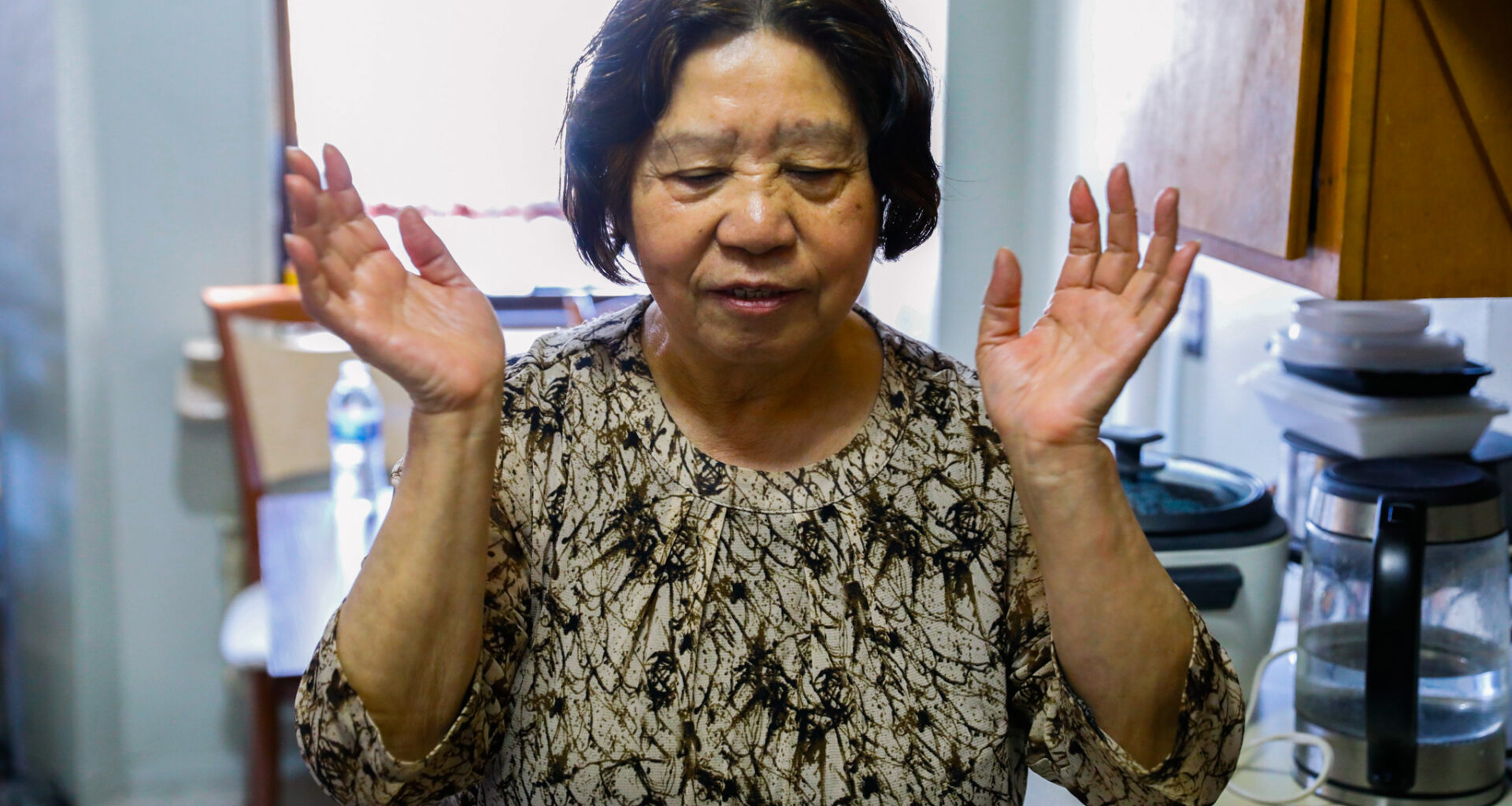
The $1.2 billion reconstruction of NYCHA’s Fulton, Elliott and Chelsea Houses has been touted as a win-win-win.
Eighteen mid-sized NYCHA buildings that are in need of serious upgrades will be demolished and replaced with six taller towers. Each of the 2,056 residents now living in these developments will be guaranteed a spot in the new buildings.
Developers will also construct nine new buildings on the land that NYCHA will continue to own. They will contain an additional 1,000 permanently affordable apartments.
The buildings will also hold 2,500 market-rate units in one of Manhattan’s most coveted neighborhoods, subsidizing the NYCHA housing.
The ambitious transformation is now being enthusiastically pushed to the finish line by the Mamdani administration, which views it as the best option to improve conditions for current residents, while also building new affordable housing.
But there’s a catch: the entire project relies on getting a group of elderly tenants living in a seniors-only development called Chelsea Addition to relocate not once, but twice.
The seniors would first be moved to nearby housing projects so that their development, which sits on a relatively large plot of land, can be demolished, making room for the bigger towers, which they would move back eventually. The entire process is expected to take at least three years.
Not surprisingly, many of these tenants — all of whom are in their 70s, 80s and 90s — fear they won’t live long enough to see their promised new homes. And, they say, the prospect of moving into a non-senior NYCHA development — when they had been expecting to live out their golden years in a seniors-only paradise — is daunting.
Thus a project that was set to kick off last December is now on hold, as seniors in 24 NYCHA households have declared they’re not going anywhere.
“They’re telling me to go, but I don’t care,” 79-year-old Yu Zhen Story told THE CITY last week. “Some people have moved because they are scared. Some people, we are holding together. They’re holding on because they can’t move.”
Story is one of 18 Chelsea Addition residents who filed suit last week in Manhattan civil court against NYCHA and their private sector partners, The Related Companies and Essence LLC. All 18 are among the 24 holdout tenants.
The lawsuit, filed by attorney Thomas Hillgardner, accuses Related and their affiliates of harassing the elderly tenants to pressure them to sign new leases and relocate to the nearby Chelsea and Elliott Houses while their building on W. 27th Street is taken down and replaced.
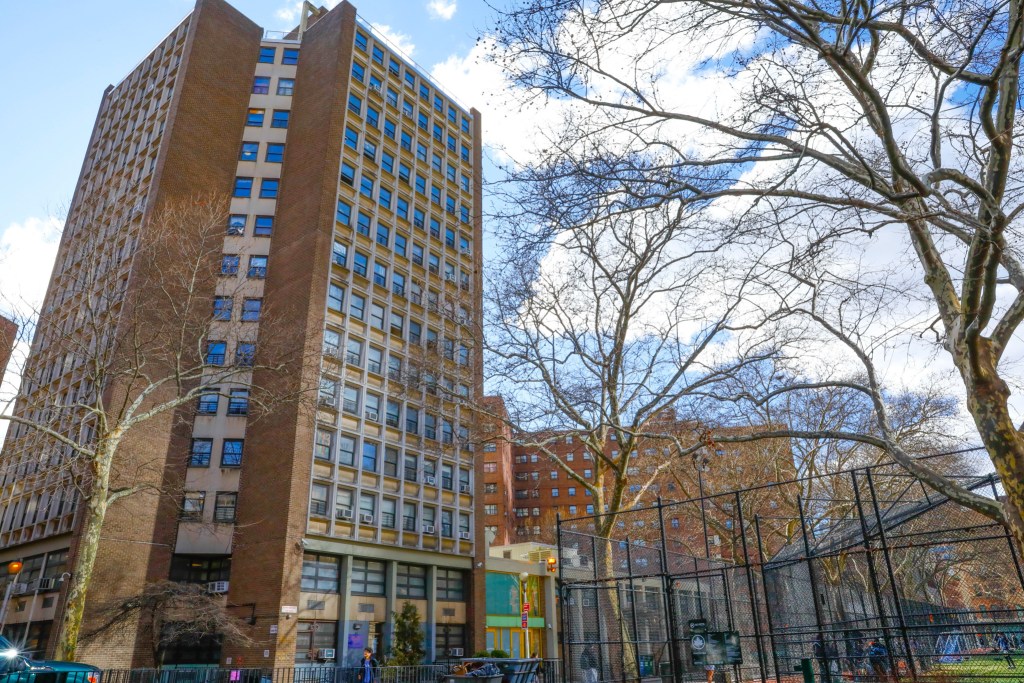 Chelsea Addition residents are being asked to move out of their homes so that the NYCHA complex can be redeveloped, March 17, 2026. Credit: Alex Krales/THE CITY
The tenants all say that moving out of a seniors-only building — where a security guard is on duty and they feel comfortable leaving their doors unlocked — would be harmful to their health and well-being.
As 78-year-old tenant Jin Gui Tan said in court papers, “Things are very quiet and peaceful. There are no rowdy incidents in the hallways, and I sleep very well without disruptions, which is very important for my health.”
As a group, they fear moving twice will be disastrous. One is suffering from Alzheimer’s, another from dementia. Several use walkers, and at least one relies on a wheelchair.
In their lawsuit, they all allege that starting last summer, representatives of the developer began knocking on their door nearly every day and calling them at all hours, pressuring them to sign new relocation leases that would put them in non-seniors-only developments until at least 2029.
“How do the old people move? They can’t. Maybe they stay, they live longer,” said septuagenarian tenant Story, who like many at Chelsea Addition speaks limited English.
In her affidavit to the court, Story said her building “has a remarkable community of senior-citizens fluent only in Chinese (Mandarin and/or Cantonese), and relocation destroys this community. I do not want to relocate now because I finally have a home where I feel safe, and I want to live out the rest of my years in this environment.”
Resident Jin Tao Wu, 93, said in court papers that he relies on a wheelchair and has heart disease, diabetes and emphysema from breathing dust created by the collapse of the World Trade Center. He lives with his wife, 90, who has dementia, and both rely on home health aides. His doctor told him relocating even once is “not advisable.”
“At the age of 93, temporary relocation that’s planned to last three to four years and probably will be five years may not be as temporary for either me or my wife as they claim,” he stated in his filing to the court.
Cui Ping Sun, 76, told the court that the pressure to move into non-senior housing has damaged her mental health: “It makes me feel like I do not want to live anymore. This is a cruel world where the profits of developers became more important than the lives of people. I feel like I should just die to give NYCHA and the developers what they want.”
Some tenants fear being placed in the nearby non-senior NYCHA developments because they had experienced traumatic incidents when they lived in those locations in prior years, including gunfire and a robbery.
Related declined to comment on the pending tenant lawsuits.
Asked by THE CITY what they will do if the elderly holdouts continue to refuse to budge, NYCHA Chief Executive Officer Lisa Bova-Hiatt responded, “To say that under no circumstances are they going to relocate? Ultimately they will.”
Bova-Hiatt said tenants should not worry about whether they will have an apartment to return to once the construction is done.
“Everybody’s concerned about where they’re going to live? Will they have a place? Can they come back?” she said. “But they’ve signed an agreement, especially the people who’ve already left, they have the right to return. I think there’s a tremendous amount of misinformation that’s out there, and that’s what we really have to make sure we’re clarifying.”
‘Who Made That Decision?’
The harassment lawsuits follow earlier legal skirmishes that have raged for months over the Fulton-Elliott-Chelsea project, including suits NYCHA filed last fall against 18 of the holdout tenants asking the court to order them to sign new leases.
NYCHA later withdrew these lawsuits after Manhattan Supreme Court Justice David Cohen denied their request for a preliminary injunction forcing tenants to sign. But before he did that, Cohen seemed perplexed about why NYCHA was rolling out a project that makes elderly tenants move twice.
“Whose idea was it to have people in their 70s, 80s and 90s — who are taking multiple medications and have various infirmities that are typical of people their age — to have to be the ones to move twice?” he asked during a December hearing. “Who made that decision?”
When NYCHA’s lawyer said he wasn’t involved, an incredulous Cohen responded, “No no. Who made that decision? Because I would very much like to see that individual and have that individual explain to me how that decision was made.”
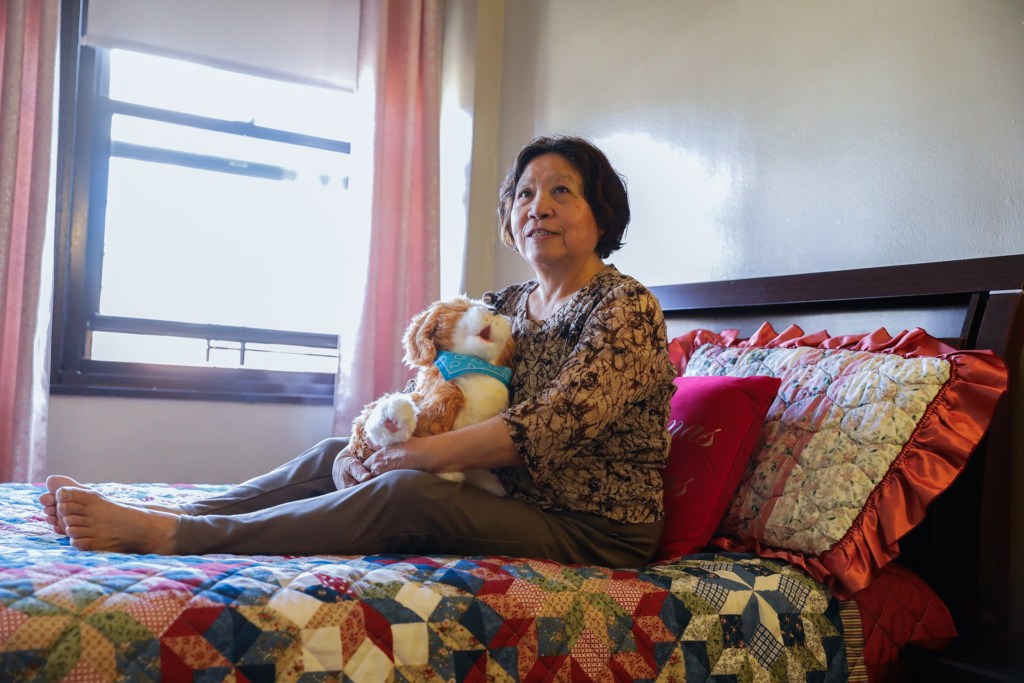 NYCHA resident Yu Zhen Story spoke about being forced to move from her Chelsea Addition home, March 17, 2026. Credit: Alex Krales/THE CITY
When THE CITY posed those questions again to NYCHA officials, they first explained that replacing 18 buildings with 15 new ones on limited land requires two buildings to come down before any new ones could go up.
Jonathan Gouveia, NYCHA’s executive vice president for real estate, said Chelsea Addition was chosen strictly for logistical reasons: Its 96 units make it smaller than Fulton, Elliott and Chelsea, and it sits on a big piece of land.
“The building that is actually the smallest is Chelsea Addition, but it has a larger land area, so you can build a bigger building in its place. So unfortunately that’s all it came down to is geometry,” he said.
Gouveia said once the tower is complete at the Chelsea Addition site — and another at a Fulton Houses building that contains 36 units that will also require tenants to move twice — NYCHA will begin moving some tenants from Fulton, Chelsea and Elliott into those towers along with all the residents of Chelsea Addition.
The puzzle pieces will keep moving, as the other developments are razed and replaced with four more towers, which will ultimately house all of the current NYCHA residents, nearly all of whom will only have to move once. Once all the NYCHA buildings are down, Related will also begin building the nine mixed-use buildings.
Gouveia noted that even in non-senior developments, there are plenty of seniors who would have had to relocate if they’d instead targeted those developments for demolition before replacement. And he said he’s confident the current standoff will end, and NYCHA will ultimately convince all the holdouts at Chelsea Addition to move.
“We spent a lot of time with those residents, having a special town hall meeting with residents of Chelsea Addition to explain to them what this means for them and the moves that they would have to do,” he said.
‘Emotions Are High’
The project also faces another potential obstacle: a second lawsuit filed on behalf of all Fulton, Elliott and Chelsea tenants arguing that the project violates public housing law and that NYCHA did not subject the project to the same review developers seeking zoning changes face, including approval by the community board, the Manhattan Borough President, the city planning commission, the City Council and the mayor.
In January, Judge Cohen, who is handling this suit as well, denied the tenants’ request to pause the project, finding that they had brought their litigation too late. He did not rule on the merits of the case, and his decision against the pause is now under review by the appellate division. The appeals court is expected to rule soon.
And the planned demolition of one of the Fulton buildings on W. 19th St. also triggered extra scrutiny after the soil there was found to contain toxins. NYCHA says they’re not required to seek state approval for soil remediation they’ve crafted to ensure toxic dust doesn’t contaminate the surrounding area during demolition, but the developers filed for approval with the state Department of Environmental Conservation (DEC) anyway. A decision by DEC is also expected any day.
Throughout the many months NYCHA and the developer have sought to win over tenants, many voiced concern about some of the details, starting with NYCHA’s requirement that they must be removed from traditional public housing subsidies called Section 9 and instead receive subsidies for private housing called Section 8.
Currently under Section 9, all NYCHA tenants’ rent contribution is capped at 30% of their income. Some residents of Fulton, Elliott and Chelsea, however, noted with alarm that NYCHA’s website states Section 8 tenants “pay no more than 40 percent of their adjusted monthly income toward their rent share.” NYCHA officials told THE CITY that the 30% cap will remain in effect.
And though NYCHA continues to say it has not moved to evict anyone during this relocation effort, tenants expressed alarm over a FAQ handed out last fall at a tenant meeting with Related and a federal housing official. The FAQ asked, “What happens if the resident doesn’t sign the lease?” The response used the e-word: “The property can’t get subsidy for the unit. If there’s no subsidy the owner won’t be receiving the full contract rent. The tenant is at risk of eviction.”
Asked about this, NYCHA’s Gouveia responded, “It’s very important that you sign the lease because eventually you could have a problem.”
 NYCHA resident Yu Zhen Story spoke about being pressured to move from her Chelsea Addition home, March 17, 2026. Credit: Alex Krales/THE CITY
Bova-Hiatt said of Related’s efforts to get tenants to agree to relocate, “I think they’re doing the best they can. It’s a very tricky situation. As you said at the start of this conversation, emotions are high. Emotions are high when anyone is asked to relocate.”
NYCHA does acknowledge that tenants who are currently “overhoused” — such as one or two tenants living in a three-bedroom unit — will be required to accept a smaller apartment tied to the number of household members. There are currently 324 such households in Fulton, Elliott and Chelsea.
Meanwhile, NYCHA has support for this project from a very important player: Mayor Zohran Mamdani.
At a recent panel talk sponsored by the New York Housing Conference, a non-profit group that advocates for more affordable housing, Leila Bozorg, Deputy Mayor for Housing and Planning, enthusiastically backed the project as essential to tackling the city’s affordable housing crisis.
“While we know what is working, and we can scale what is working, we also have to find new ways to do this work,” she said.
“It’s part of the reason why this administration has committed to move a project like Fulton-Elliott-Chelsea forward, even though it’s politically challenging and there’s a lot of pushback on it. We’re able to replace over 2,000 public housing units and get 3,000 mixed income units in the future without a single dollar of capital subsidy.”
During a budget hearing before the City Council’s Public Housing Committee Tuesday, Bova-Hiatt made clear that the Chelsea project is possibly just the start. Committee chair Christopher Banks (D-Brooklyn) asked her if NYCHA is considering other demolish and rebuild projects at other locations.
“Yes,” she answered. “We have to pursue every opportunity that’s available to us to make sure that there are affordable places to live — not only for this generation but for generations to come.”
Related