
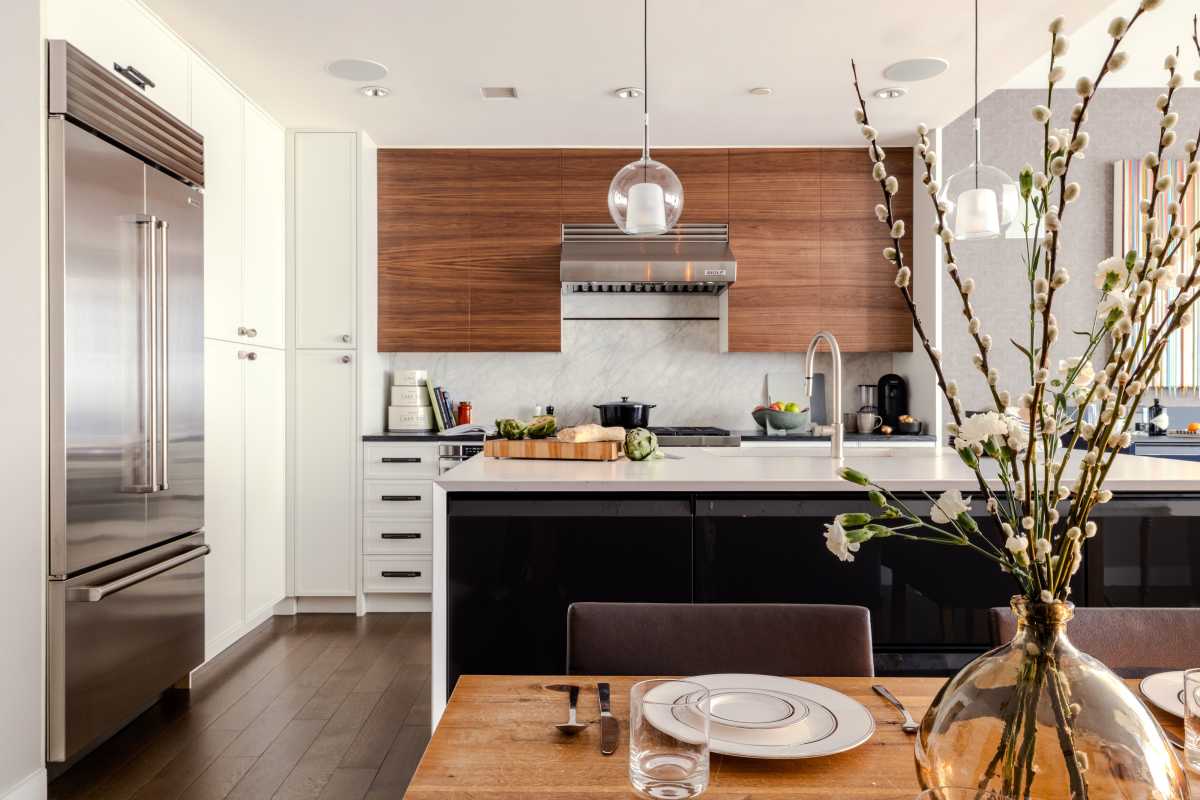
Jamel Williams of To Be Designed delivers elevated living spaces.
Photo by Steven Rengifo
There are interiors that impress, and then there are those that linger—spaces that seem to breathe with a kind of quiet intelligence, where every element feels not only considered, but in conversation. Within this Cobble Hill residence, Jamel Williams of To Be Designed delivers precisely that: an environment that reveals, with increasing clarity, the emergence of a designer whose eye is both discerning and deeply attuned to the evolving language of art and design.
Williams’ work carries a calibrated elegance, one that favors precision over excess and nuance over noise. A palette of blues unfolds in layered tonalities, gently enriched by gold and copper accents that lend warmth without tipping into indulgence. The effect is immersive yet composed, a space that invites engagement rather than demanding attention. There is, notably, a confidence in the edit—an understanding of when to hold back and, more importantly, when to allow something to fully arrive.
That sensibility extends, quite beautifully, into his relationship with art. Williams does not treat artwork as a decorative afterthought, nor as a predictable marker of luxury. Instead, there is a clear curatorial instinct at play. His interiors anticipate art. They create the conditions for it to live well, to resonate, to deepen the emotional and visual cadence of a space. This is where design begins to transcend arrangement and move into something far more enduring.
 Jamel Williams of To Be Designed
The placement of Francisco Valverde’s Polysemy (2024) crystallizes this philosophy. Represented by DTR Modern Galleries, Valverde has cultivated a practice defined by layered meaning and visual elasticity, works that shift in presence depending on their environment. Within this residence, Polysemy does not merely occupy a wall; it recalibrates the room. Tones align with greater precision. The atmosphere settles into a richer, more cohesive register. What was already sophisticated becomes, quite suddenly, complete.
There is a certain alchemy in that moment, and it speaks to a broader truth within the current market. The integration of art and design is no longer aspirational; it is essential. Collectors, particularly those operating at the highest levels, are seeking environments that reflect not only taste, but intention. They are building lives around their collections, and in doing so, they are demanding designers who can think beyond layout and into narrative, placement, and long-term cultural value.
Williams is, arguably, positioning himself within that echelon. His firm is not simply executing interiors; it is shaping environments that understand the power of art as both an aesthetic and economic force. The collaboration and placement of works through AA Luxury Atelier, alongside longstanding relationships with DTR Modern Galleries, underscores a growing ecosystem—one in which designers, advisors, and galleries operate in a more fluid, mutually reinforcing dialogue.
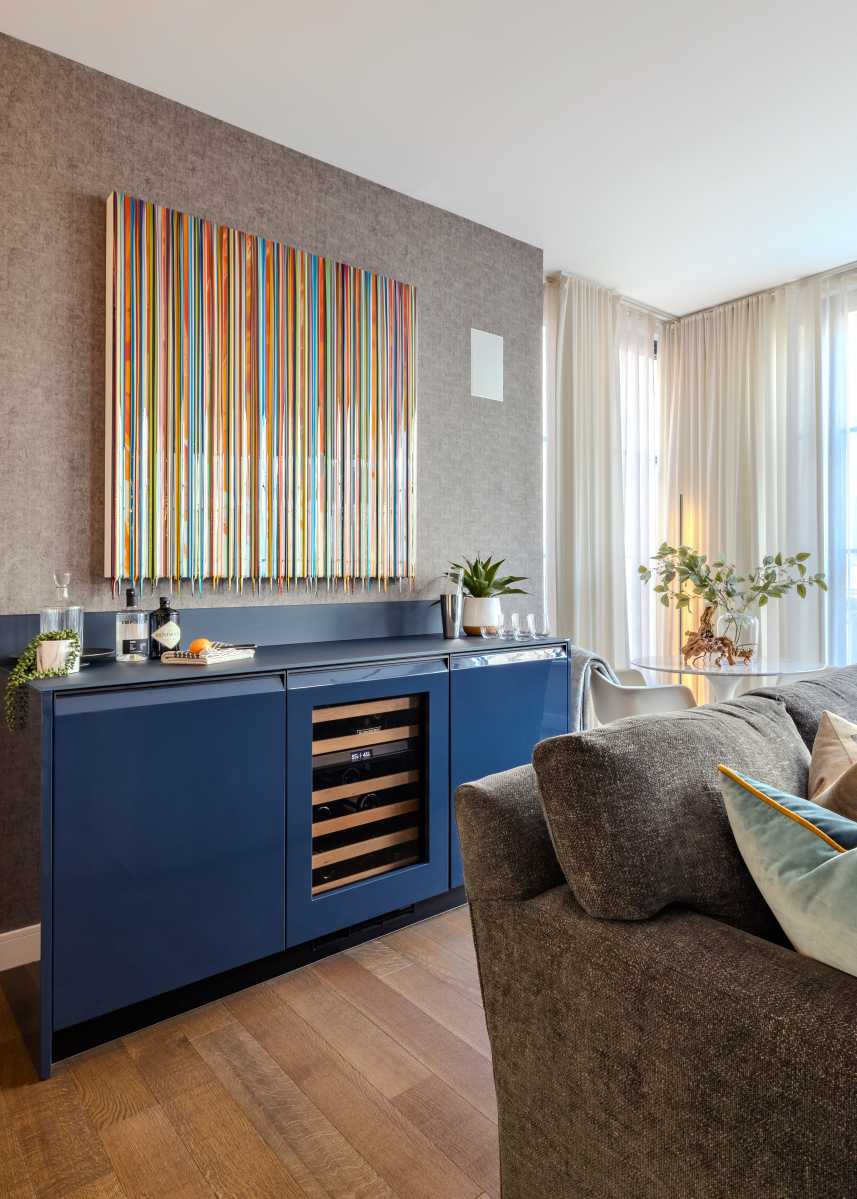 Jamel Williams of To Be Designed delivers elevated living spaces.Photo by Steven Rengifo
This dialogue extends beyond the private residence. The movement of artists like Valverde between domestic spaces and broader public or institutional contexts contributes to a layered understanding of their work. In the home, the experience is intimate, evolving, deeply personal. In public, it becomes part of a larger cultural conversation. Both placements are vital. Both inform value, visibility, and legacy.
Within the Cobble Hill project, craftsmanship supports this larger vision with quiet precision. Custom Italian cabinetry, bespoke wall-coverings, and refined millwork operate not as isolated gestures, but as part of a cohesive visual language. Each detail is in service of the whole, allowing the art to exist without competition, yet never without context.
There is, perhaps most compellingly, a sense that Williams is building something of consequence. Independent designers working at this level are not merely responding to the market; they are helping to define it. His eye—discerning, evolving, and increasingly assured—suggests a trajectory that extends well beyond a single project.
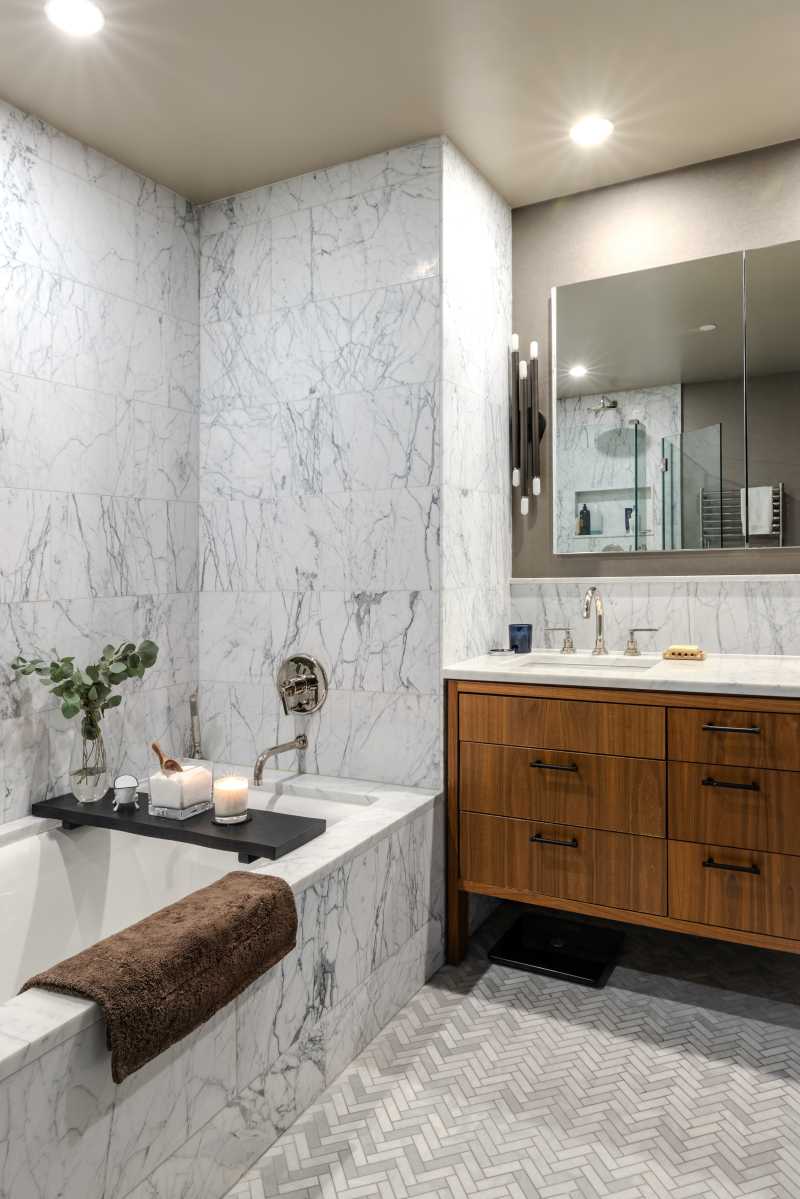 Jamel Williams of To Be Designed delivers elevated living spaces.Photo by Steven Rengifo
Francisco Valverde’s presence within this narrative only amplifies that momentum. As his work continues to circulate between private collections and wider platforms, each placement becomes part of a larger constellation, shaping how the work is seen, experienced, and ultimately understood.
What emerges here is not simply a beautiful interior, though it is undoubtedly that. It is a reflection of where art and design are headed—toward a more integrated, more intentional future, where spaces are not only designed, but composed, and where the presence of art does not adorn, but defines.
Dtrmodern.com