
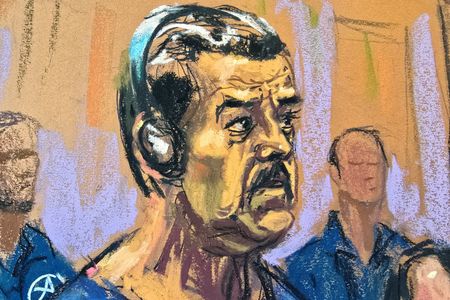
Deposed Venezuelan President Nicolás Maduro will appear in a Manhattan courtroom Thursday to argue his drug trafficking charges should be dismissed. The case centers on a dispute over U.S. sanctions preventing Venezuela from funding his legal defense after his January capture by U.S. forces.
Former Venezuelan President Nicolás Maduro is scheduled to appear in a Manhattan courtroom Thursday, where he will seek dismissal of drug trafficking charges more than two months following his dramatic capture by U.S. special forces in Caracas.
The 63-year-old ousted leader and his 69-year-old wife, Cilia Flores, find themselves at the center of a legal battle involving U.S. sanctions that block the Venezuelan government from funding their criminal defense.
Both defendants have entered not guilty pleas to multiple charges, including narcoterrorism conspiracy, and remain detained in a Brooklyn facility while awaiting trial.
The couple’s legal team has petitioned U.S. District Judge Alvin Hellerstein to drop all charges, claiming that their inability to access Venezuelan public funds violates their Sixth Amendment right to counsel of their choice.
Defense attorneys maintain that Maduro and Flores lack personal resources to cover their legal expenses independently.
Barry Pollack, Maduro’s attorney who previously represented WikiLeaks founder Julian Assange, has indicated he may withdraw from the case if Judge Hellerstein refuses to dismiss the charges and Venezuelan government funding remains unavailable. The exact amount of Pollack’s legal fees has not been disclosed, and he declined to comment when contacted.
U.S. military personnel apprehended Maduro and Flores during a January 3 surprise operation at their Caracas home before transporting them to New York to face drug trafficking allegations, according to a detailed Reuters investigation into the covert mission and its international implications.
Thursday’s proceedings are set to commence at 11 a.m. EDT. During their previous January court appearance, the defendants were transported from jail to Manhattan via helicopter.
The defense argues that Venezuelan law and tradition require the government to cover presidential and first lady expenses.
Federal prosecutors counter that since the United States ceased recognizing Maduro as Venezuela’s legitimate president in 2019, he and Flores should not expect American approval for Venezuelan-funded legal representation. Prosecutors suggest the defendants can receive court-appointed public defenders if private counsel becomes unaffordable.
Maduro confronts four felony counts, including narcoterrorism conspiracy, which targets drug trafficking activities that finance what the United States classifies as terrorism. This rarely-used statute has faced limited courtroom testing, with Reuters court record analysis revealing that two of three trial convictions were later reversed due to witness credibility concerns.
During his initial presidency, Donald Trump intensified sanctions against Venezuela, citing allegations of government corruption and democratic institution destruction. Washington labeled Maduro’s 2018 reelection as fraudulent.
Maduro has rejected these accusations and drug trafficking allegations, characterizing them as manufactured justifications for what he described as American attempts to control the South American OPEC member’s extensive oil resources.
Diplomatic relations between Caracas and Washington have shown improvement since former Vice President Delcy Rodriguez assumed interim leadership following Maduro’s capture.