
The New York City Council’s right-leaning Common Sense Caucus says it’s dedicated to public safety and fiscal responsibility.
But allegations of sexism within the caucus have disrupted that mission, with two female councilmembers departing the group earlier this month, mirroring high-profile exits of Republican women in state and national leadership.
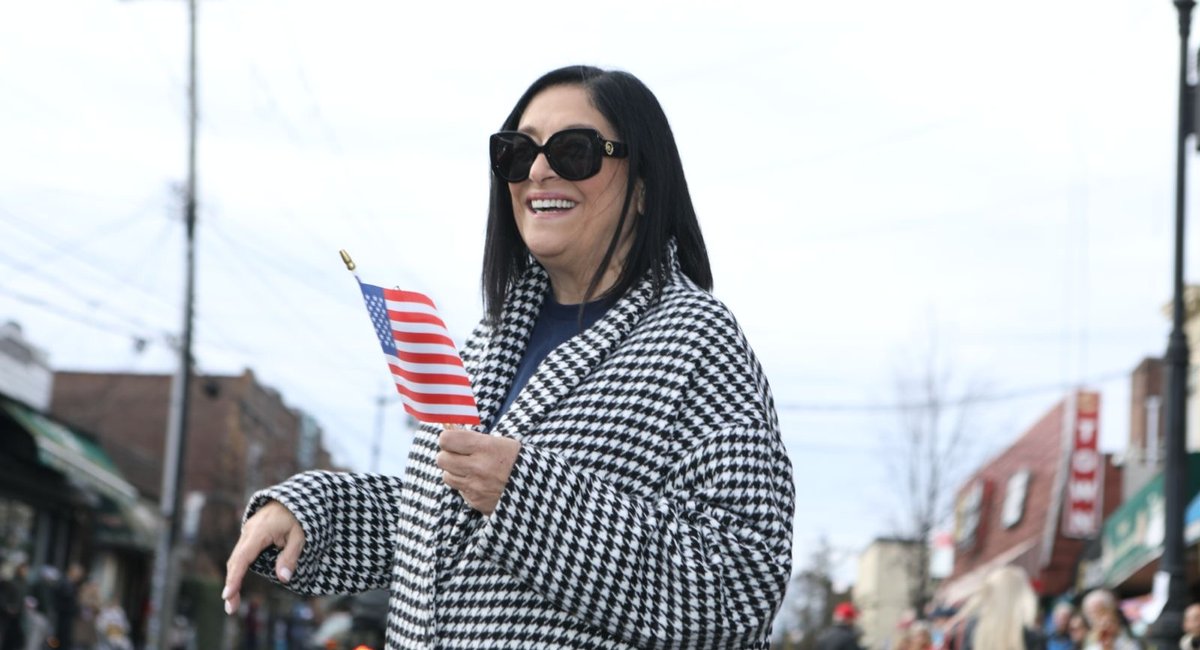
“It is absolutely a boys’ club,” Councilmember Joann Ariola, whose Queens district includes the Rockaways and Howard Beach, said in a recent interview. “When you have five women and three men, and the three men are making the decisions, that’s not a democracy, that’s not inclusive.”
Ariola’s departure is the latest example of a trend in the Republican Party.
In recent months, U.S. Rep. Elise Stefanik suspended her campaign for New York governor, Marjorie Taylor Greene resigned from the U.S. House of Representatives and President Donald Trump removed Homeland Security Secretary Kristi Noem, even as male agency leaders facing seemingly constant controversy, like FBI Director Kash Patel, remain. Taken together, the high-profile exits raise questions about the role Republican women will play in their party’s future.
One Common Sense Caucus leader denied the sexism allegations and said their leadership decisions were driven by a long-term strategy to play a decisive role in the next City Council speaker race.
But Debbie Walsh, director of Rutgers University’s Center for American Women, said there’s a sense right now that women don’t quite fit in the Republican Party.
“I think that it’s gotten harder for women in the Republican Party because that kind of bro culture is really on steroids now,” Walsh said.
She pointed to the most recent Republican National Convention, when Trump walked on to the stage to James Brown’s, “It’s A Man’s Man’s Man’s World.”
“It just was so over the top male,” Walsh said.
The bipartisan Common Sense Caucus previously included three centrist Democrats and the five-member Republican delegation. Ariola contends that when the caucus was electing its co-chairs and setting its bylaws this year, Republican Minority Leader David Carr orchestrated the election of Republican Frank Morano and Democrat Phil Wong.
“This idea of allowing a handful to dictate to the many runs counter to the collaborative spirit and democratic ideals that this caucus was meant to represent, and as a result I feel I can no longer take part in this group and sit idly by while our voices are removed from the conversation,” Ariola wrote in a letter announcing her exit from the group.
Carr declined to comment on the record.
Councilmember Vickie Paladino, a fellow Republican from Queens, also quit the Common Sense caucus on the same day as Ariola. She did not respond to a request for comment.
A source with direct knowledge of Paladino’s decision said she left the Common Sense Caucus meeting on March 10 at City Hall fuming over a lack of public support from her colleagues as she faced an ethics inquiry over Islamophobic social media posts. Paladino yelled “I’m out of here” as she left Carr’s office.
Paladino is currently facing charges of disorderly conduct by the Council’s ethics committee over social media posts that Council Speaker Julie Menin said contained “Islamophobic rhetoric.” She filed a lawsuit against the Council for violating her First Amendment rights, which the city has moved to dismiss.
Both Morano and Wong are serving their first full terms. Wong did not respond to a request for comment. Morano said he was sorry that Ariola and Paladino left the Common Sense Caucus, describing them both as friends of his. But he pushed back on Ariola’s “boys’ club” charge.
“ It’s not a boys’ club. My goal is exactly the opposite,” Morano said. “I want to build a caucus that’s inclusive and genuinely bipartisan. The more voices we have at the table, especially from different backgrounds and perspectives, I think the more influential we’re going to be.”
Councilmember Inna Vernikov, a Republican whose district is in South Brooklyn, declined to answer questions about whether there was sexism behind the leadership decision within the Common Sense Caucus, or what the departure of Republican women from leadership positions said about the party more broadly. But she texted a comment praising the caucus as “incredibly diverse, inclusive and collaborative.”
“The Caucus is only made stronger by amplifying female voices representing Black, Asian, Ukrainian, Jewish and immigrant communities and I am excited to play an integral part in moving forward its centrist agenda over the next few years,” Vernikov wrote.
Morano said the members selected him and Wong as the co-chairs because they were the only two members who will not be term-limited out of the Council after this session.
“ We want to build this into a body that has an enormous amount of influence in the next speaker’s race and continue to be a group of moderate Democrats and Republicans that are able to help sway the speaker’s race, just like the way that we influence this speaker’s race,” Morano said.
He also said sexism was not a problem in the Republican Party. To bolster his case, he cited Trump’s selection of Susie Wiles as his chief of staff. She is the first woman to serve in that role in U.S. history.
“I think the fact that the president appointed someone like Ms. Wiles shows how much Republican leaders and Republican elected officials value women,” Morano said.
He also pointed to the head of the Republican congressional delegation in New York City, Rep. Nicole Maliotakis. He said he had endorsed Stefanik in her bid for the GOP nomination for governor last year, who he said had “an excellent chance of winning the primary had she stayed with it.”
Late last year, Stefanik suspended her campaign for the Republican nomination for governor and said she did not plan to seek re-election to her North Country congressional seat. Stefanik’s political fortunes took a nosedive after Trump was elected to his second term. Trump withdrew Stefanik’s nomination as ambassador to the United Nations last May to preserve a razor-thin Republican majority in the House.
Stefanik, who reportedly clashed with Speaker Mike Johnson, was then considered the favorite to be the GOP nominee for governor. But Trump withheld his endorsement from Stefanik, who had been unwaveringly loyal.
Stefanik dropped out of the governor’s race in December, saying she wanted to spend more time with her family.
Stefanik’s departure erodes Republican women’s already disproportionate numbers at the congressional level. Of the 150 women who are serving in Congress, only 40 of them are Republicans. The other 110 are Democrats.
Ariola declined to comment on what is happening for women in the Republican Party on the state and national level.
“ I can only really speak to what happens locally,” Ariola said. “And what I see in that office now is men running the show and the rest of us women are to just fall in line. And that’s not who I am.”