
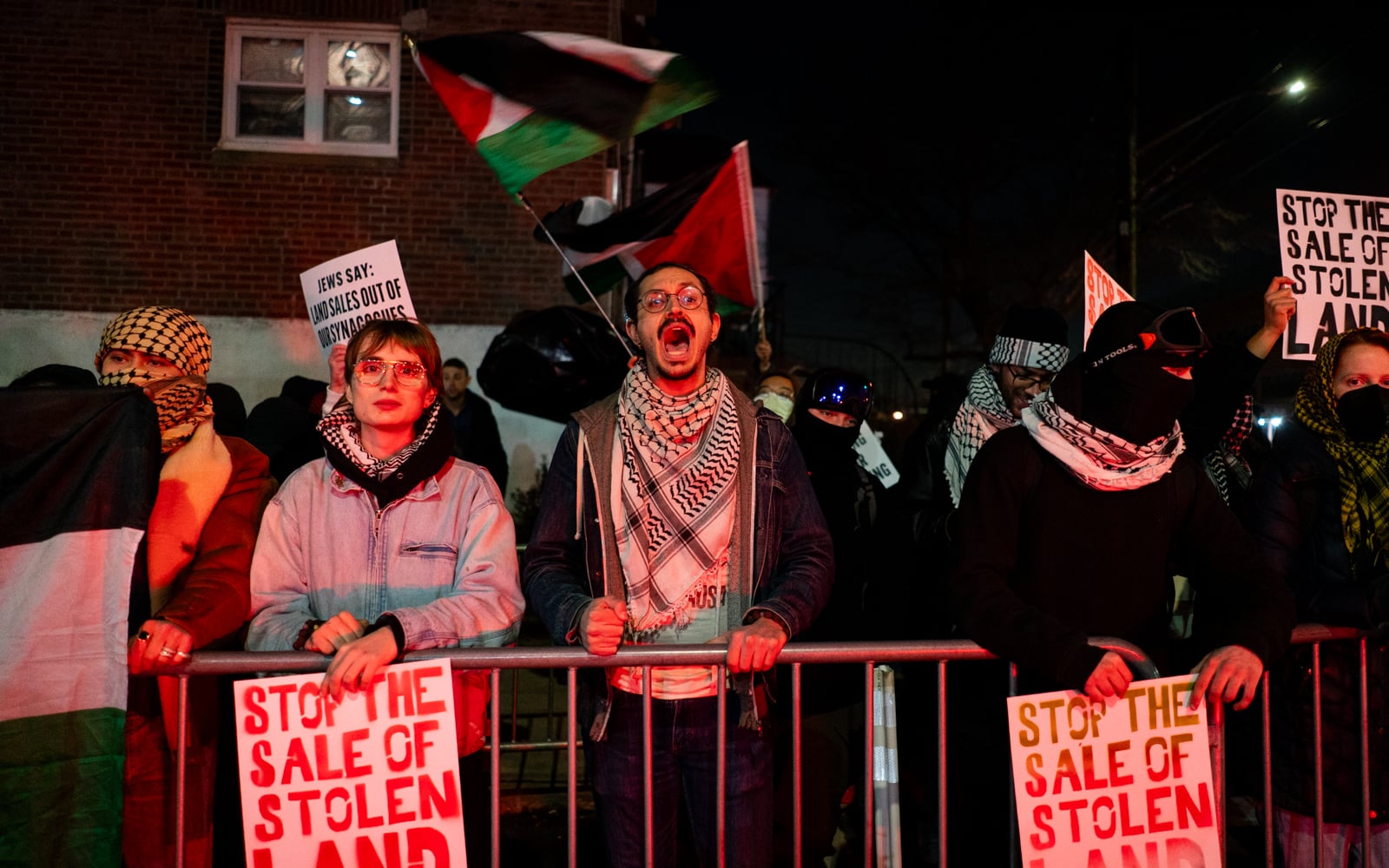
NEW YORK — The New York City Council on Thursday passed legislation meant to protect houses of worship by a veto-proof majority despite opposition from leftist and anti-Israel groups, part of the council leadership’s broader push to rein in rampant antisemitism in the city.
The bill passed by a vote of 44 in favor and five opposed in the 51-member council.
New York City Council Speaker Julie Menin led the effort to pass the legislation, which came in response to two vitriolic protests outside synagogues in recent months that unnerved Jewish New Yorkers, who are targeted in hate crimes far more than any other group.
The legislation directs the NYPD to “establish a plan to address and contain the risk of physical obstruction, physical injury, intimidation, and interference at places of religious worship,” and to make those plans public. The bill does not bar protests or establish buffer zones at any specific distance, and police already set up safety perimeters around houses of worship during protests.
“This provides transparency and accountability to a process that was very opaque before,” Menin said at a Thursday briefing. “It also requires the NYPD to do community engagement, which didn’t exist before.”
Get The Times of Israel’s Daily Edition
by email and never miss our top stories
By signing up, you agree to the terms
Police will be required to engage directly with houses of worship and protesters about security plans, Menin said.
A related bill requiring the NYPD to establish a similar plan at educational facilities passed by a smaller margin of 30 in favor and 19 opposed. Some of that legislation’s opponents cited concerns about infringing on protests on college campuses.
A coalition of activist groups protested against the legislation, framing it as an attack on free speech and oppressive toward Palestinians, while mainstream Jewish groups backed the measure.
Nodding to those concerns, the bill’s text directs the NYPD to formulate its plans “while preserving and protecting the rights to free speech, assembly, and protest.”
“It upholds both public safety and constitutional freedoms in the very same breath,” Menin said.
“The bills don’t even talk about protesting,” she said.
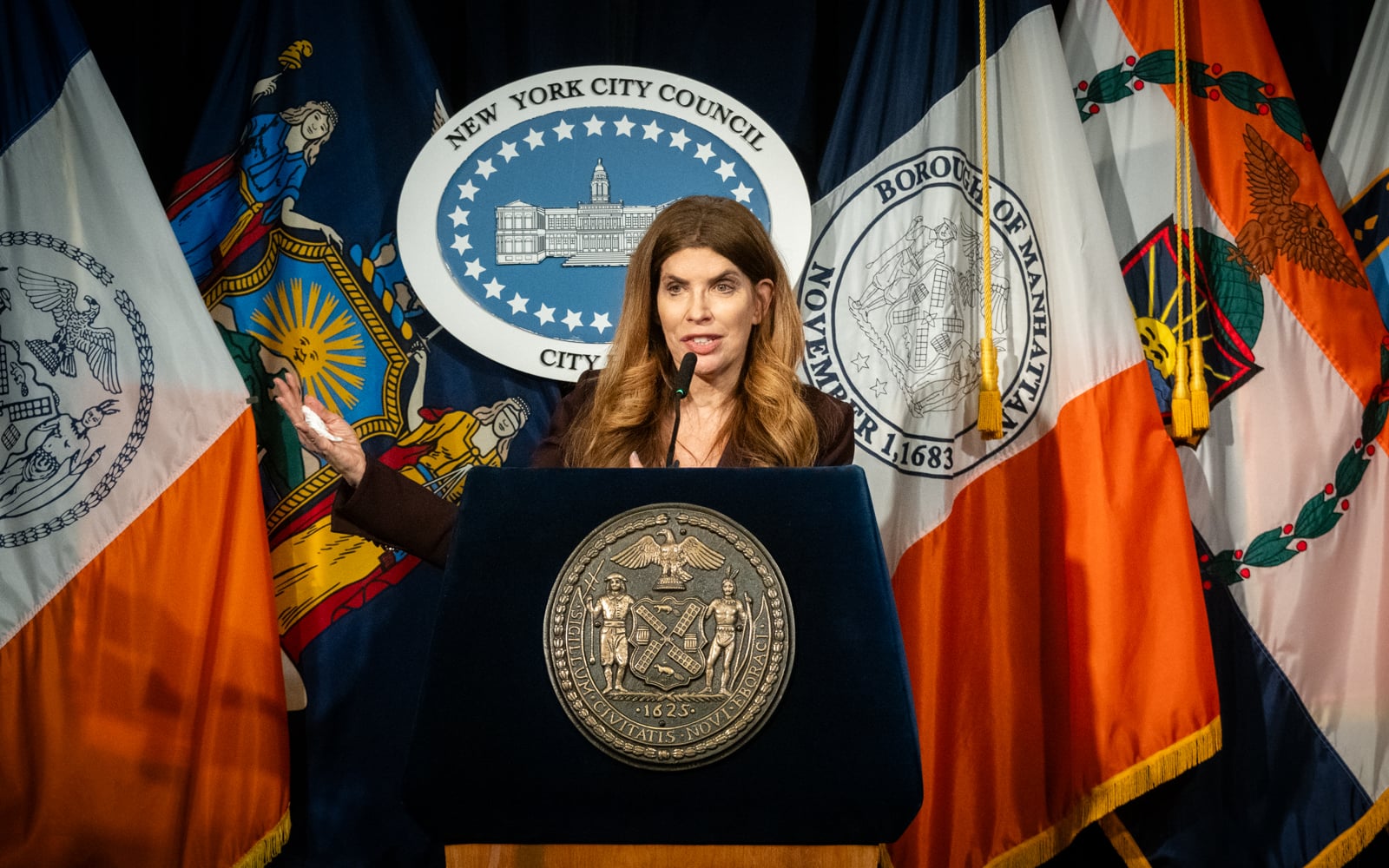
New York City Council Speaker Julie Menin discusses legislation meant to protect houses of worship, at City Hall in Manhattan, March 26, 2026. (Luke Tress/Times of Israel)
The legislation’s opponents included the New York Civil Liberties Union, the leftist Jews for Economic and Racial Justice, the anti-Zionist Jewish Voice for Peace, and Pal-Awda, the group that led the synagogue protests.
Those demonstrations targeted events with ties to West Bank settlements, one that facilitated immigration to Israel and another that provided information about real estate.
During the demonstrations, protesters chanted in support of the Hamas terrorist group, shouted “Death to the IDF,” hurled vitriol and discriminatory epithets at Jews, and chanted, “We need to make them scared.”
The New York Civil Liberties Union led a protest outside City Hall on Thursday ahead of the council’s vote, with demonstrators holding signs that said, “Protect free speech,” and “Protect protest.”
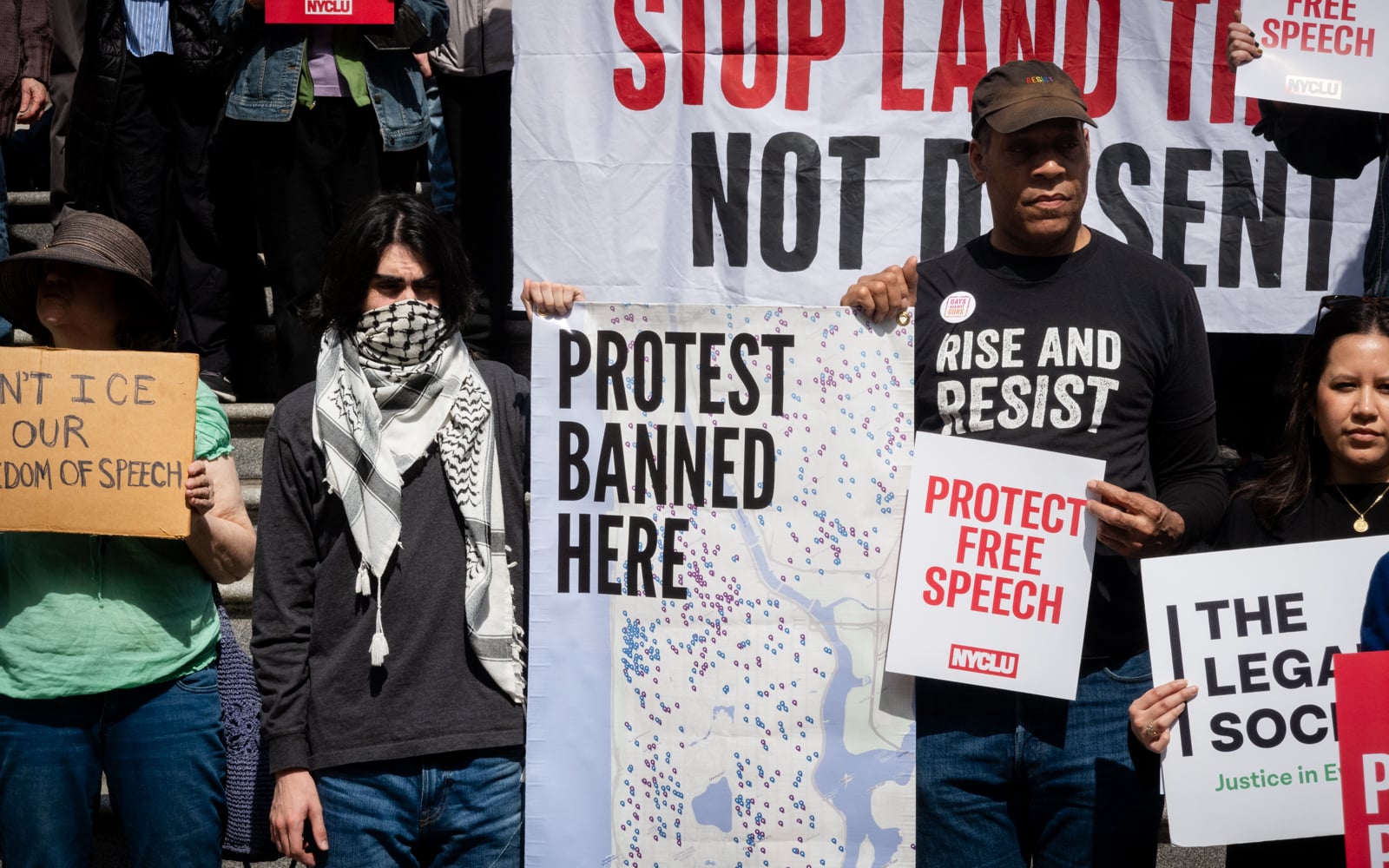
Protesters demonstrate against legislation meant to protect houses of worship, at City Hall in Manhattan, March 26, 2026. (Luke Tress/Times of Israel)
New York City’s branch of the far-left Democratic Socialists of America, the home base of New York City Mayor Zohran Mamdani, instructed its supporters to tell City Council members to vote against the legislation.
“Julie Menin is trying to crack down on your right to protest and ramp up surveillance on New Yorkers. Don’t let the City Council erode our rights,” the party said on Tuesday.
At Thursday’s rally, Jews for Economic and Racial Justice spokesperson Sophie Ellman-Golan said the group opposed the bill because “it grants total NYPD discretion for enforcement.”
“And what we know is that the NYPD cannot be trusted to enforce something fairly,” Ellman-Golan told The Times of Israel.
“At best, it does nothing. At worst, it emboldens NYPD abuse and selective enforcement. So why is this the solution to antisemitism, which is a real problem in New York City?” she said.
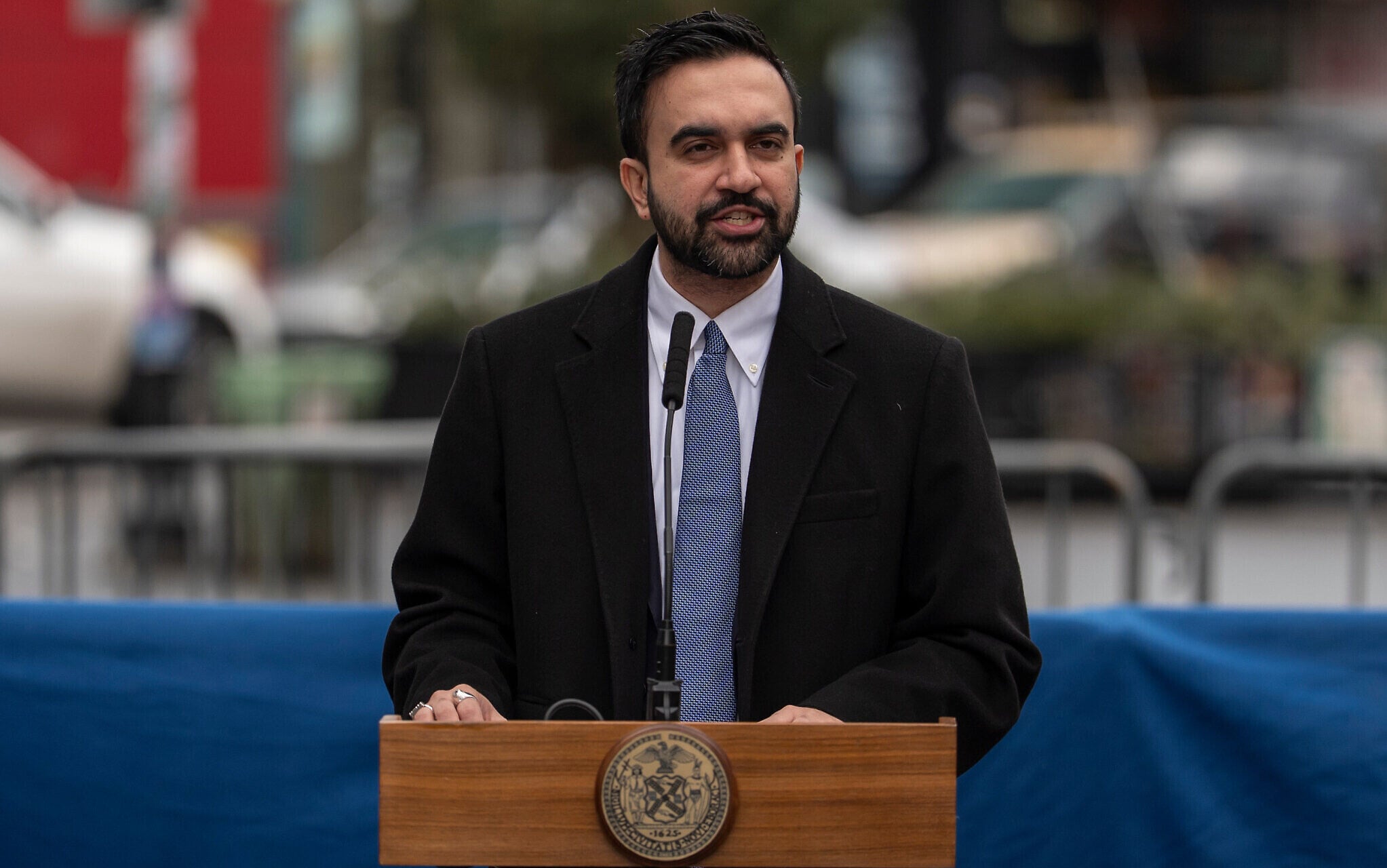
New York Mayor Zohran Mamdani speaks during a news conference, January 7, 2026, in the Queens borough of New York. (AP Photo/Yuki Iwamura)
The synagogue legislation presents a challenge to Mamdani, putting him between his far-left allies, and the City Council’s leadership and mainstream Jewish groups that back the buffer zones. Mamdani has not confirmed whether he will support or veto the legislation.
After passing the City Council, the legislation will head to Mamdani for approval. If the mayor signs the bill, it becomes a local law; if he vetoes the legislation, the council can override the veto with a two-thirds vote. The 44 votes in favor meet that threshold, so the council will be able to pass the bill into law, even if Mamdani issues a veto.
The legislation for houses of worship initially called for a protected area of up to 100 feet (30.5 meters) around houses of worship, but was later watered down after the NYPD expressed concerns about enforcement logistics. The updated text removed mention of a specific distance.
Police representatives have said the legislation would not have a significant impact on how officers operate on the ground, but would increase transparency around their handling of protests.
“The bill would not change what we do day-to-day. It would require us to articulate, and put in words on paper, what our approach is in these situations,” Michael Gerber, the NYPD deputy commissioner for legal matters, said at a hearing last month.
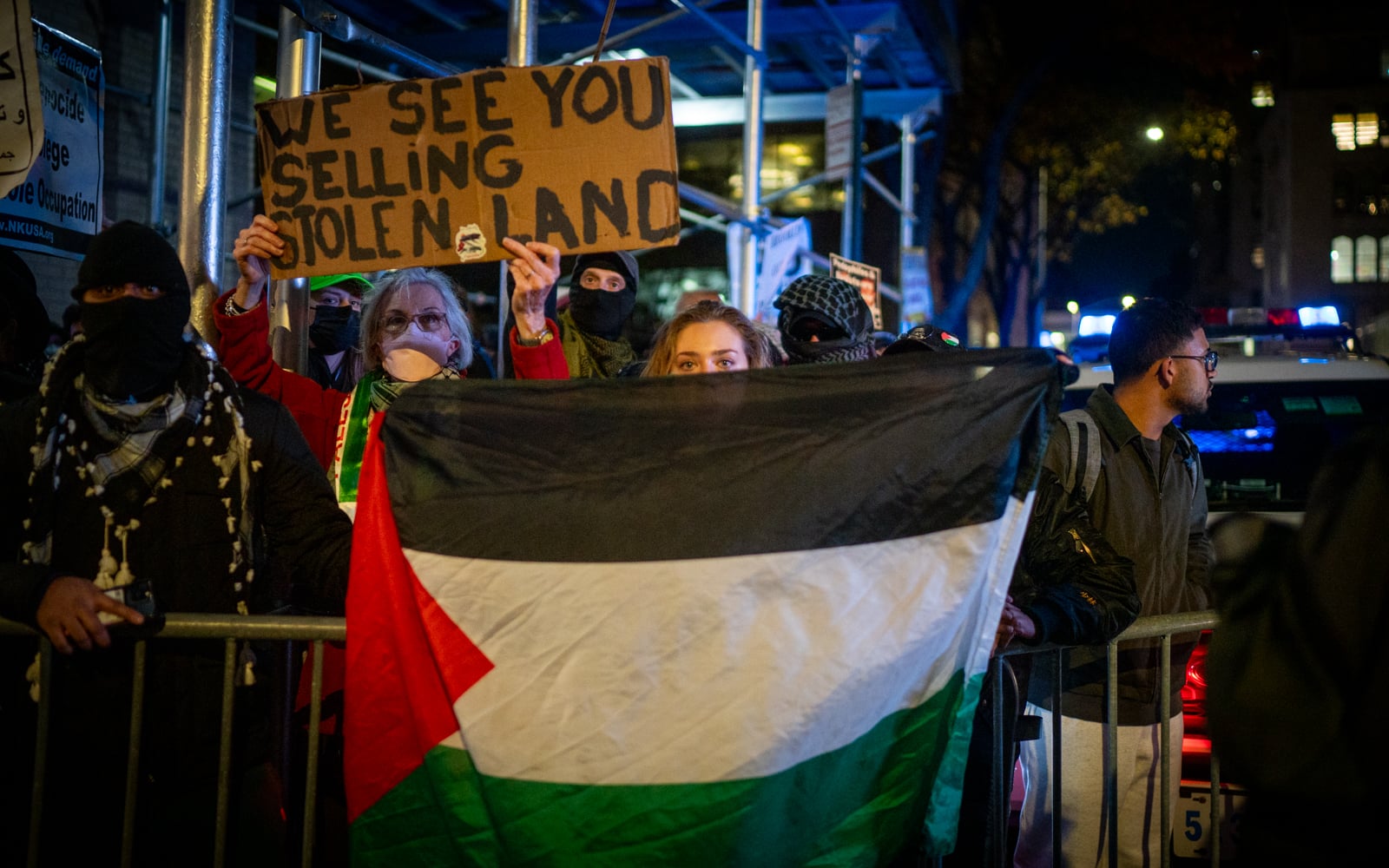
Anti-Zionist protesters outside a New York City synagogue, November 19, 2025. (Luke Tress/Times of Israel)
Menin is a moderate Democrat and the council’s first Jewish speaker. The role is a powerful position in the city government and a counterweight to the mayor’s office.
Discussing the legislation at the Thursday press briefing, Menin called the bill “deeply personal” due to her family history.
“I am the daughter and granddaughter of Holocaust survivors. My grandfather was killed in the Holocaust. It’s not a new issue for me,” she said.
New York Governor Kathy Hochul has pushed a separate, but similar, statewide proposal for 25-foot buffer zones around houses of worship.
You appreciate our wartime journalism

You clearly find our careful reporting of the Iran war valuable, at a time when facts are often distorted and news coverage often lacks context.
Your support is essential to continue our work. We want to continue delivering the professional journalism you value, even as the demands on our newsroom have grown dramatically during this ongoing conflict.
So today, please consider joining our reader support group, The Times of Israel Community. For as little as $6 a month you’ll become our partners while enjoying The Times of Israel AD-FREE, as well as accessing exclusive content available only to Times of Israel Community members.
Thank you,
David Horovitz, Founding Editor of The Times of Israel