
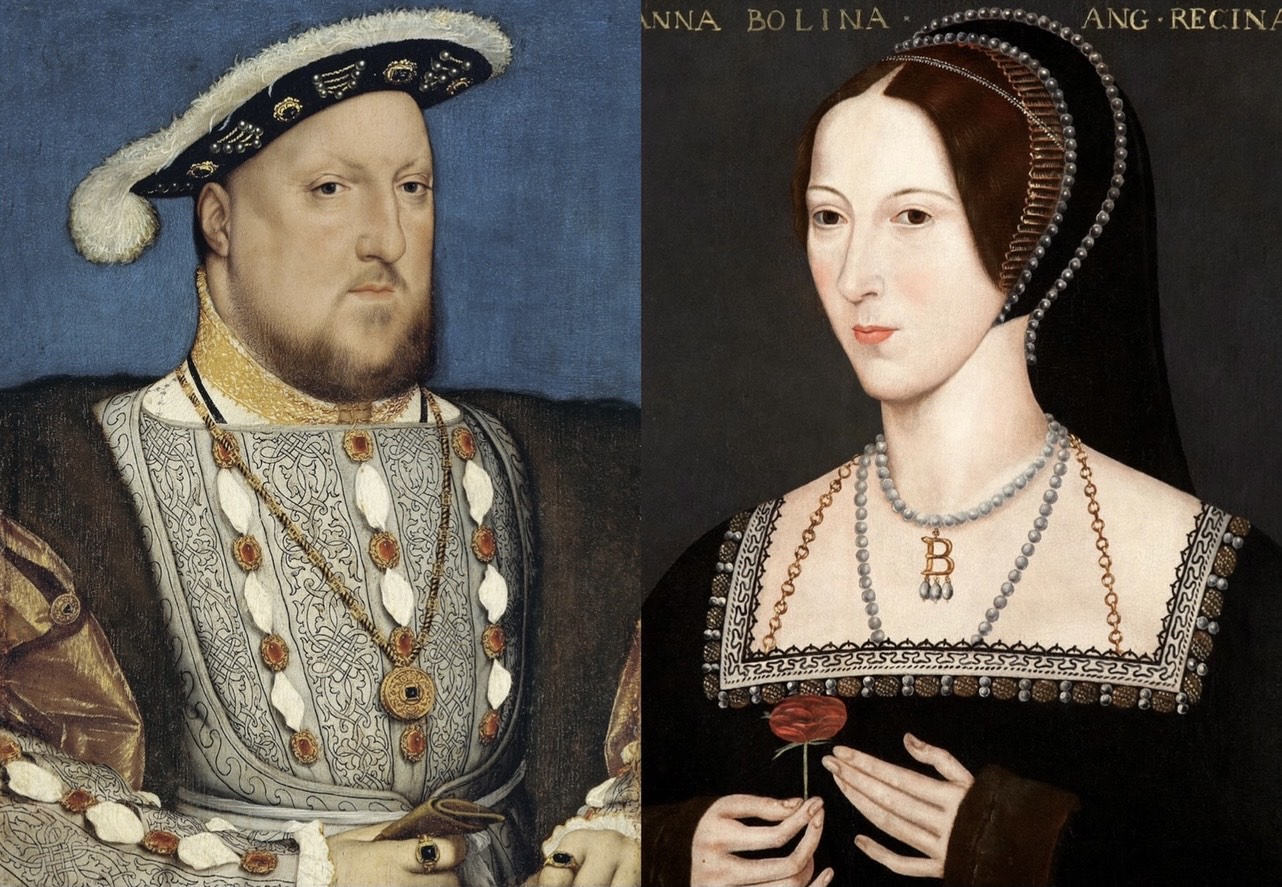
In part I, we traced Mary’s childhood amidst the events of Henry’s political failures on the European stage, as well as the change in her affairs at the conclusion of the King’s Great Matter. Now we will resume in 1533, just before the birth of Elizabeth.
Eustace Chapuys, the Imperial ambassador in London, did much to advocate on Katherine and Mary’s behalf. Earlier in the year, he had gotten into a heated exchange with Henry when he was advocating for Mary in the succession. As he relates, in a dispatch back to Charles V:
He said that he wished to have a successor to his kingdom ; and when I said to him that he had a daughter endowed with all imaginable goodness and virtue, and of an age to bear children, and that as he had received the principal title to his realm by the female line, nature seemed to oblige him to restore it to the Princess, he replied that he knew better than his daughter, and that he wished to have children. And when I said to him he was not sure of having them, he asked me three times if he was not a man like other men.
As we noted, Mary continued to be welcome at court, and it seemed as though she would be. The apparent good relations led Mary into a false sense of security. In reality, Henry had already replaced her in his mind. While Anne labored with a difficult pregnancy, Henry sent Lord Hussey to obtain Mary’s jewels. Jewels were not mere trinkets for royalty, they were also a sign of status and position. Just as Katherine was raised to be a queen, Mary was raised to be a princess, with a proud sense of the dignity which this conferred. She put up no end of obstructions to Hussey, marveled that he did this with no written command of the king, and as a result, he threw up his hands in exasperation when explaining to Cromwell why he was unable to fulfil his charge. It was clear to Henry that she meant never to submit, and would be as defiant as her mother. She was locked in battle with Anne, and September would change the situation for both of them as Anne gave birth to a healthy child; except that it was a girl.
Henry put a brave face on it, but the truth is he was displeased. Did Henry think back to the Mary’s birth in 1516, when He confidently said sons would follow? Whatever about this baby, it wasn’t nothing, and it gave Henry a useful tool in dealing with his older daughter. Earlier in the year, St. Thomas More received the news of Henry’s marriage to Anne, and the invitation to Anne’s coronation (which he skipped), and quipped to his daughter, “By God Meg, they will soon confirm this with oaths.” So it came to pass the following year, with the commencement of the Succession Act of 1533 (taking effect on 15 January 1534). This act declared that only Henry and Anne’s issue would succeed to the throne, it formally disinherited Mary, and de facto, Elizabeth was proclaimed as the true heir. It was also accompanied by a preamble, forcing subjects to swear in some form that the marriage between Henry and Katherine was invalid, and the marriage of Henry and Anne valid, therefore bastardizing Mary as well. The refusal to swear this act was the cause whereby Sts. Thomas More and John Fisher were sent to the tower, but this was but the opening salvo. Mary had widespread sympathy and support, but it wasn’t enough when dealing with the King’s will. It was now treason to support Mary’s inheritance. As unpopular as Anne Boleyn was, few were willing to cross the king, and Mary, though she had the spirit of her grandmother Isabella, she did not have her troops.
In December Henry, prodded by Anne, dismissed her household. She was to be housed at Hatfield, with the true princess (from Henry and Anne’s standpoint), Elizabeth. Mary wrote a formal protest, declaring she would acknowledge no other as princess but herself, and no other as queen but her mother. This irritated the Duke of Norfolk who came to execute the command, and he was harsh with her. Her servants were dismissed; the duchess of Salisbury, Margaret Pole, was likewise dismissed. Margaret Pole had been Mary’s governess, and a constant pillar of support during the King’s Great Matter, all the more important to Mary since her mother had been banished from court and forbidden to see her. Lady Margaret offered to serve the princess at her own expense, but Henry forbade this. He must, not only because Anne would never allow it, but because he could not allow his daughter to continue defying him, and such a situation would only encourage it. She was given a short time to pack her things, and then transported to Hatfield, where Norfolk immediately attempted to provoke her, by inviting her to pay court to the princess. She declared that she knew of no other princess in England but herself, and would treat Elizabeth merely as a sister. This did not please the Duke, but there was little more that he could do, and he was glad to be finished with such business.
The governess of the house was Lady Anne Shelton, Anne Boleyn’s paternal aunt. Anne had given her instructions for Mary to be beaten if she would continue to insist on her title of princess, and she was regularly given occasions to be shown her inferior status to the infant Elizabeth. When travelling, she was placed in a notably inferior position to Elizabeth; at meals, she was given food tailored to mark her lower status. Mary attempted to avoid these implicit acknowledgments of Elizabeth’s place by forcing the help to pick her up and place her into a carriage, rather than entering willingly; as for meals, by eating more in the morning in her chamber so she could skip dinner, or even taking dinner in her chamber. Lady Stelton did not envisage herself as a jailer, and seems to have had a certain degree of respect for Mary’s situation. She was criticized by Anne and others for not being severe enough with Mary, and it seems that she refused to follow Anne’s capricious instructions to physically assault an already emotionally damaged teenage girl. Her health also declined, and she suffered from extreme menstrual pain, as well as other disorders which came from the psychological isolation to which she was subjected. And apart from a rare letter which she was allowed to receive from her mother, she was not allowed any contact with her, or Chapuys the Imperial ambassador. She spent a miserable Christmas at Hatfield, but continued in her resolve.
It is clear that Henry still felt affection for his daughter, but, just as everyone in his life, his favor was conditional upon being bent to his will. She would yield; it was just a matter of time. Yet he still showed signs of cracking. When Du Bellay, the French ambassador was speaking about the situation with Henry, the king told him he had refused to see her due to the obstinance of her behavior, which came from her Spanish blood. When Du Bellay noted that Mary had been well brought up, the king’s eyes welled up with tears, and all he could do was praise her. In January of the following year, 1534, Henry resolved to see Mary to persuade her to renounce her title. Anne was anxious. She knew Henry well enough to know that he was emotional, could not handle the sight of women in tears, and would easily backslide due to the love for his daughter, which she envied and resented. No sooner than he had gone did she send Cromwell after him to persuade him not to see her, and send Cromwell in his place. He was not successful, and so Anne attempted a carrot and a stick approach. She visited Mary offering better treatment, which Mary would answer with scathing rudeness. She alone was the princess, and her mother was Queen, but if “Lady” Anne would speak to her father on her behalf, she would be well treated indeed. The outcome of such meetings was predictable, Anne’s temper was enraged, and Mary maintained the moral victory.
Charles V now became concerned with Mary’s treatment. He received a stinging letter from Katherine in February 1534, and was prodded to action. He demanded the Pope finally decide on the case, which he had been astutely ignoring even though it was quite clear that Henry had already rejected his authority. The result of this was the belated decision in favor of the validity of Henry and Katherine’s marriage, and Henry’s excommunication. This was completely ignored in England, and only supplied Katherine and Mary with a moral victory. Moreover (in spite of having once been betrothed to her), Charles began to take a fatherly interest in Mary, since her own father seemed to abandon her. But since every protest on Mary’s behalf seemed to enrage Henry further, Charles followed Chapuy’s advice and cease to agitate the matter. Just the same, the result was a relationship that would continue throughout Mary’s life, even when she would become Queen.
Nevertheless, Mary continued to be ill throughout 1534 and 1535; the execution of the Carthusians, Sts. John Fisher and Thomas More cowed any public support for Mary in the country, which was now treasonous by the Act of Royal Supremacy, and left her quite alone. Mary’s only real recourse was to write to Thomas Cromwell, who had the unhappy task of filtering her pleas and requests to Henry, which went ignored.
Just the same, Mary was not without supporters on the outside. These included Nicholas Carew, the Master of Horse and a longtime friend of Henry’s, Lord Henry Courtenay and Elizabeth Courtenay, Mary’s godmother, Margaret Pole, and above all, the Imperial ambassador Eustace Chapuys. They were all about to enter a conspiracy in a year of violence and duplicity which would upset the power structure in England.
The Fall of Anne Boleyn
1536 would be a year of death and defeat for Mary. It begins with Katherine’s death on 7 January of that year. This came as a blow for Mary, who had not been permitted to see her mother for years, but it was different news at Hampton Court, where Henry and Anne are said to have danced in celebration. Nevertheless, things were not well between them. First, Katherine had her revenge. On 29 January, the very day of her funeral, Anne had miscarried; it was male. This made for quite a lot of talk in London, where Anne was always unpopular. Even before this, and after, she was constantly seen arguing with Henry; it seems that Anne had not made the transition from royal mistress to queen. She often interfered with the ability to see his friends (men such as Carew), and was a kill joy for the courtly romances that had made up so much of Henry’s royal life. It was attractive for Anne to be outspoken and resist Henry when she was his love interest, but it was another for her to do so as Queen, for queens were expected to be docile and obedient; Anne was anything but. With frequent arguments and no son, Henry began to wonder if it was a sign that he was cursed. Thus Mary’s circle of supporters saw a break, and would now set out to use whatever means they could to destroy the Boleyn faction. And for that, it was handy to have an alternative to Anne, which they found in Jayne Seymour.
Jayne was the daughter of a Wiltshire squire, and in every way a contrast to Anne. She was docile, and of pleasant demeanor. Sometimes historians have viewed Jayne as a doormat, with no opinions of her own, but this does not fit with the events. Though Carew and others were the principal patrons of Jayne, and according to Chapuys had coached her, Jayne knew what she was playing for, namely the job Anne Boleyn currently had.
About mid-March, Henry sent a messenger with a purse of money and a letter. Jayne kissed the letter, but returned it to the messenger unopened, and instead, “She begged … [Henry] to consider that she was a gentlewoman of good and honourable parents, without reproach, and that she had no greater riches in the world than her honour, which she would not injure for a thousand deaths, and that if he wished to make her some present in money she begged it might be when God enabled her to make some honourable match.” Jayne was now following in Anne’s footsteps, and it seems to have worked. Henry brought her in with chaperons to ensure honourable conduct, and from this point she had moved from lady in waiting to queen in waiting; she would not have a long wait.
Anne began to see her influence and that of her faction decline, and her response was to lash out. She and Cromwell had come to a definite break over the latter’s pro-Imperial policy, compared to her pro-French policy, and a sharp disagreement over the suppression of the smaller monasteries. Anne wanted these turned into educational institutions, whereas Cromwell wanted these turned to the king’s purpose, to say nothing of appropriating their wealth. She had one of her chaplains, Rev. Skip, prepare a sermon comparing herself to Queen Esther, and Cromwell to Haman, who, as a result of his scheming, was hanged from the highest gallows that could be made. If Cromwell was in any doubt, he was disabused, and he knew it was either him or her.
Cromwell also had intelligence reports about the meetings at Chapuys’ residence with various supporters from Mary’s circle, and now he approached Chapuys. They entered into a temporary alliance, except that Cromwell was the one holding the cards. He played a double-game, securing Henry’s interests, while using all of those disaffected by the Boleyns to assist him; and then discard them. Mary’s circle seems not to have grasped Cromwell’s duplicity, or clear signs from Henry that the fall of Anne would not help her.
Just the same, getting rid of the Boleyns was not an easy task. A divorce was out of the question, given what had been done to make that marriage happen in the first place. Something more cunning was needed, and Cromwell just needed to wait. On 30 April, he seized upon the first evidence he needed. Anne had been in a public row with the Groom of the Stool, Henry Norris, who had made an off-color remark about feelings for her. Anne put him firmly in his place. It wasn’t quite enough, but then Cromwell received reports of another incident, where Anne had gotten into an argument with a court musician named Smeton, for seeming to speak of feelings towards her. It was enough.
Smeton was taken to Cromwell’s residence for questioning, and later put to the rack in the tower. At last he confessed to adultery with the queen. Then the circle widened, more were arrested, including Anne’s brother George, and Anne herself was sent to the tower, following the same route she had taken on her coronation procession: she would never see Henry or Elizabeth again.
In the tower, Anne went into hysterics, and every word was written down and taken in its worst possible sense. At last, she was tried for treason, adultery with numerous men, even with her own brother. The charges were so grandiose, that even Anne’s enemies found them hard to believe; did Henry so easily believe them? Did he remember the passionate love letters he had written to Anne? The truth is, he had engineered it all, Cromwell was merely carrying out his master’s will, while also destroying a potential rival. The trial’s verdict was a foregone conclusion, and Anne was beheaded at the Tower on 19 May 1536. The next day, Henry was betrothed to Jayne Seymour, and they were married by the end of the month.
Mary had written several letters to Cromwell, expecting that the removal of the “that woman” would now presage her restoration. Surely, it had been the caprice of Henry which had caused all of this? Now Mary was disabused. Her letters had gone unanswered, and Henry sent a deputation of earls, headed by the Duke of Norfolk to demand her submission, chiding her for being so unnatural as an ungrateful bastard to disobey her father. The Earl of Essex even declared that if it had been his daughter, he would smash her head against a wall. In spite of threats and violence, Mary remained firm. Cromwell at last played the final card: She would submit, wholly and entirely to Henry, repudiate her mother’s marriage, accept her bastardy, and swear the royal supremacy, or her friends and supporters would also be executed. Even Charles V had seemed to abandon her, as Eustace Chapuys encouraged her to accept it, and that everything could be worked out with the Pope later.
In 1534, Katherine had written to Mary advising her to obey the king in all things, except her conscience and those that pertained to God. But now in 1536, with pressure on every side, finding no earthly help, she broke.
On 22 June, she signed her submission, in obedience to all of the laws of the realm, to acknowledge the king as supreme head of the Church of England, and that her mother’s marriage “was by God’s law and man’s incestuous and unlawful.” She had broken her own conscience, and she would never be the same.
Like this:
Like Loading…
Related