
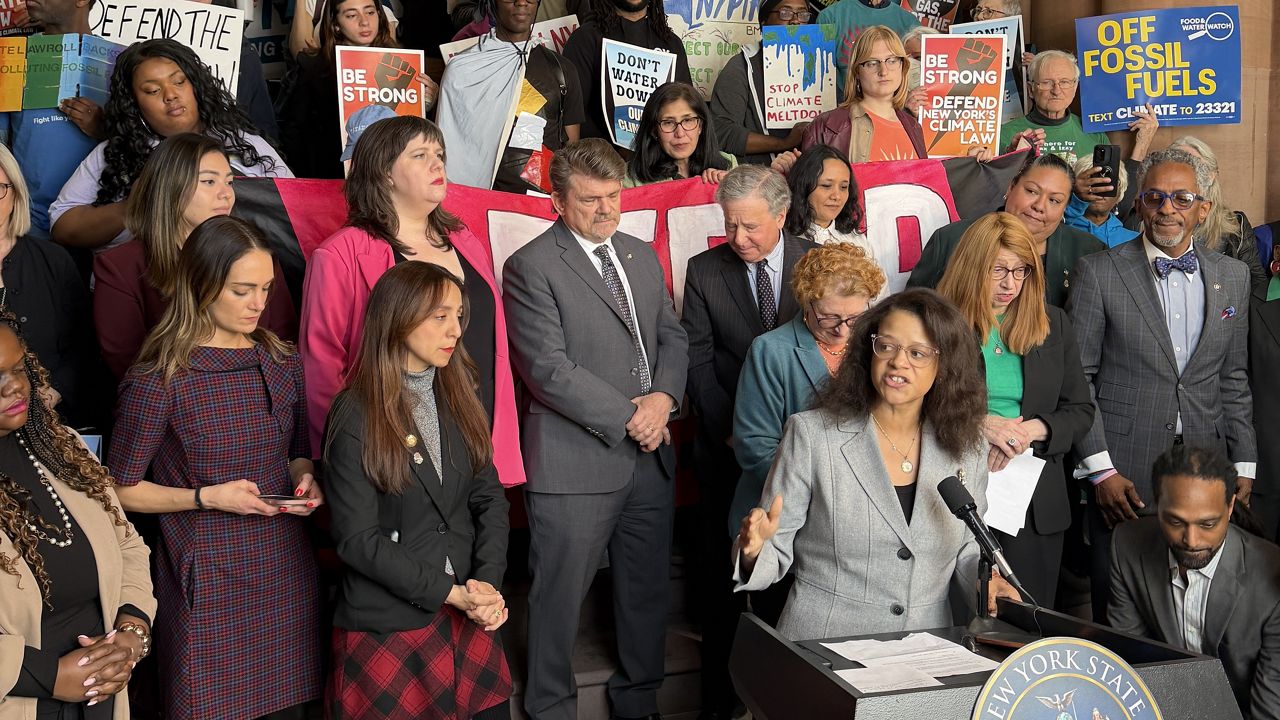
Environmental advocates gathered en masse in Albany on Wednesday, rallying outside Gov. Kathy Hochul’s office on the second floor of the state Capitol to voice their opposition to her proposed changes to the state’s landmark 2019 climate law, unveiled late last week in an Empire Report op-ed.
If advocates hopped Hochul would hear their vehement disagreement with her assessment, she didn’t in real time: she wasn’t there.
Hochul hit the road on a press tour Wednesday, drumming up community support for her “affordability agenda” outlined in her executive budget proposal, including a pitch to reform the state’s car insurance laws intended to lower rates and proposed changes to environmental review standards intended to spur housing development. But she also took questions from reporters multiple times on the climate issue, which has at times overshadowed those other key aspects of the budget conversation.
The irony of Hochul delivering remarks miles away from protesters seeking her attention underscores the frustration on both sides. Environmental advocates, along with state lawmakers telegraphing their concerns, have implored the governor to settle a lawsuit she cites as the basis for the proposed rollbacks and to avoid making changes in the secrecy of the budget process. Meanwhile, Hochul has privately expressed frustration behind the scenes that the issue is being framed as an “us vs. them” fight, and has argued her hands are tied and her commitment to environmental issues has not wavered.
“All I need is a longer runway,” she said at a stop in Rochester. “We’re not talking about walking away from the goals. I believe in them.”
Specifically, Hochul is pushing to delay the release of long-overdue regulations outlining how the state will fund its goal of an 85% reduction in emissions by 2050, moving the timeline to 2030, and to change how the state calculates its emissions progress.
While some key lawmakers, such as Assembly Environmental Conservation Committee Chair Deborah Glick, have expressed openness to negotiating at least the first aspect of Hochul’s proposal, those gathered on the Capitol’s Million Dollar Staircase expressed only frustration.
“We have a climate crisis. We need to do everything we can to build renewables as fast as we can,” Glick said. “There is an affordability crisis, and the proposals won’t help that.”
“We will not go quietly. We will not back down,” said Assemblymember Anna Kelles, who sharply criticized Hochul’s proposal to shift the state’s policy from a 20-year accounting methodology to a more common 100-year methodology.
Hochul lamented that her reasoning — citing legal proceedings related to a lawsuit brought by environmental advocates over the state’s failure to implement regulations around a previously proposed cap-and-invest program, as well as changes stemming from the COVID-19 pandemic and the Trump administration’s environmental policies — is falling flat with some lawmakers and many in the environmental community.
“I think if they understood where my heart is and what I’m trying to do in a very changed world, they would be supporting our changes, which are just to give us more time,” she said. “A judge is forcing those changes. The only way I can avoid imposing those is to get the Legislature to act now. I think everybody should be telling their legislators: follow the governor’s lead.”
Inside the Capitol, frustration is mounting among lawmakers, who say they have yet to see a formal proposal in budget language and are instead relying on Hochul’s op-ed, though her overall messaging on what she would like to see changed extends back several weeks.
“It is very clear that we have no details to rebut because we don’t have any legislative language to look at, but what we do have is reality,” Glick said.
“Most of us in the Legislature haven’t seen anything in writing other than the op-ed,” said Senate Finance Chair Liz Krueger, pointing to elements of the Senate’s one-house budget proposal that she said would better address utility rates and the state’s compliance with the climate law. “We have all these proposals and legislative language in our one-house budget that will dramatically speed up opportunities.”
Some Republicans in the legislature who might be expected to support the governor’s changes are accusing her of acting now to bolster her reelection bid, suggesting she could reverse course after the election — specifically comparing the move to her 2024 election-year pause and subsequent un-pause of congestion pricing.
Hochul dismissed the comparison.
“They’re wrong,” she said. “Congestion pricing I said was a pause. Pause meant it was going back on. It went back on, and it’s been wildly successful.”