
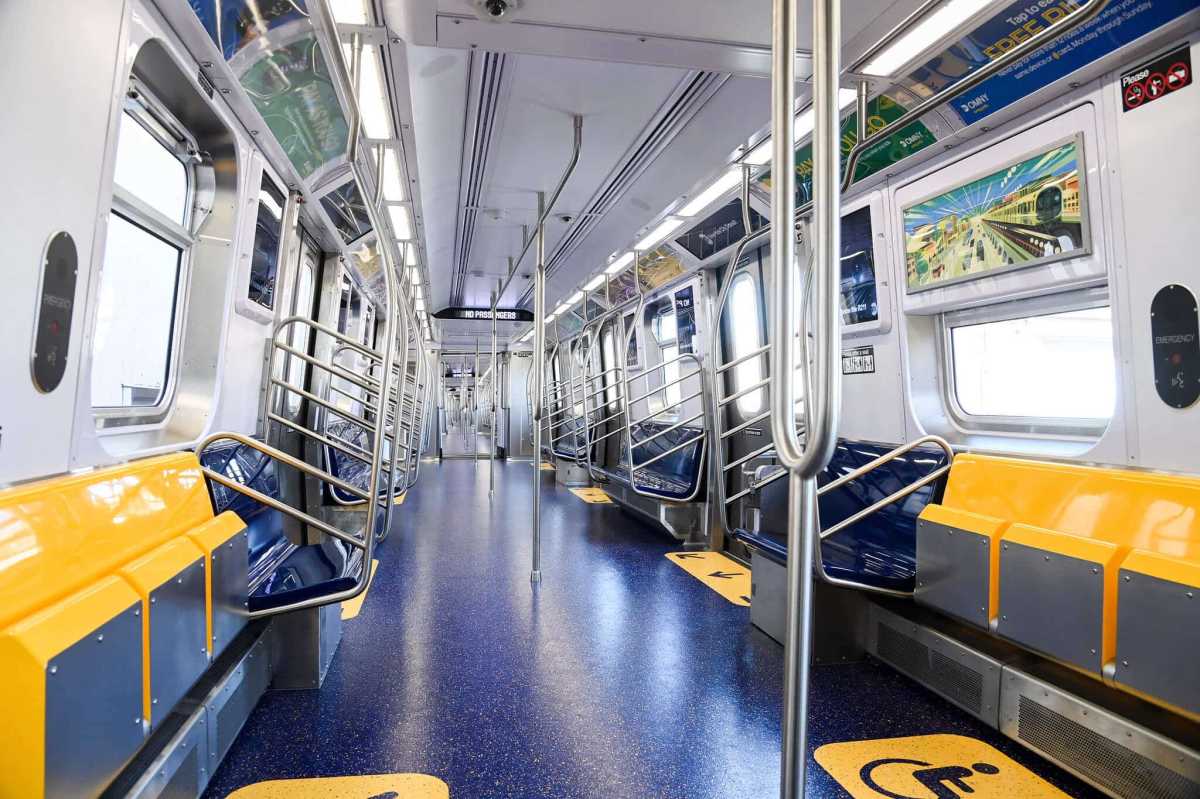
The open gangway allows riders to seamlessly move between train cars.
Marc A. Hermann / MTA
MTA Chair and CEO Janno Lieber said this week that a number of factors will determine to what extent the agency embraces open gangway trains in its latest order of modern subway cars.
During a press conference following the MTA board’s March 26 meeting, Lieber said the transit agency is still in the midst of evaluating both the operational and maintenance challenges that come with open gangway trains. The trains feature cars joined via accordion-style apparatus, allowing passengers to walk the length of an entire train without going outside. The open gangways replace the interior doors that have been standard on subway trains for a century.
The MTA boss said agency leadership will take both into account when deciding what percentage of their new train order — the largest in the agency’s history — the trains will account for.
“That work is still underway, and that’s going to be, as we get further into that, that’s going to be the basis for determining how many open gangway versus closed-end cars that we get done,” Lieber said.
While announcing the order of 2,390 new rail cars last week, MTA officials said that up to 60% of the purchase could be open gangway cars. The state-of-the-art subway cars, known as R262s and R262As, will replace aging trains that have run on the 1, 2, 3, 4, 5, and 6 lines since the 1980s.
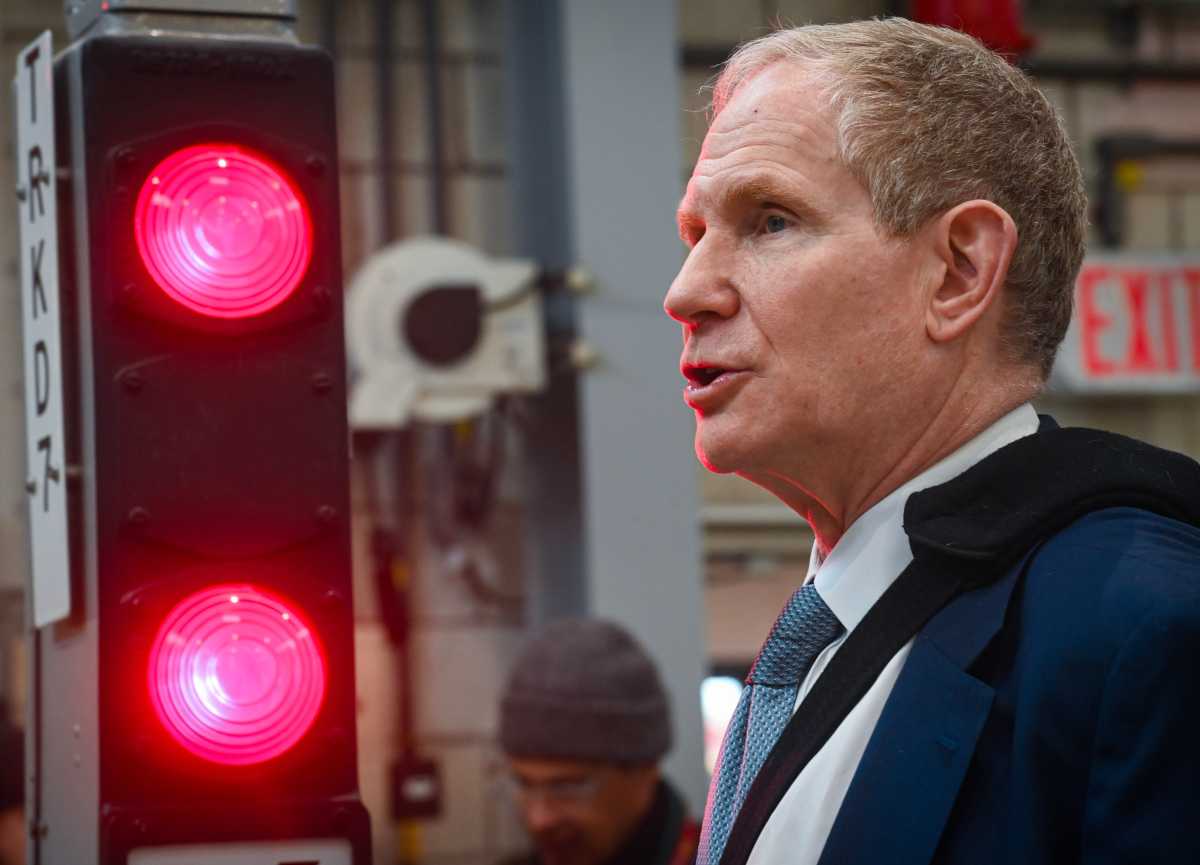 MTA Chair & CEO Janno Lieber announced on March 19 the release of an RFP for the R262 subway car class at the Railcar Acceptance and Testing Facility on Thursday, Mar 19, 2026.Marc A. Hermann / MTA
Lieber said the different maintenance needs of open gangway cars include where and how to elevate them in order to access their undercarriages, the parts required, and how long those parts will last.
He added that the agency is also still looking at whether passengers take advantage of the open layout to spread themselves out and what benefits the added capacity brings.
“The pros…are looking at all that, and they’re going to continue to look at that right up to the time we need to make those decisions,” he said.
The open gangway design is standard in subway systems around the world, except in the United States. Proponents of introducing more open gangway cars in the New York City subways say they would greatly increase capacity, as ridership numbers continue to climb post-pandemic, and are better at guarding against subway surfing, because they do not allow riders to easily climb on top of trains.
The MTA has been testing open gangway versions of its newest trains to date — dubbed R211s — since February 2024, when it first introduced them on the C line. Last year, it also rolled out open gangway R211s on the G line.
However, the MTA reportedly did not purchase any open gangway trains in an order of 378 R268 model cars in October.
Brian Fritsch, of the Permanent Citizens Advisory Committee to the MTA, said that while he recognizes the potential benefits of open gangway trains, he understands some of the concerns that Lieber raised about fully embracing the design.
“Anytime you put in an order of this size, there’s some risk that you need to check all the boxes before you pull the trigger,” Frisch said of the R262 order. “I don’t think there’s anything super new about that. I do understand that the MTA has to do all its due diligence on ensuring that it’s ready for whatever changes come with the cars.”