
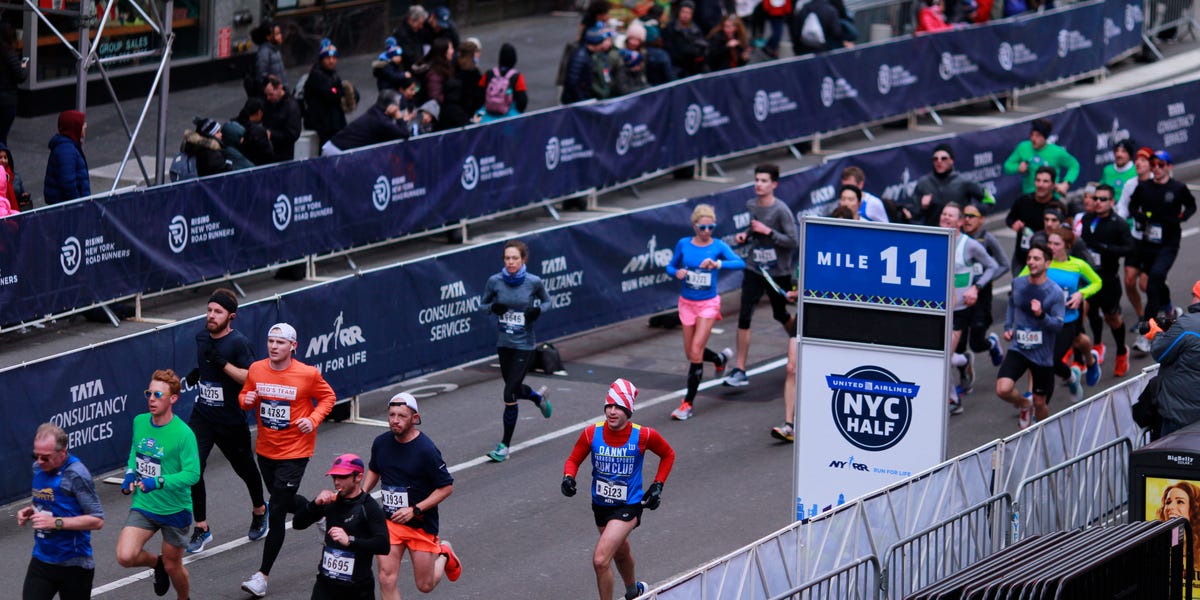
Lisabeth Shlansky doesn’t remember exactly where she was on the evening of the most recent New York Road Runners registration period for members, January 29.
But it’s likely she was delivering a baby.
Shlansky, 63, is an obstetrician, and she can’t always get to her computer when registration for NYRR races opens four times per year at 6 p.m. And runners typically have to be on by 5 p.m. to be placed in a queue for the opportunity to register for events coming up over the next few months.
That evening in January, Shlansky logged on at 5:55 p.m., and by the time it was her turn to register for races in April, May, and June 2026, they were all filled.
“I got shut out,” Shlansky said. “I waited in a queue for an hour. I finally got out of the queue, and all the races were sold out literally within an hour. It’s been bad in years gone by, but this year was absolutely 100 percent out of control.”
Related StoryDemand trickles down
What’s driving the demand for these four-milers and five-milers and the 10Ks, the races that happen on weekends, primarily in Central Park, and turning the registration process into something akin to scoring Taylor Swift concert tickets?
It’s simple: Guaranteed entry into the next year’s New York City Marathon for people who complete nine of those races and volunteer once in a calendar year. Runners refer to the program with the shorthand “9+1.”
New York Road Runners leaders see the blessing and the curse. On the blessing side: the popularity of the NYC Marathon.
“Demand to get into the TCS New York City Marathon is massive and growing,” said CEO Rob Simmelkjaer in an interview with Runner’s World.
As a measure of that demand, in the recent drawing for entry into the race, about 1 percent of 240,000 applicants made it in.
The 9+1 program, on the other hand, provides a guaranteed way for New York-area runners to get into the marathon. In 2025, there was a 7 percent increase in runners who completed the 9+1. NYRR doesn’t publicize exact numbers but well more than a quarter of all 2026 entrants to the marathon will be people who completed the 9+1 program last year.
And that demand for 9+1 entry means ever-increasing numbers of people are trying to register for the NYRR weekly races.
The nonprofit puts on about 40 adult races every year. In 2026, 33 in-person races and three virtual events will be designated as 9+1 qualifiers.
New York Road Runners can’t simply add more 9+1 events, however. The organization needs to secure permits from the New York City Department of Parks & Recreation and other city agencies for events.
And they can’t simply add more runners to each event. Permits come with caps on numbers of participants. Then there’s the matter of logistics. The four-mile course in Central Park starts and ends in the same place, with the race’s winners running faster than 5:00 pace. They’ll be done in about 20 minutes, and won’t be able to access the finish line if thousands of people are still trying to cross the start line.
No easy fixes
The organization is experimenting with different forms of membership and registration. In 2017, they introduced a “member plus” option, which is double the price—$126.90 versus $63.45 for an individual membership. Those who belong to member plus get to sign up for races two days early—on a Tuesday instead of on a Thursday.
Related Story
“We have not yet had a race that sold out during the member plus period,” Simmelkjaer said, meaning that by the time race registration opens for general members, there are still spots remaining.
But not many.
“We started to see that we were coming closer than we would like to get, and that is why we’ve started to experiment with some changes to ensure that that not happen,” he said. “We’ve seen the challenge of getting into races grow, especially for regular members.”
NYRR has been trying different ways to fix it.
One way is by adding to the number of races that are filled by drawing only. The Manhattan 10K, for instance, became a race that filled by a drawing in 2026, joining the NYC Half and the Brooklyn Half. (The Manhattan 10K in February was canceled due to extreme cold that hit the city. Runners still got credit for the race as one of their 9+1 events, however.)
The organization has also experimented with putting a cap on the number of people who could enter races during the two-day member plus window, without saying which races those were.
The results were mixed. On the positive side, more regular members got in. On the negative side, the registration mayhem that was typically reserved for Thursday and the general membership simply started earlier.
“What I would tell you is that the rush to enter races that we’ve been seeing on the third day, on the day that they go on sale to the general membership, that rush was then just replicated during the member plus period,” Simmelkjaer said.
It’s a work in progress, and the organization hopes to have better solutions in place next year.
“We’re looking at a broad set of changes for 2027 that will likely be a little more comprehensive, potentially, than what we’ve been doing this year,” Simmelkjaer said. “If we’re testing this year, we’ll look to do something a little bit broader for next year to help solve this in a more systemic way.”
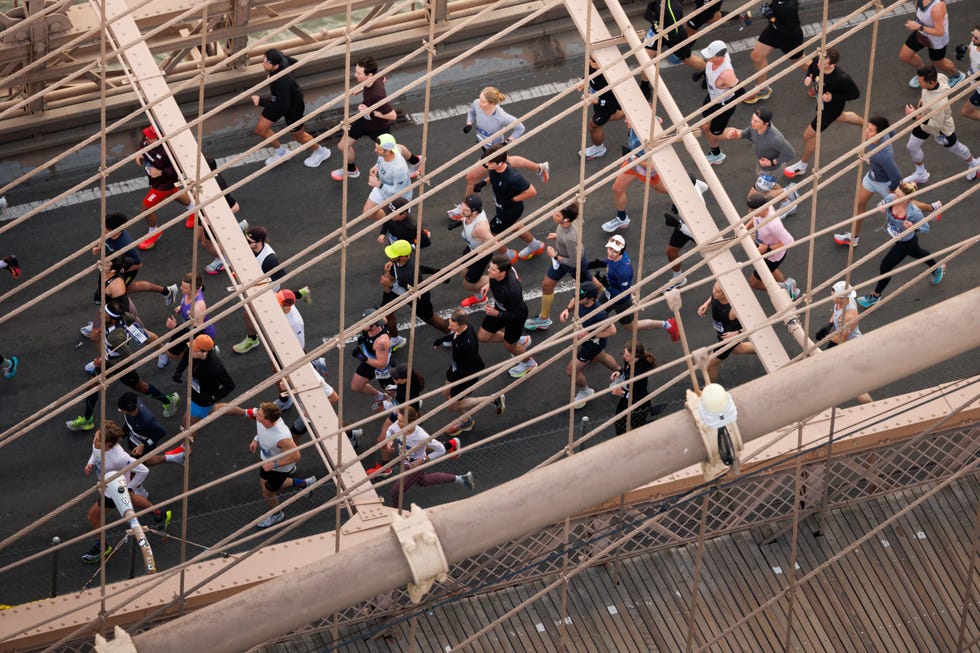 New York Road Runners//Getty Images
Runners cross the Brooklyn Bridge during the 2026 NYC Half.
Something lost
In the rush of members trying to register for races—in hopes of securing a bib for the next year’s NYC Marathon—many longtime members feel something has been lost. The community. The camaraderie. Right now, it all just feels a little transactional.
Shlansky wonders if there’s a separate pathway for those who want to run the marathon and those who don’t. Some races for the folks who want to run the marathon, and then separate races for people who are there just to run and have a good time.
“That’s a whole different crowd,” Shlansky said. “And that’s the real spirit and the real heart of running. A lot of people want to do the four-miler, or they want to do the 10K. And those are distances that can be a lot of fun for the general population, but there isn’t any room for them because of all this nonsense.”
Sandra Allen-Bard has been an NYRR since the 1980s. She guesses she’s run the Mini—the women’s 10K every June that started in 1972 as the first women’s-only race—20 times. But she couldn’t get in last year or this year. She’s a nurse practitioner and she couldn’t wait online to register at the appointed hour. She simply stopped doing races after the Mini in 2024. The hassle became too much.
“They have no loyalty to those that have been running with them forever,” she said. “It’s lost the community feel. I was going to write a letter to New York Road Runners telling them my grief. It’s been years I can’t get in a race, and I don’t have a job that I could sit and wait in that waiting room for hours to get online to get in a race.”
Andrea Mihalko, 43, hopes the organization can find a way to make everyone happy. For now, she’s mostly staying away from NYRR races.
“We want new people in the sport,” she said. “I can hear people sort of wanting to shut the doors, and I don’t want to do that.”
She remembers how she was a new runner 15 years ago, and how welcoming and encouraging people were.
“If I had not been able to get into races, maybe I would have stopped back then, instead of 10, 15, years later, still being a runner,” she said. “So I don’t think we should restrict things. It’s just, how can we be more inclusive? And that may mean that, you know, some of us who have been around a long time say, ‘You know what? I’ve had my chance. Let’s let some other people do it, you know?’”

Sarah Lorge Butler is a writer and editor living in Eugene, Oregon, and her stories about the sport, its trends, and fascinating individuals have appeared in Runner’s World since 2005. She is the author of two popular fitness books, Run Your Butt Off! and Walk Your Butt Off!