
In the last two years, the world has fallen back in love with the Olympics. And how could you blame us?
We watched athletes glide down the Seine during a breathtaking Opening Ceremony in Paris, then compete against some of the most iconic backdrops on earth. Just weeks ago, winter athletes split their events between chic Milan and the soaring peaks of Cortina, proving that a global city and a historic mountain town can together deliver a spectacular games.
Advertisement
The Olympics feel vibrant, accessible and global in a way they have not in years.
Soon, it will be America’s turn.
Los Angeles will host the Summer Games in 2028, and no place on earth embodies endless summer quite like LA. From Hollywood to Venice Beach, from surfboards to skateboards, from the Beach Boys to Snoop Dogg, Los Angeles will offer a celebration of sport and culture unlike any other.
Then, in 2034, the Winter Games head to Utah, where the “Greatest Snow on Earth” will once again take center stage, building on the legacy of the highly successful 2002 Salt Lake City Games.
Advertisement
That is all worth celebrating. But it also reveals something important: in a country as vast and diverse as the United States, the Olympic spotlight is increasingly concentrated in one region: the west.
It does not have to be that way.
The case for a New York City-Lake Placid winter games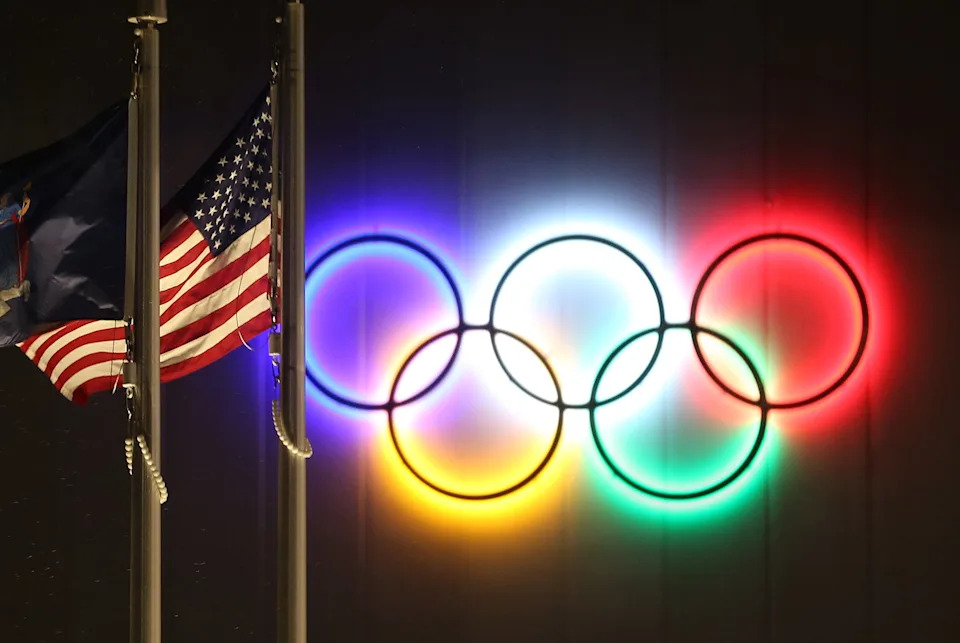
The Olympic Rings outside the Olympic Center on Main Street in Lake Placid Jan. 9, 2023.
That is why New York City and Lake Placid should bid to jointly host the 2042 Winter Olympics. Unlike a Summer Olympics, a Winter Games here would require little to no new sports infrastructure — the venues already exist. And because the Winter Games are less than one-third the size of the Summer Olympics, the logistics are far more manageable
Advertisement
Milan-Cortina proved that a two-region model works. France, which hosted the 2024 Summer Games in Paris, will host the Winter Games in the Alps just six years later in 2030. And if Switzerland secures the 2038 Games, as many expect, the Alps will have hosted three of four consecutive Winter Olympics. There is no reason the United States, with its continental scale, world-class infrastructure and global reach, cannot host three Games within a 14-year span. In fact, we are uniquely positioned to do so.
And nowhere is better suited than New York.
New York City is home to people from every nation in the world and a center of global media, finance, and culture and yet it has never hosted an Olympic Games. Meanwhile, London, Paris, Tokyo and Los Angeles have each hosted multiple times.
What New York offers is unmatched: a concentration of world-class sports venues unlike anywhere else on earth. Madison Square Garden, Barclays Center, UBS Arena, Yankee Stadium, Citi Field and the USTA Billie Jean King National Tennis Center already host global events every year. In fact, New York could host more Winter Olympic events in existing venues right now than Milan did.
Advertisement
Those arenas could stage every indoor ice event, while iconic outdoor settings could push the boundaries of what a Winter Games looks like — Big Air at Citi Field or Yankee Stadium, or even a cross-country sprint through Central Park. That is how you bring winter sports to the center of global attention.
Five hours north sits Lake Placid, the birthplace of American winter sports and host of the 1932 and 1980 Winter Olympic Games. Anchored by Whiteface Mountain, with the greatest vertical drop east of the Rockies, and home to world-class skiing, sliding, ski jumping and Nordic facilities, Lake Placid is prepared right now to host a full slate of Olympic winter events.
That did not happen by accident. For years, New York State, under the leadership of Governor Kathy Hochul, has made a deliberate choice to modernize and maintain these Olympic venues rather than let them fade into history. Today, they regularly host World Cups and international competitions. That investment has preserved a winter sports tradition that stretches back more than a century and shows why Lake Placid was America’s original capital of winter sport.
In fact, during the recent Milan-Cortina Games, Lake Placid was designated the official backup host for sliding events because of construction delays in Italy — a powerful testament to how competition-ready these facilities remain.
Advertisement
Ed Forbes: A new Miracle? Could Lake Placid, NYC host Winter Olympics? | Opinion
New York and Lake Placid could better Milan-Cortina
Just as important are the logistics, and Milan-Cortina showed they are more feasible than many people realize. Milan and Cortina are roughly the same distance apart as New York City and Lake Placid. Fans in Italy traveled by train and bus through the mountains. New York could do the same — and do it better.
Spectators could travel by rail from Penn Station along the Empire Corridor to Albany or Saratoga Springs and continue by shuttle to Lake Placid. With the right planning, a future Olympic bid could even accelerate long-overdue investment in one of the busiest rail corridors in the country.
Advertisement
Housing presents a similar opportunity for smart, long-term investment. Milan built a permanent Olympic Village that will become student housing, while Cortina relied on temporary accommodations that will be dismantled after the games. New York City could replicate this model by partnering with universities or converting underused office space into a lasting Olympic Village that later becomes student or affordable housing. In Lake Placid, a mix of permanent and temporary structures could support both the games and the region’s long-term workforce and housing needs.
But the strongest argument for a New York City-Lake Placid Games is an intangible one.
New York would bring the Winter Olympics to the largest, most diverse, most creative and most connected metropolitan region in the world — the opposite of a vision of winter sports as geographically and economically exclusive, confined to distant mountain enclaves. The possibilities that would emerge from that are impossible to fully predict: new audiences, new athletes, new traditions and new expressions of winter sport.
Winter sports on the doorstep of more than 60 million people would transform who follows these events and who participates in them for a generation. A child from Brooklyn, Philadelphia, New Haven or Baltimore could see these sports not as something distant, but as something that belongs to them too.
Advertisement
That matters.
In Italy, tickets were accessible. Fans from Germany, Japan, the Netherlands, Canada, Korea, Brazil, Italy and the United States sat side by side cheering together. Volunteers and locals embraced the Games as their own. From bartenders trading Olympic pins to Alpini soldiers guiding skiers through the Dolomites, the Olympics felt like a civic experience.
New York knows how to create that energy.
We have hosted Super Bowls, World Series, All-Star Games, the Grammys, political conventions, and every year the U.S. Open, the world’s largest marathon and the United Nations General Assembly. We know how to welcome the world — and by thoughtfully splitting events between New York City and Lake Placid, we could do it responsibly and sustainably.
Advertisement
It is time to think big again. No credible future host can represent and welcome the world quite like New York City and Lake Placid. Together, we can honor Lake Placid’s Olympic legacy while charting a new course for Olympism in the world’s most international city where nothing is impossible.
A New York City-Lake Placid Winter Olympics in 2042 would not just be a sporting event. It would be a statement: that our communities are strongest when we dream big and welcome the world as neighbors.
The Olympic flame should not stop at the Rockies.
It is time to bring it to New York.
Robert Carroll represents Brooklyn in the New York State Assembly.
This article originally appeared on Rockland/Westchester Journal News: New York City Lake Placid Winter Olympics | Opinion