
For nearly three years, a couple of lawyers have been waiting for the mayor’s office to respond to a public records request for city documents about air quality and liability concerns in lower Manhattan after the Sept. 11 terrorist attacks.
They got their answer a few weeks ago, and they tell NY1 it just raises more questions.
The mayor’s office and law department both told Andy Carboy they would not be turning over any records, according to a February letter.
However, NY1 has a copy of a 2001 memo that laid out potential liability the city could face in the wake of the attacks.
What You Need To Know
Lawyers waited nearly three years for a response from the mayor’s office on 9/11 air quality and liability records
A 2001 memo shows the city acknowledged potential liability for tens of thousands of claims after the attacks
The mayor’s office and law department say no records exist, despite evidence to the contrary
Attorney Andy Carboy has filed a lawsuit to obtain the documents, continuing a long history of legal disputes over 9/11-related records
The letter, sent to Bob Harding, a deputy mayor under Rudy Giuliani until late 2001, outlined that there could be as many as 35,000 claims filed against the city for a range of issues, including being allowed back into lower Manhattan before it was safe.
The memo does not say the city knowingly did that, but the two-page document lists it as a possible reason for lawsuits.
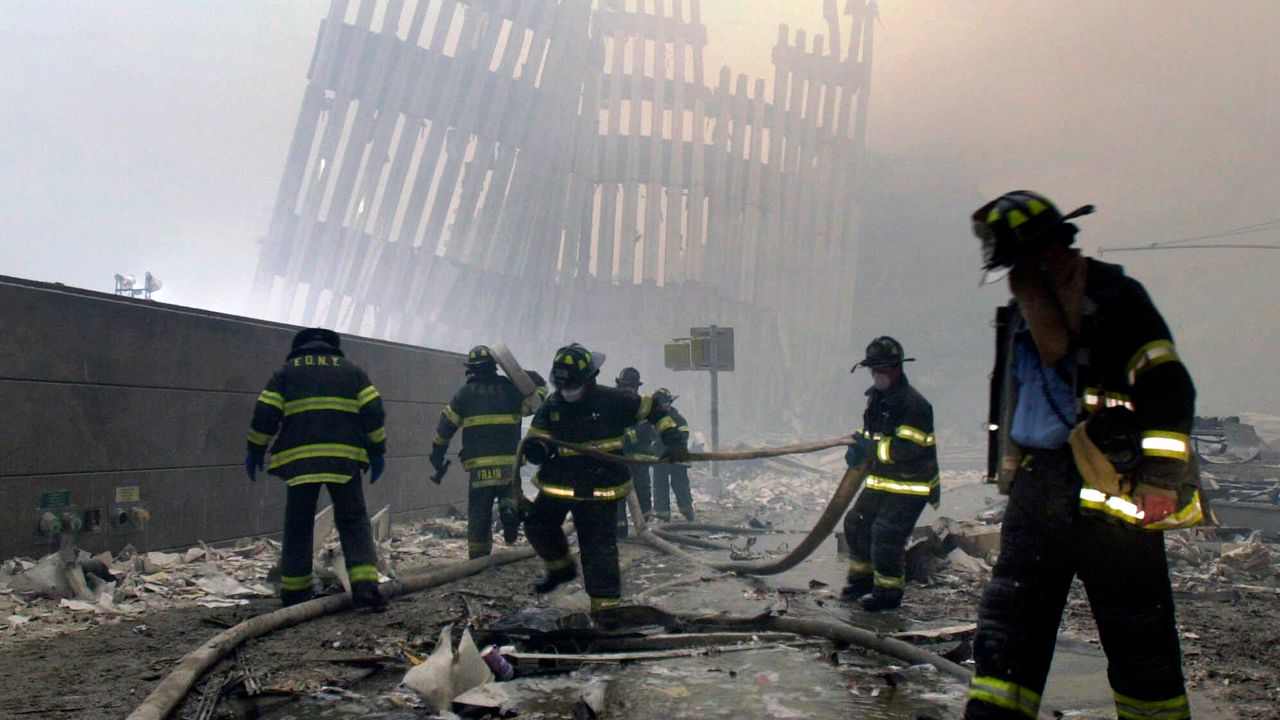
Tens of thousands of people have conditions doctors have connected to the air they breathed in the days, weeks, even months after the towers fell, according to the Centers for Disease Control and Prevention.
More people have died from 9/11-related illnesses than those who died on the day of the attacks, according to the 9/11 Memorial and Museum.
Last month, Carboy obtained the memo sent to Harding. However, he did not get it from the mayor’s office. He got it from a library at the University of Texas, where the archives are held for longtime New York City journalist Wayne Barrett.
Barrett wrote a book about the aftermath of 9/11 and mentioned the memo sent to Harding.
Carboy said he reached out to the library for a copy of the memo, which he said he received in a matter of weeks.
On the other hand, the mayor’s office requested 10 separate extensions for Carboy’s document inquiry, which was sent in September 2023.
The first line item requested: the memo sent to Harding.
NY1 has copies of other documents Harding signed after 9/11 while he still served as deputy mayor. His signature is on letterhead that reads: “Office of the Mayor.”
However, the response Carboy received on Feb. 27 read:
“With regard to the Mayor’s Office…after conducting diligent searches, they have not identified any records responsive to your request under FOIL,” part of the letter said. It was signed by Jeffrey Lowell, the records appeals officer.
Carboy appealed the decision, which was also denied by Lowell.
“The Mayor’s Office searched all available records in the Enterprise Vault (EV) database (over 7,200 email accounts) and searched for physical records in possession of the Mayor’s Office at a storage facility on White Street,” Lowell wrote in a March 20 letter. “The EV database holds records dating back to 2002 with occasional records from prior years if the email account was active prior to 2002 and stayed active in 2002.”
The letter did not specify what happened to documents from 2001.
“There are documents. And I’ll never be convinced otherwise,” Carboy said in an interview with NY1.
Council Member Gale Brewer, who has been leading the push at the council level to have the files turned over, agreed.
“Is it lying, or is it inadequate records, or is that a combination?” she said. “It doesn’t add up that there are no records. It’s impossible. It’s impossible.”
NY1 reached out to the mayor’s office multiple times with a series of questions. A spokesperson declined to answer.
The denial of documents also involved another agency Carboy had requested files from: the law department.
The Harding memo stated the liability estimates outlined in the document came from analysis in the law department.
“[The law department’s] records are not maintained in a manner that allows it to search for records responsive to the request,” Lowell said in the February letter to Carboy.
However, Carboy said that response contradicts the law department’s own guidance.
NY1 obtained a document sent by the law department to city employees, in an undated letter.
“These original World Trade Center documents have been collected and scanned by the New York City Law Department. DO NOT DISPOSE OF THESE DOCUMENTS: they must be preserved to serve as evidence in the event future WTC-related legal actions are brought against the City,” the letter from Jesse Levine reads.
The letterhead is from the office of Michael Cardozo, who served as corporation counsel during Mayor Michael Bloomberg’s entire tenure.
“To scan the entire archive without making it accessible, without preserving it? Was this just an exercise?” Carboy asked. “Okay, let’s scan it. Let’s not make an index. Let’s not make them searchable and just close the doors and walk away. I don’t buy that for one moment.”
Last month, the new corporation counsel, Steve Banks, was asked about his plan on releasing 9/11 records during his confirmation hearing.
“Under my watch we’re going to review what records there are and release what records can be released,” he said at the time.
The law department did not respond to NY1’s questions about how the department couldn’t turn over any records, despite evidence indicating it should.
Carboy has filed a lawsuit in state court against the mayor’s office.
It’s not the first time Carboy, who said he is doing this work pro bono on behalf of the nonprofit 9/11 Health Watch as well as first responders and families impacted by 9/11-related illnesses, has had to sue a city agency for these records.
In 2024, Carboy sued the Department of Environmental Protection, an agency with a well-documented history of investigating the air quality in lower Manhattan.
The suit came after DEP said on multiple occasions it had no records related to the documents request, which spanned from test results to liability concerns.
After calling Carboy’s lawsuit a “fishing expedition,” the city revealed there were 68 boxes of material to turn over, a process that is ongoing to this day.
DEP has never publicly explained the dramatic change from zero documents to hundreds of thousands of them.