
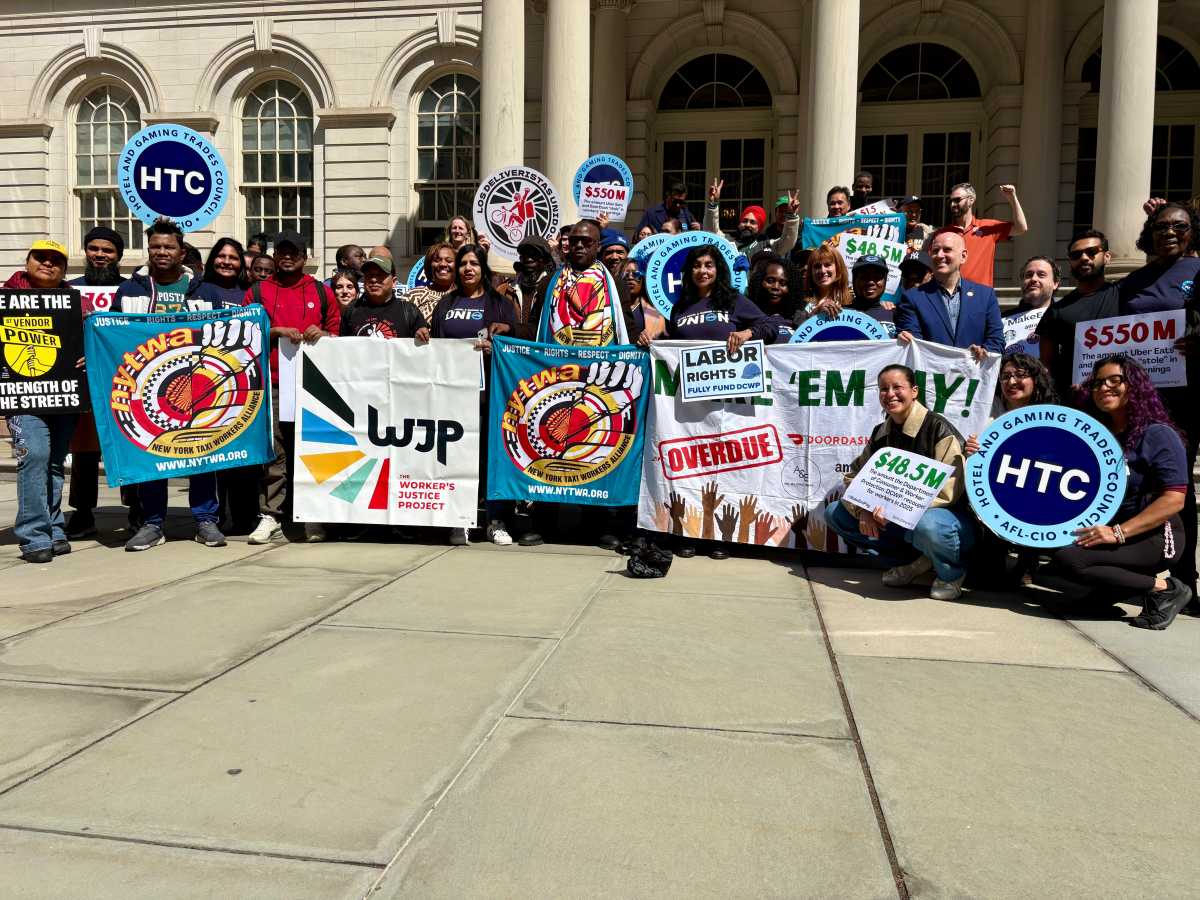
Dozens of union workers rallied at City Hall on Monday to demand that the city’s Department of Consumer and Worker Protection (DCWP) receive full budgetary funding, following Mayor Zohran Mamdani’s proposed cuts to the agency’s coffers in his preliminary spending plan.
Photo by Sadie Brown
Dozens of union workers rallied at City Hall on Monday to demand that the city’s Department of Consumer and Worker Protection (DCWP) receive full budgetary funding, following Mayor Zohran Mamdani’s proposed cuts to the agency’s coffers in his preliminary spending plan.
City Council Member Harvey Epstein (D-Manhattan), who chairs the Committee on Consumer and Worker Protection and organized the event, underscored the agency’s role as a watchdog and enforcement arm of NYC’s labor and consumer protection laws.
“ This is not just a smart investment,” Epstein said. “This is what good policy looks like. Investing in DCWP means investing in New York, and we have an opportunity now in this transformative moment to do that.”
Labor advocates and Epstein argued that Mamdani’s preliminary budget included an 8% reduction in funding for the DCWP, from $85.5 million in the current year to $74.7 million proposed for the next fiscal year. But City Hall disputed the calculation, instead pointing out that the nearly $75 million the Mamdani administration proposed represented a 1% increase from former Mayor Eric Adams’ November proposal for the FY2027 budget, which showed DCWP funded at around $73.4 million.
The city is currently facing a $5.9 billion budget gap that it must close this spring. Mayor Mamdani and the City Council will soon enter budget negotiations to eliminate the deficit and map out the city’s spending plan for the next fiscal year, which must be enacted by June 30.
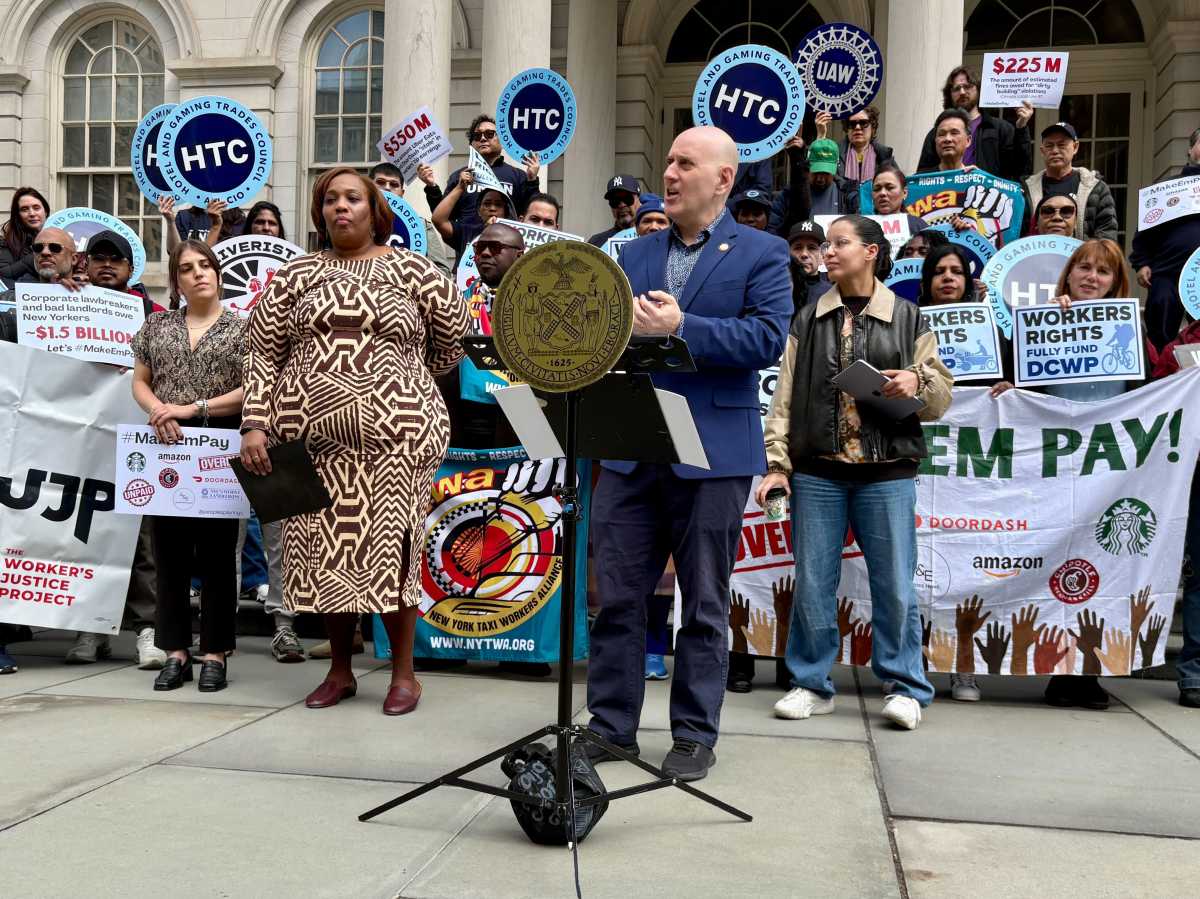 City Council Member Harvey Epstein (D-Manhattan), who chairs the Committee on Consumer and Worker Protection and organized the event, underscored the agency’s role as a watchdog and enforcement arm of NYC’s labor and consumer protection laws.Photo by Sadie Brown
Still, the preliminary budget retreated from Mamdani’s campaign pledge to double the budget for DCWP and highlighted the agency’s crucial efforts in “fighting corporate exploitation” and recovering money for both working-class New Yorkers and the city. In 2025, DCWP recovered some $48.5 million for workers in New York City, according to the policy platforming organization The People’s Plan NYC.
A spokesperson from Mayor Mamdani’s office told amNewYork in a statement that the DCWP remains a vital part of his affordability platform.
“The Department of Consumer and Worker Protections is one of the most powerful tools the Mamdani Administration has to protect working people and crack down on corporate abuse,” the spokesperson said. “Mayor Mamdani will continue to work closely with Commissioner Levine to ensure that DCWP has the strength, the staffing, and the support it needs to do this vital work.”
Mamdani’s office said that it was still committed to increasing DCWP’s funding over time.
“Even in the face of a historic budget deficit the Mamdani Administration inherited, we are not backing down from our core responsibility of protecting workers,” they said. “The Mayor remains committed to increasing DCWP’s funding over time to ensure that the agency has the resources needed to meet its mission.”
Labor Unions like the Taxi Workers Alliance, the Street Vendors Union, service workers union 32BJ SEIU, the United Auto Workers and the Hotel and Gaming Trades Council all attended the rally and reiterated the importance of DCWP’s mandate to both enforce labor laws and raise funds for the city through fines.
Bhairavi Desai, executive director of the Taxi Workers Alliance, said that arming the DCWP with adequate funding was the best way to combat the city’s affordability crisis, which Mamdani vowed to tackle on the campaign trail.
“ Services are not enough to bring people out of poverty,” Desai said. “What most workers want is not benefits. What they want is a job that will pay them a dignified living, livable income to keep ourselves out of poverty.”