
State lawmakers are set to arrive at the state Capitol in Albany on Tuesday to pass the first budget extender of the year, confirming what almost every Albany watcher has known for days — or months, depending on who you ask: the budget will be late.
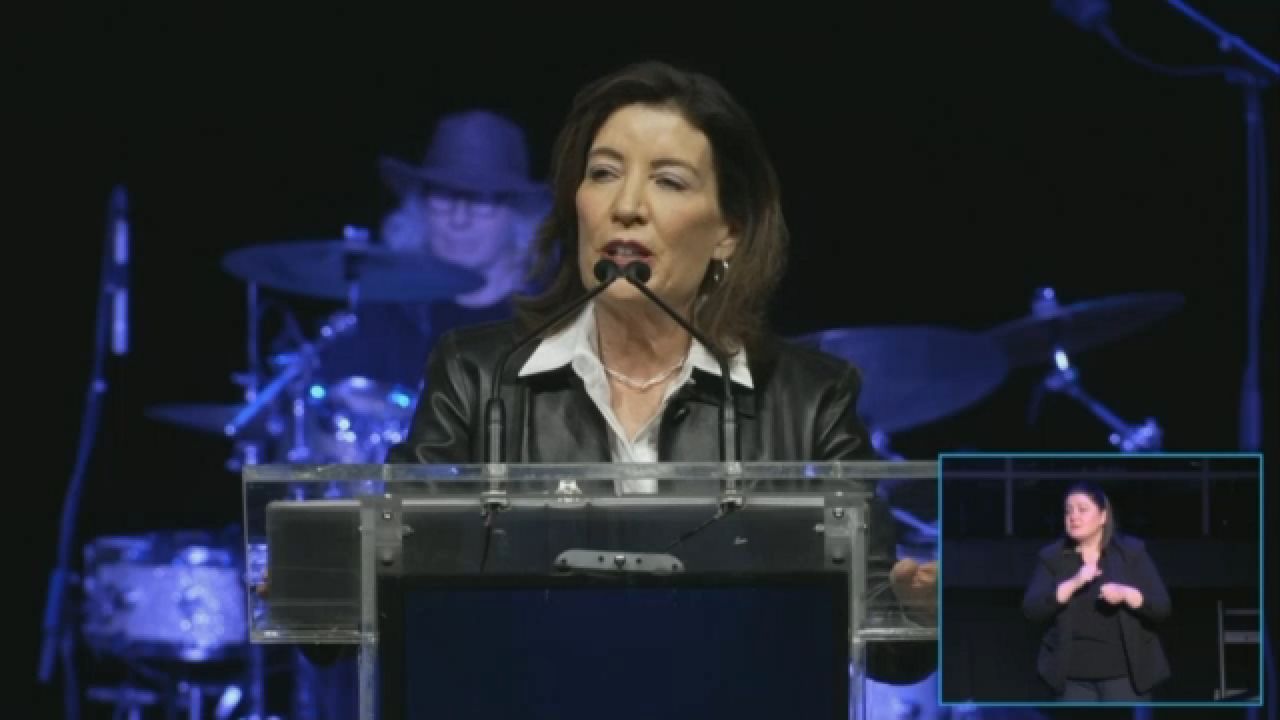
As Gov. Kathy Hochul appears more than content to negotiate her fifth overtime budget and the state Legislature’s Democratic majorities remain in pushback mode, Hochul sent lawmakers an extender package Monday evening to keep government funding flowing and state workers paid through next Tuesday. This will ensure the Legislature won’t have to return to Albany until after the Easter weekend. Lawmakers are scheduled to be off from Wednesday through Monday, April 20, for a holiday break driven by the Easter and Passover holidays.
If the budget process pushes beyond that, the extender schedule remains up in the air.
As Hochul and legislative leaders plod through major differences on the governor’s proposal to reform the state’s car insurance laws and dial back the 2019 climate law, conversations have yet to fully lock in around countless issues that relate directly to spending. While discussions between the governor’s office and the Legislature have touched on taxes — and Hochul’s reluctance to raise them — conversations on issues such as school aid and pension reform have yet to take center stage.
Fixing the state’s Tier 6 pension system has emerged as one of the key discussions this budget cycle and has not taken a traditional path, drawing limited attention outside the Albany bubble until a 15,000-person rally this month at Albany’s MVP Arena.
Hochul has indicated general support for reforming the system, which was enacted under former Gov. Andrew Cuomo in 2012 to reduce pension costs. The state Senate and Assembly signaled support for a remedy in their one-house budgets, and Assembly Speaker Carl Heastie has been particularly clear that he wants to see reforms this year. Comptroller Thomas DiNapoli, who manages the pension fund, has largely given the campaign his blessing.
It comes as affected unions continue to insist that scaled back benefits under the most recent pension tier, compared with previous levels, are preventing people from entering public service and are causing recruitment and retention issues.
Melinda Person, president of New York State United Teachers, argues the campaign gets at the heart of what working for New York state is supposed to mean.
“I grew up here in Albany, and when I was a kid everyone would talk about, ‘Make sure you get in with the state. Make sure you get on the civil service list. Make sure you get in with the county or local government,’ because people looked at public service as a path to a dignified retirement and a middle-class life, and people no longer look at it that way,” she said. “They can’t find people to take public service jobs, and I think that should alarm all of us.”
Person said that while reforms made in 2024 — which dealt with vesting and how an employee’s average salary is calculated — were a step in the right direction, there is more to do this year.
“Now we’re looking to do something around contributions, age of retirement and overtime, and so these are pieces that matter in terms of recruiting and retaining people into the public sector workforce,” she said. A key cornerstone of the push is a retirement age of 55 with a lower contribution rate.
Discussions are currently in a murky place. Sources say unions are having conversations with Hochul’s team and others over a specific package of asks which could then be brought to the negotiating table. The Senate and Assembly, given their willingness to tax and spend more, could be an easier sell than Hochul when it comes to how far the reforms could go this year.
The lack of a clear proposal to drive a more definitive conversation has inconvenienced few since seemingly no one with the power to influence the agenda is ready to have it yet.
Those against the reforms say the arguments coming from union leaders are exaggerated, especially when it comes to recruitment.
The state’s hiring numbers have nearly climbed back to pre-pandemic levels, though certain areas like corrections — where 2,700 National Guard troops remained in place as of February — remain in a difficult spot, and retention is a clear challenge.
“Lawmakers are buying some really baloney arguments when it comes to what the unions are saying. New York state government, in particular, is not having a recruitment problem,” said Ken Girardin, a fellow with the Manhattan Institute, pointing to robust — and in some cases record — hiring numbers in recent years.
There are also concerns over the costs that could be imposed on local governments and taxpayers if the plan succeeds, as cities and municipalities across the state, from Buffalo to New York City, are experiencing tremendous fiscal stress.
Hochul herself has expressed concern that localities not bear the brunt of reforms.
“This would cost about $100 billion at least in the coming decades,” Girardin said. “If the unions get what they are demanding here and they ‘fix Tier 6,’ it’s going to hurt upstate the most in terms of school taxes, and it’s really going to clobber New York City at a time when bond rating agencies are increasingly skeptical about the city’s fiscal health.”
If overall data shows a rebound, Person said the problems run deeper within the system.
“We have workforce shortages in almost every area of public service, with mandatory overtime costing employees a lot of money,” she said. “School districts are looking ahead and having to pay higher salaries in the long term when people stay for those extra eight years. I would say, how can we afford not to do this?”