
Photo: Robert Nickelsberg/Getty Images
Many of the challenges Zohran Mamdani has encountered in his first 100 days as mayor — like ending street homelessness, halting the deterioration of public housing, or preventing the deaths in custody of jailed detainees on Rikers Island — are not just tough but essentially unsolvable.
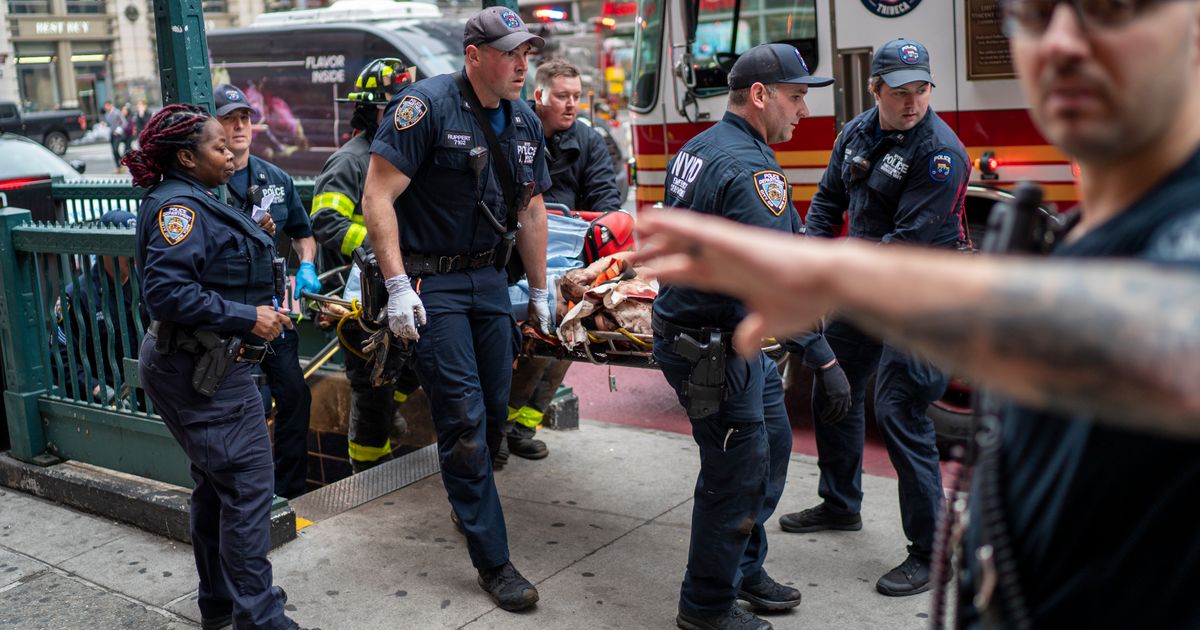
But raising the abysmally low wages of emergency medical-services workers, New York’s fabled corps of skilled “street doctors” who staff fire-department ambulances and respond to every manner of health crisis, is not one of those problems. Even in a tough budget season, it will be a scandal if City Hall doesn’t fix this pronto.
“We have quite a few members who are homeless — either living in shelters, sleeping in their cars, sleeping at the station, sleeping on a friend’s couch,” says Oren Barzilay, president of FDNY EMS Local 2507, which represents most emergency medical technicians in the city. “They put on a uniform during the day, and at night, they’re homeless.”
You read that right. The first responders who answered more than 1.6 million 911 calls last year, often alongside cops and firefighters, get starting pay of $39,000 a year and top out at $59,000 after several years on the job. EMS is part of the Fire Department, but EMTs get paid far less than the $54,000 starting pay of firefighters, who can expect to make $110,000 after five years.
It’s a daily slap in the face of responders who show up within minutes when New Yorkers have a bad fall, a heart attack, or a bleeding cut. “I worked overnight, so I worked from 6:30 to 6:30,” Jasiah Canelo, a 23-year-old Astoria native, told me about his years as an EMT stationed in Washington Heights. “There’s no elevators, so we would have a six-flight carry down, you know what I mean? That would happen eight or nine times a night. You’re doing something, and it can get very physical.”
But we, the citizens of New York City, did not pay Canelo a living wage for that grueling, lifesaving work. “I was making around $3,500 a month. So I probably got $55,000 last year doing a bunch of overtime, and that’s not including me paying my tolls and gas,” he told me. “After each paycheck, after I paid all my bills, I probably had like $150 to $200 to spend on groceries and food and all that.”
Taysha Soto, an EMT and single mother stationed in Staten Island, told me she works 16 hours every day to supplement her $39,000 salary. “We give our best, and we’re just not treated how we’re supposed to be treated,” she told me. “There’s people I’ve heard of that actually do sleep in their cars, that are actually facing eviction, you know, because they’re just so backed up with bills and everything. I had that problem not too long ago, where I was just backed up in bills and rent like three months. I just now got my taxes and I was able to catch up on bills and stuff, but I was backed up on everything, literally. And it’s just not right.”
The low pay leads to high turnover. “We’re losing almost 1,500 members by the end of the year,” Vincent Variale, president of Local 3261 of the Uniformed Emergency Medical Service Officers Union, told me. “So that’s a considerable amount when you talk about the size of our service being 4,500.”
Canelo enlisted in the Army earlier this year and spoke to me from Fort Benning, Georgia, on the day after he completed basic training. “My plan right now is I want to be able to sustain myself and kind of set up a future for my family,” he said. “When I come back, I want to go to paramedic school, and I want to be a paramedic in the fire department.”
The low-pay problem is getting more attention from prominent people. “EMS are the lowest-paid first responders in the city, and that is unacceptable,” newly appointed fire commissioner Lillian Bonsignore, who rose through the EMS ranks, said at the State of FDNY speech earlier this year. “I can talk firsthand about what it’s like to live on an EMS salary. The majority of my career I had to work three to four jobs in order to support my family.”
Now, Mamdani and the proud socialists in City Council have to deliver. “We have hopes that he will take this on, because this is exactly what he’s been saying all along. Affordability, equality, equity for people that are being mistreated and treated unfairly,” Variale said. “This is not even an EMS issue anymore. This is a public-safety issue. People are dying.”
The simplest solution, aligning EMT salaries with those of firefighters, was supposed to happen under Mayor Eric Adams. “For years our EMTs, paramedics, and fire inspectors have been shamefully denied pay parity — that comes to an end when I become mayor,” candidate Adams vowed in 2021 after accepting the endorsement of the EMS unions.
Adams never came through: The Daily News reported that, despite the mayor’s public promise, his chief adviser, Ingrid Lewis-Martin, shot down the idea of parity. “I wouldn’t agree with that, because they do work, EMS workers definitely do work, but not on the same level as a police officer or fireman does. No, that definitely doesn’t make sense to me,” she said during a 2023 City Hall meeting with EMS advocates.
So the EMS unions went years without a new contract under Adams, and the system remains under severe strain. An estimated 14 EMS workers have committed suicide since 2020, and the Independent Budget Office found that reponse time is increasing due to short staffing.
“When you don’t have the manpower, it impacts not just the workforce, now it’s a public-safety issue,” Barzilay told me. “One gentleman did CPR on his son for over 20 minutes before an ambulance arrived. So people are dying every day. We’re not making this up.”
And that creates an opportunity for Mamdani to score a triple win: boosting the pay of working-class New Yorkers, improving performance of a vital city service, and turning the page on a failure of the one-term Adams administration.
Sign Up for the Intelligencer Newsletter
Daily news about the politics, business, and technology shaping our world.
Vox Media, LLC Terms and Privacy Notice